
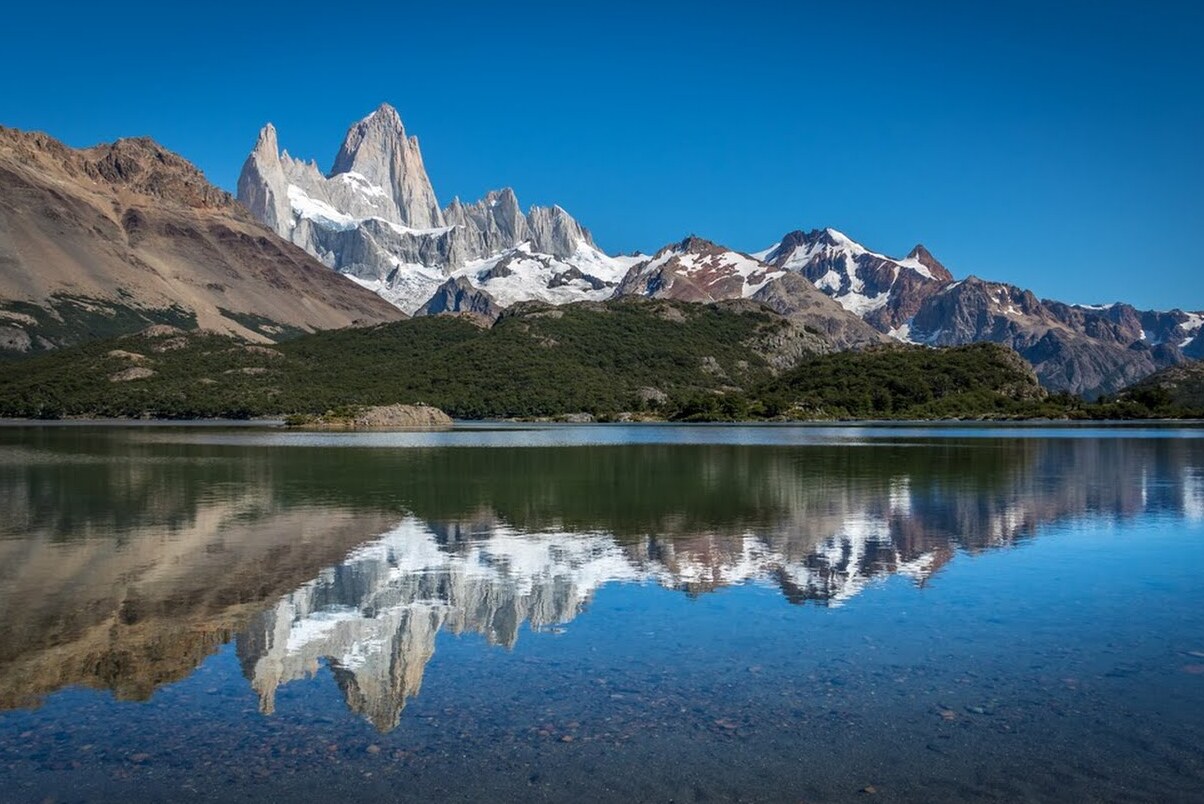

Nestled within the breathtaking expanse of the Los Glaciares National Park, Лаго Капри, or Lake Capri, offers a pristine escape into nature's untouched beauty. This serene lake, located just a short trek from the vibrant town of El Chaltén, remains a hidden gem among Patagonia's splendors, drawing those who seek both tranquility and adventure.
Historically, the region around Lake Capri was inhabited by indigenous peoples long before European explorers arrived. The native Tehuelche people roamed these lands, living in harmony with the rugged environment. Their ancient paths and stories linger, whispering tales of survival and reverence for the land that provided for them. With the advent of European exploration in the late 19th century, this area became part of Argentina's national park system, preserving its rich natural and cultural heritage.
Art and architecture in the region reflect a deep connection to the landscape. While there are no grand structures by the lake itself, the architectural style of nearby El Chaltén combines rustic charm with modern comforts. The town's buildings, often constructed with local stone and timber, echo the rugged beauty of their surroundings. Artistic endeavors here are deeply inspired by nature, with local artisans crafting paintings and sculptures that capture the formidable peaks and serene waters of the area.
Culturally, the Patagonian region is a tapestry of traditions rooted in both indigenous and European influences. Local festivals often celebrate this rich blend, with events like the Fiesta Nacional del Trekking, which highlights the area's hiking culture and encourages both locals and visitors to embrace the outdoors. Traditional music and dance further enrich these celebrations, providing a lively backdrop to the majestic scenery.
Gastronomy in this part of Argentina offers a taste of the rustic and the refined. Visitors to El Chaltén can indulge in Patagonian lamb, a regional specialty often roasted over an open fire, embodying the robust flavors of the area. Fresh trout from the icy waters of nearby rivers and lakes is another local delicacy, often paired with ingredients like wild herbs and locally sourced vegetables. To accompany these meals, the region's Malbec wines offer a rich, full-bodied complement, bringing a taste of Argentinean vineyards to your table.
Among the lesser-known curiosities of Lake Capri is its reputation as a photographer’s paradise. While many tourists flock to the famous Fitz Roy massif, few realize that the reflections of these iconic peaks on the lake's surface offer some of the most stunning images of the region. Moreover, Lake Capri's shores are dotted with unique flora, including the rare Calceolaria uniflora, a peculiar flower known locally as the "Darwin’s slipper" due to its unusual shape.
For those planning a visit, the best time to experience Lake Capri is during the Southern Hemisphere's spring and summer months, from November to March. During this period, the weather is milder, and the trails are more accessible. Hiking to Lake Capri requires moderate effort, with well-marked paths leading through diverse landscapes, from dense forests to open meadows. It's advisable to start early in the day to avoid the afternoon winds typical of the region and to wear sturdy boots to navigate the sometimes rocky terrain.
While approaching Lake Capri, keep an eye out for the diverse wildlife that calls this area home. Guanacos, relatives of the llama, can often be seen grazing in the open spaces, and the skies are frequently patrolled by the majestic Andean condor. For a truly immersive experience, consider camping overnight to enjoy the lake's tranquil beauty under a canopy of stars, free from light pollution.
In conclusion, Lake Capri offers a unique blend of natural beauty, cultural richness, and historical depth. Whether you're drawn by the allure of its scenic trails, the promise of a quiet campsite, or the stories of its past, this enchanting destination provides a memorable escape into the heart of Patagonia.


