
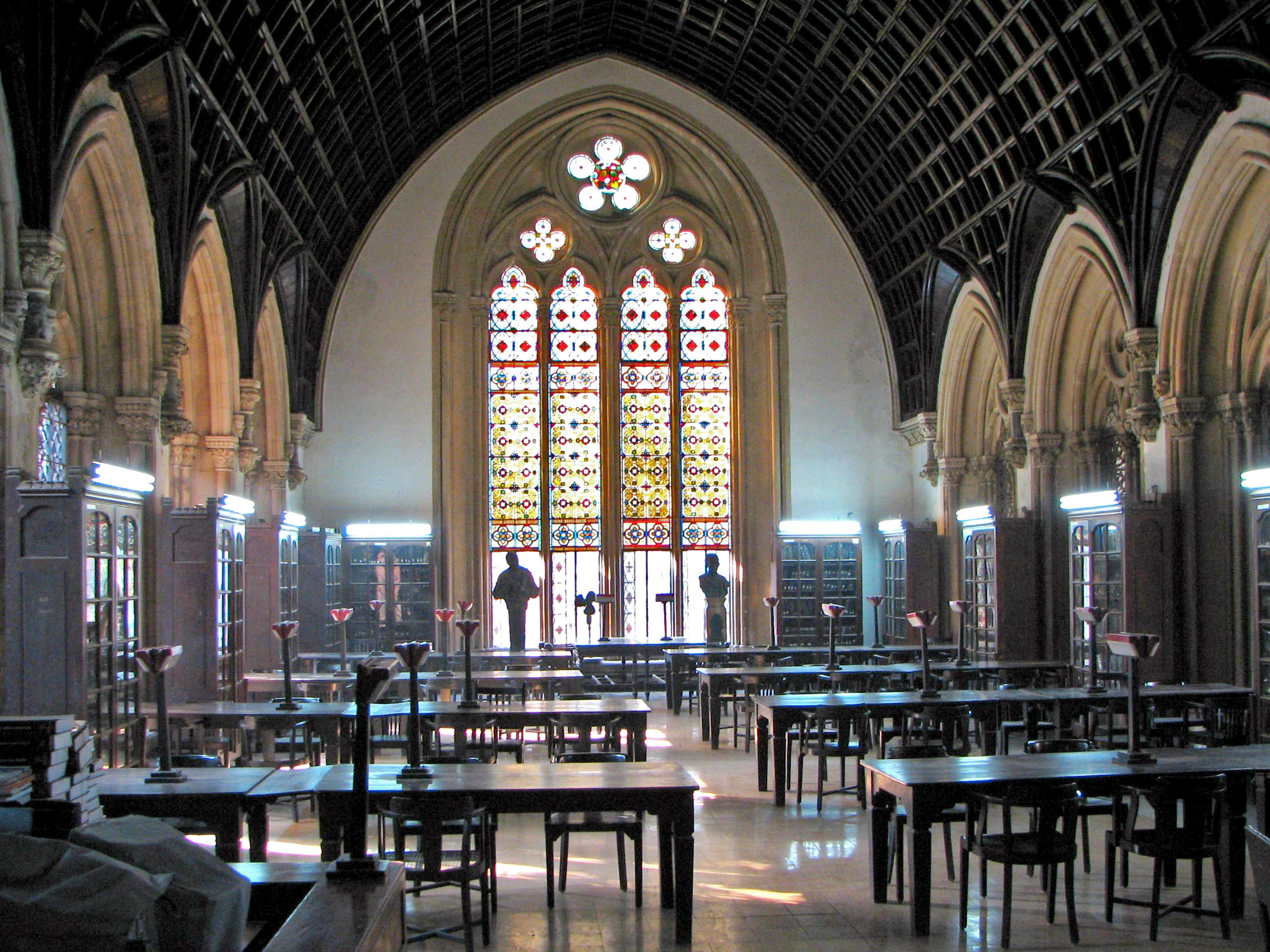

In the bustling heart of Mumbai, amidst the city’s vibrant chaos, lies a sanctuary of knowledge and beauty—Універсітэцкая бібліятэка, or the University Library. This architectural gem, renowned for its stunning stained glass and mesmerizing staircases, offers a window into the city's rich history and cultural tapestry.
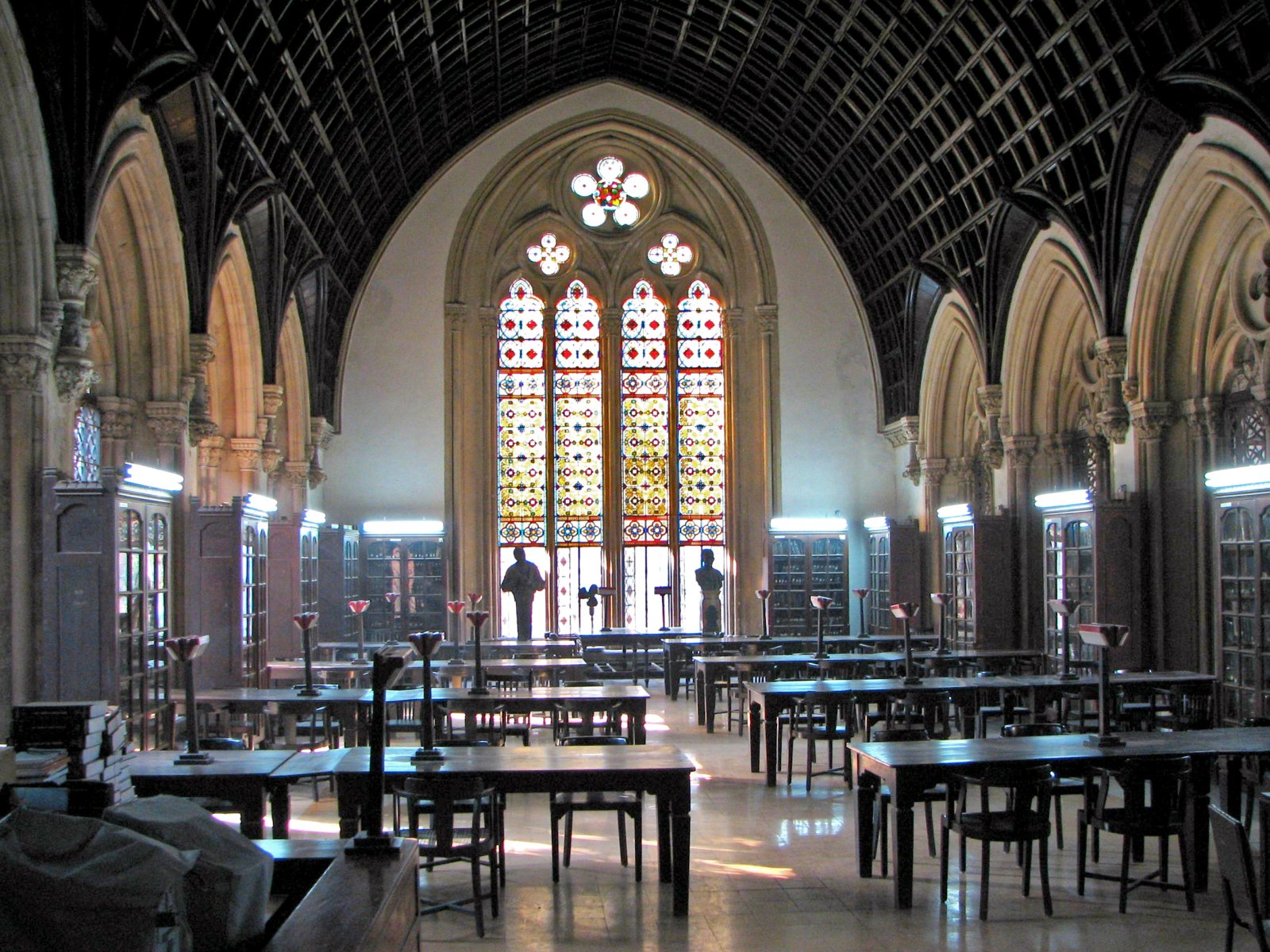
The story of the University Library begins in the mid-19th century. Established in 1857, it is part of the University of Mumbai, one of the oldest and most prestigious universities in India. The library's construction was marked by the architectural vision of Sir George Gilbert Scott, a celebrated British architect known for his Gothic Revival style. Completed in 1878, the library stands as a testament to the colonial era's blend of European design with Indian craftsmanship. This period was pivotal as it marked the beginning of formal higher education in Mumbai, which later became a cornerstone of intellectual development in India.
Walking into the library, visitors are immediately struck by its imposing Venetian Gothic architecture. The intricate stained glass windows, crafted by the renowned firm Clayton and Bell of London, depict scenes from Shakespeare’s plays and other literary classics, painting the walls with vibrant hues as sunlight filters through. The soaring ceilings and ornate woodwork illustrate a meticulous attention to detail that was characteristic of Scott’s work. The spiral staircases, intricately designed with wrought iron, offer a visual delight, spiraling elegantly toward the upper levels.
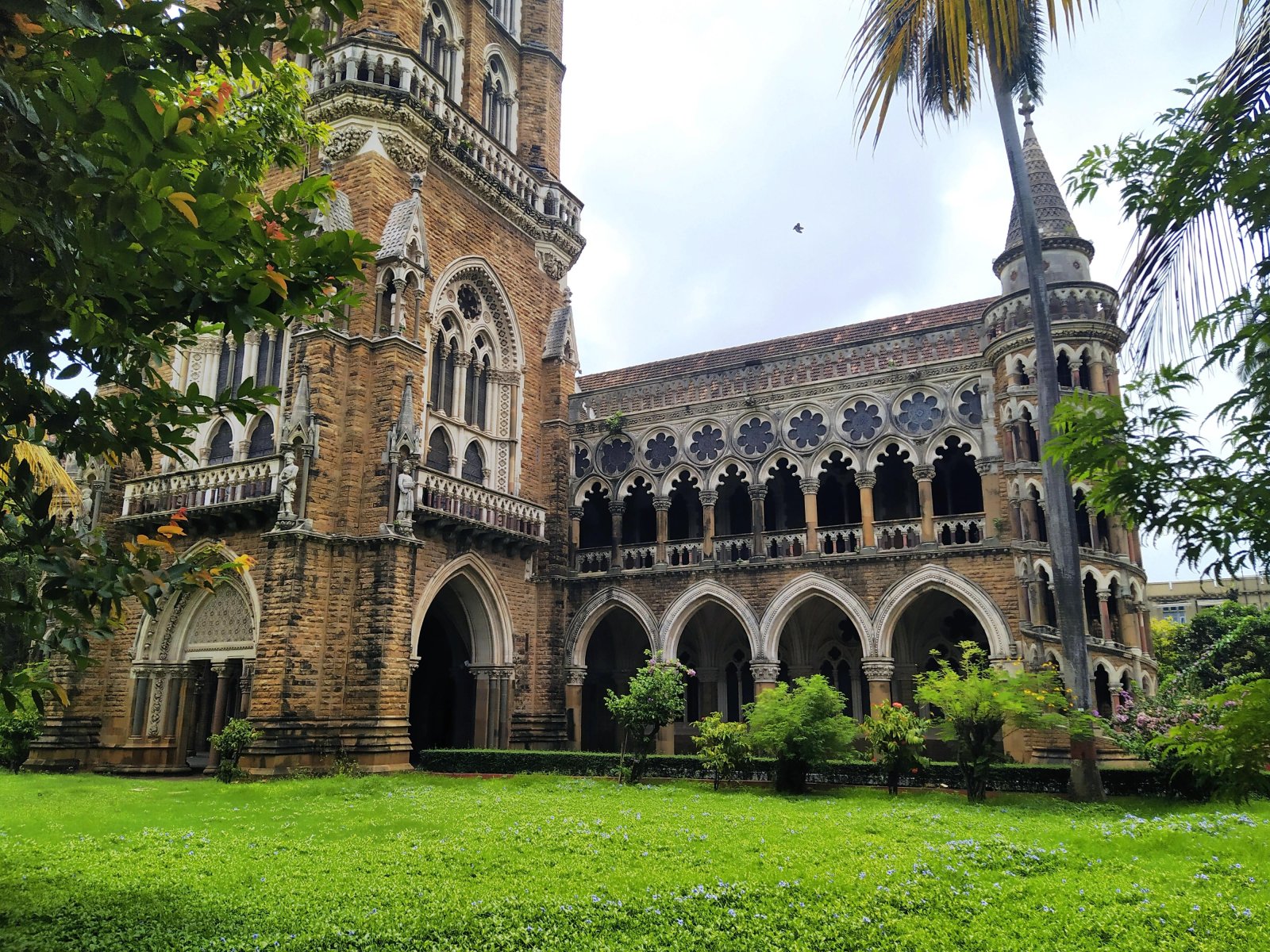
Beyond its architectural grandeur, the library holds a deep cultural significance for the local community. Mumbai is a city of contrasts, where ancient traditions coexist with modernity. The University Library reflects this duality, serving as a repository of both classic literature and contemporary research. It hosts numerous cultural events, lectures, and workshops that are integral to the city’s academic and cultural calendar. The library is particularly animated during the Kala Ghoda Arts Festival, a major cultural festival held annually in Mumbai, attracting artists, writers, and thinkers from across the globe.
While the library itself may not offer gastronomy, the surrounding area is a haven for food enthusiasts eager to sample Mumbai's culinary delights. Just a short walk away, you can find local eateries serving vada pav, often referred to as the city's beloved street food—a spicy potato patty served in a bun. Nearby cafes offer Irani chai and bun maska, a buttery delight perfect for a mid-afternoon respite. These local flavors, steeped in history and tradition, offer a taste of the city's diverse gastronomic heritage.
Amidst the well-trodden paths, the library harbors lesser-known curiosities. One such gem is the Rajabai Clock Tower, which shares its Gothic architectural lineage with the library. Standing tall at 280 feet, it was completed in 1878, funded by Premchand Roychand, a wealthy broker whose mother, Rajabai, was visually impaired. The tower's melodic chimes once echoed across the neighborhood, keeping time for the city's inhabitants.
For those planning to visit, the best time to explore the University Library is during the cooler months from November to February, when Mumbai’s weather is more forgiving. Arriving early in the morning allows visitors to experience the library in serene solitude before the city’s hustle begins. While there, be sure to look for the library's rare collection of ancient manuscripts and first editions, which offer a glimpse into the literary past of India and beyond.
In conclusion, the Універсітэцкая бібліятэка ў Мумбаі is not just a place of books but a vibrant intersection of art, history, and culture—a must-visit for anyone seeking to understand the soul of this dynamic city. Whether you're an architectural aficionado, a history buff, or simply a curious traveler, the library offers an enriching experience that lingers long after you’ve turned its last page.


