
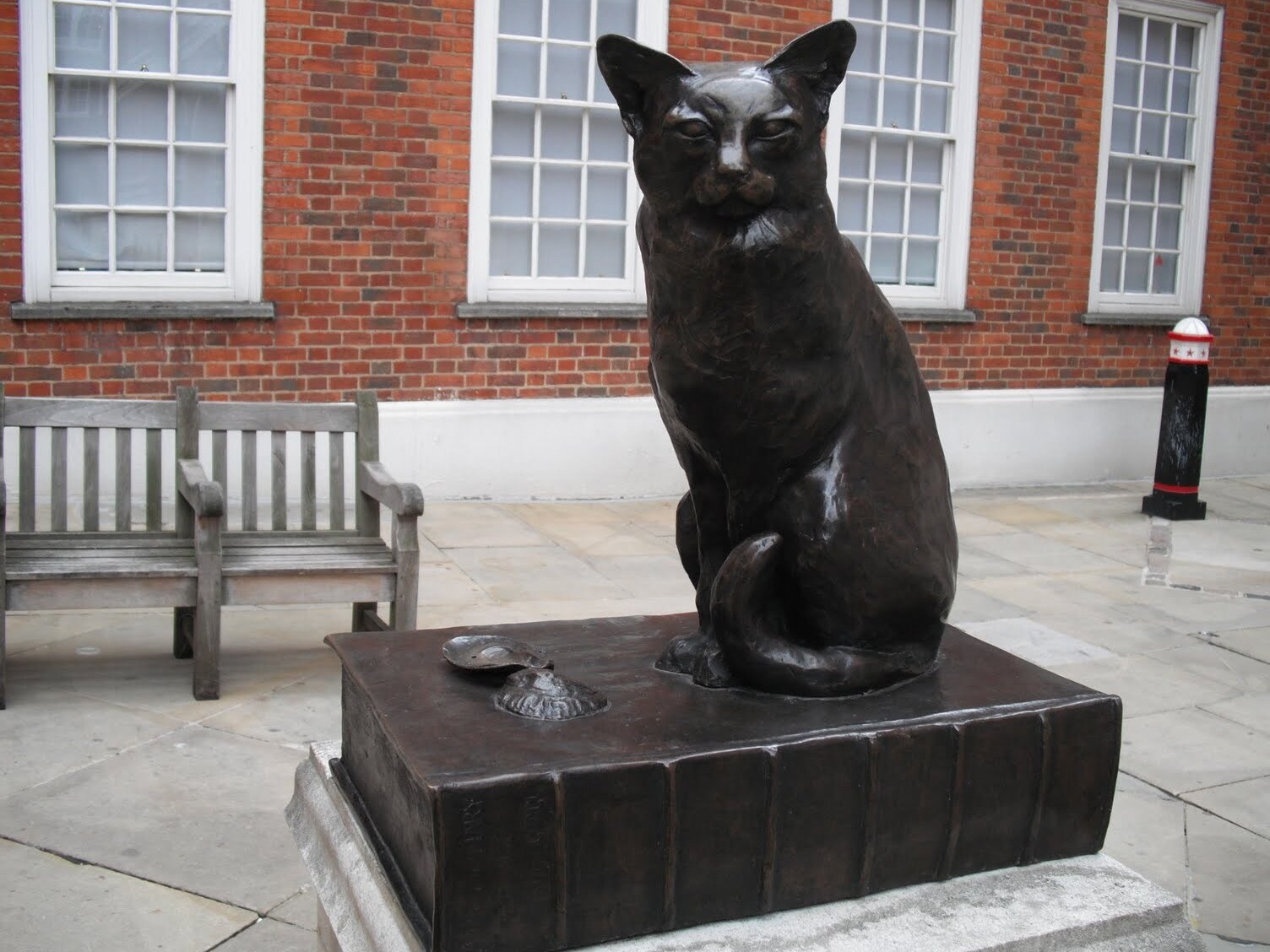

Nestled in the heart of London, amidst the hustle and bustle of the city, lies a quaint tribute to one of literature's most beloved felines, Hodge, the cherished cat of Samuel Johnson. A stroll through the historic streets of Londinium, as it was known in Roman times, brings you to the doorstep of the Samuel Johnson House Museum, where Hodge's story is immortalized both in bronze and in the pages of history.
The legacy of Hodge is entwined with the life of his owner, Dr. Samuel Johnson, the eminent writer and lexicographer known for his monumental work, A Dictionary of the English Language, published in 1755. Johnson's residence, located at 17 Gough Square, served as his home and workplace from 1748 to 1759. This Georgian townhouse, preserved as a museum, offers a glimpse into the 18th-century life of one of England's literary giants.
The architecture of Gough Square embodies the classic Georgian style, characterized by its symmetrical layout and understated elegance. Inside, visitors can explore the rooms where Johnson compiled his dictionary, surrounded by period furnishings and artifacts that transport you back to a time when the Enlightenment was flourishing in Britain.
In the courtyard, a charming statue of Hodge by sculptor Jon Bickley, unveiled in 1997, captures the essence of this feline companion. Hodge is depicted sitting atop a dictionary with oysters at his feet, a nod to Johnson's fondness for indulging his pet with this seafood delicacy. This statue is not just a tribute to a pet but a symbol of the affection and humanity that Johnson embodied, qualities that endeared him to his contemporaries.
London's cultural tapestry is rich and diverse, with traditions that have evolved over centuries. The area around Gough Square is steeped in history, with Fleet Street—once the heart of Britain's newspaper industry—and St. Bride's Church, known as the "journalists' church," nearby. Visitors can still experience the echoes of the past in the cobblestone streets and historic pubs, such as Ye Olde Cheshire Cheese, which has been serving patrons since 1667.
When it comes to gastronomy, London offers a vibrant culinary scene that reflects its multicultural population. While Hodge's oysters might have been a treat of the past, today's visitors can indulge in a variety of local delicacies. Traditional British fare like fish and chips or a hearty Sunday roast can be enjoyed at numerous establishments throughout the city, offering a taste of English culture.
For those seeking lesser-known curiosities, the story of Hodge provides a unique perspective on the life of Samuel Johnson. While Johnson is celebrated for his intellectual achievements, his relationship with Hodge reveals a softer side. James Boswell, Johnson's biographer, noted how Johnson would personally go to buy oysters for Hodge, reflecting a deep affection that transcended literary pursuits. This detail not only humanizes Johnson but also enriches our understanding of the personal lives of historical figures.
When planning a visit, the best time to enjoy London is during the spring and early autumn months, when the weather is mild, and the city's gardens and parks are in bloom. Arriving early at the Samuel Johnson House Museum allows for a more intimate experience, avoiding the midday crowds.
As you explore the museum, take note of Johnson’s writing desk and the first editions of his dictionary, which are pivotal to understanding his influence on the English language. For a unique memento, consider purchasing a replica of Johnson's dictionary or a small Hodge figurine from the museum shop.
In the bustling urban landscape of London, the story of Hodge and his master offers a moment of tranquility and reflection. It serves as a reminder of the enduring bond between humans and animals, and how the simplest gestures—such as buying oysters for a beloved pet—can resonate through the ages.


