



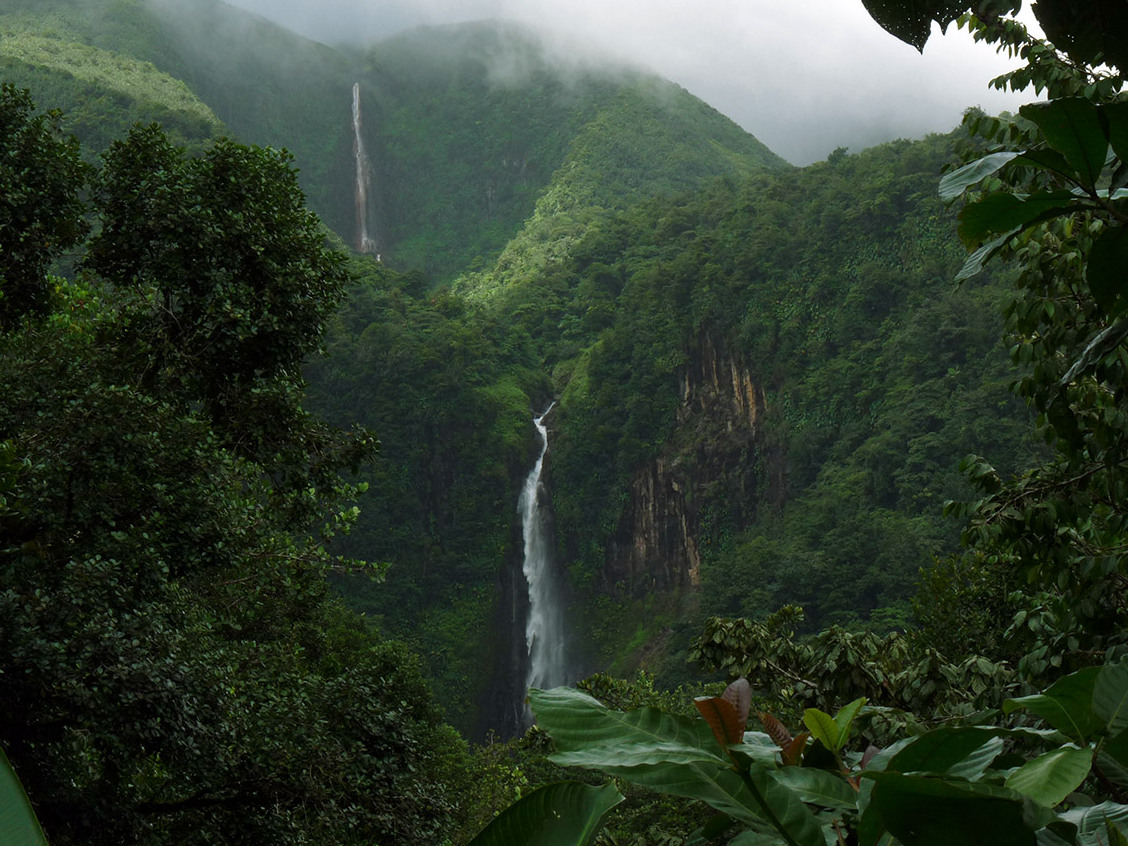
The Three Carbet Falls of Guadeloupe, nestled in the lush Basse-Terre region, are not just stunning waterfalls; they encapsulate a rich tapestry of history, culture, and natural beauty. Towering at over 110 meters for the first two and a modest 20 meters for the third, their grandeur has captivated visitors since the era of Christopher Columbus, who documented them in 1493. He noted their impressive height as he sailed the Caribbean, which led him to anchor in search of fresh water. This historical account highlights the significance of the falls, not only as a natural wonder but also as a landmark that has guided explorers for centuries.
As you approach the Carbet Falls, you are greeted by the Guadeloupe National Park, a UNESCO-protected site home to diverse flora and fauna. The park's rich biodiversity is a testament to the island's volcanic origins, providing a stunning backdrop of lush greenery that complements the sparkling waters cascading down the cliffs. The first viewpoint offers an exhilarating panorama of the two tallest waterfalls, which flow majestically amid the thick jungle. The sight is often enhanced by vibrant rainbows that dance in the mist produced by the falls, creating a breathtaking visual experience.
The region’s architecture and art reflect its colonial past and vibrant Creole culture. While the Carbet Falls themselves are a natural spectacle, nearby towns feature traditional Creole houses, characterized by their bright colors and wooden balconies that evoke the island's Caribbean heritage. The local art scene thrives in the markets, where artisans showcase handcrafted goods inspired by the natural beauty around them, ranging from vibrant paintings to intricate wood carvings. Visitors can explore these artistic treasures in nearby towns like Capesterre-Belle-Eau, where local galleries often display works that pay homage to the falls and surrounding landscapes.
The local culture is deeply intertwined with nature, where festivals celebrate both heritage and seasonal changes. One of the highlights is the Fête de la Gastronomie, usually held in late September, where local chefs and food enthusiasts come together to showcase Guadeloupe's culinary diversity. Traditional dishes like bokits (fried dough filled with various ingredients) and colombo (a fragrant curry dish) are often featured, alongside refreshing local beverages such as ti'punch, made with rum, lime, and sugarcane syrup. These culinary delights reflect the island's multicultural influences, including African, Indian, and European traditions.
As you explore the area, don’t miss the lesser-known curiosities that add to the allure of the Carbet Falls. For instance, many visitors are unaware that the falls are home to an array of unique wildlife, including rare bird species such as the Jacobin Cuckoo and the Guadeloupe Woodpecker. The falls also create a microclimate, supporting diverse plant life that thrives in the moist environment. The sound of the water crashing against the rocks can be heard from miles away, creating a serene ambiance that invites contemplation and connection with nature.
The best time to visit the Three Carbet Falls is during the dry season, from December to April, when the weather is more favorable for hiking and outdoor activities. Early mornings are particularly enchanting, as the sunlight filters through the trees, illuminating the falls and creating a magical atmosphere. Be sure to wear appropriate footwear, as the trails can be steep and slippery. A camera is essential; the views are simply too stunning to miss.
For those looking to explore beyond the falls, consider venturing to La Soufrière, the active volcano that dominates the landscape of Basse-Terre. The hike to the summit offers breathtaking views and an opportunity to witness the island’s volcanic activity up close.
In summary, the Three Carbet Falls not only showcase the raw beauty of Guadeloupe but serve as a reminder of the island's rich history and vibrant culture. From the breathtaking views to the local gastronomy and festivals, there is a depth to this natural wonder that invites exploration and appreciation. Use the Secret World app to craft a personalized itinerary for your visit to Capesterre-Belle-Eau.
