



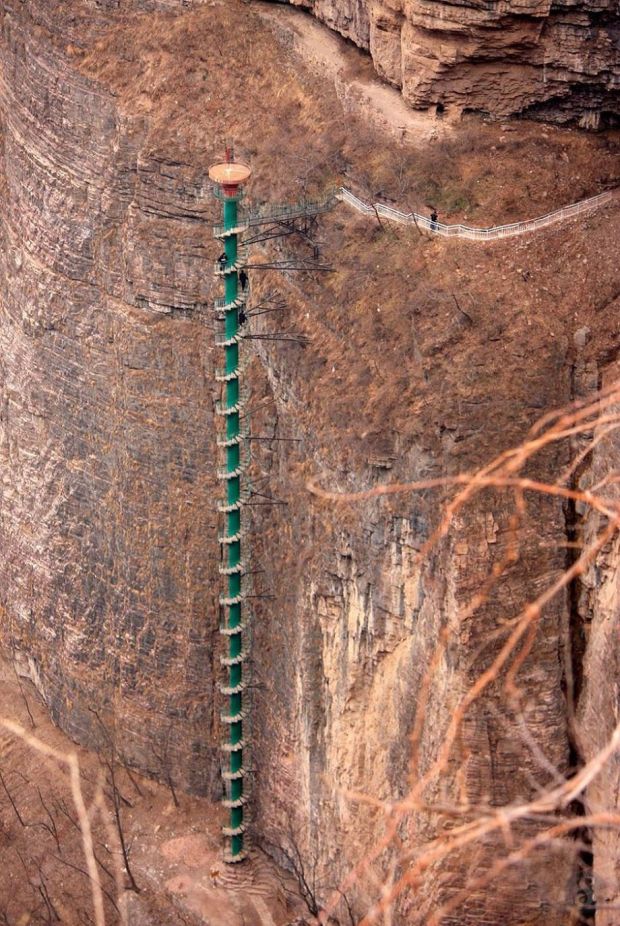
In the heart of China's Taihang Mountains, an architectural marvel clings to the rocky façade—a 300-foot spiral staircase, a testament to human ingenuity and resilience. This dizzying ascent offers not just a physical challenge but a journey through time, revealing the layers of history, culture, and nature that have shaped this spectacular region.
The Taihang Mountains, stretching across several provinces in northern China, have been a natural barrier and a source of inspiration for centuries. These mountains, known as the "backbone" of northern China, have witnessed the rise and fall of dynasties, serving as a formidable defense line and a place of refuge. The staircase, though a modern addition, is built into these ancient rocks that have stories etched into their layers. It stands as a symbol of accessibility, a bridge between the past and the present, inviting travelers to experience the raw beauty and historic significance of this landscape.
The architectural design of the spiral staircase is a marvel in itself. Constructed with robust steel that twists elegantly up the mountain wall, it seamlessly blends modern engineering with the natural curves of the mountainside. This contemporary structure echoes the traditional Chinese appreciation for harmony between human creations and nature. The staircase not only offers a unique vantage point for breathtaking views but also a striking contrast to the ancient silhouettes of the Taihang range.
As you ascend, the artistry of the environment reveals itself. The staircase is strategically placed to offer glimpses of the rich flora and fauna that thrive in this region. The seasonal changes paint the mountains in vibrant hues, providing a living canvas that shifts with each visit. The interplay of shadow and light on the rocky surfaces creates a dynamic artwork that is ever-changing with the time of day and weather.
Beyond its architectural allure, the Taihang region is steeped in cultural traditions that are celebrated throughout the year. Local festivals, such as the Lantern Festival and the Dragon Boat Festival, bring the mountains to life with vibrant displays of color, sound, and movement. These events echo the deep cultural roots of the area, offering visitors a chance to partake in age-old customs and experience the warmth of the local community.
The gastronomy of Ankang and its surrounding areas is a delightful exploration of flavors that reflect the region's agricultural bounty. The local cuisine is characterized by hearty, flavorful dishes that make use of the abundant produce found in the mountainous terrain. A visit to this area would be incomplete without trying Qinling roast lamb, a tender and aromatic specialty that embodies the rustic charm of the region's culinary tradition. Pair it with locally brewed rice wine, known for its smooth finish and subtle sweetness, to complete the gastronomic experience.
While the staircase and its panoramic views are the main draw, there are lesser-known curiosities that add depth to any visit. The mountains are home to a network of ancient paths and hidden caves, some of which have been used by monks and hermits for meditation. These secluded spots offer a serene escape from the bustling tourist spots, providing a window into the spiritual life that has long been associated with this region.
For those planning a visit, the best time to explore the Taihang Mountains is during the spring or autumn months. The weather is mild, and the natural beauty of the region is at its peak. Early mornings or late afternoons are ideal for climbing the staircase, as the soft light enhances the dramatic landscapes and offers a more comfortable climb. Be sure to wear sturdy footwear and bring plenty of water, as the ascent can be quite demanding.
In the Taihang Mountains, every step up the spiral staircase is a step back in time, a chance to immerse oneself in the natural beauty and rich history of this remarkable region. Whether drawn by the thrill of the climb, the allure of the landscapes, or the pull of ancient traditions, visitors will find themselves enveloped in the timeless spirit of these mountains.
