



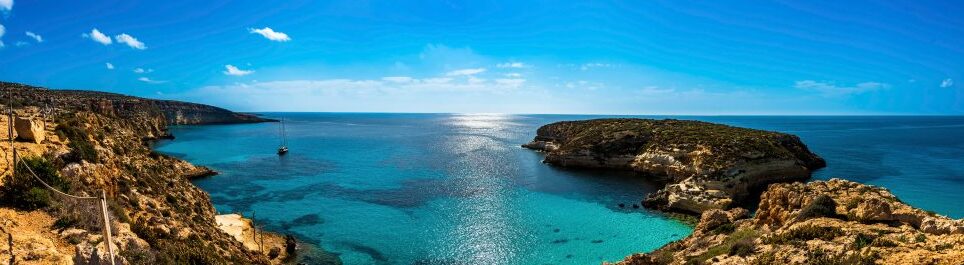
Nestled off the southern coast of Lampedusa, Italy's southernmost island, Rabbit Beach is a captivating blend of untouched beauty and rich history. Though its name suggests otherwise, you won't find rabbits here; instead, you'll discover a jewel of the Mediterranean. This secluded nature reserve, accessible only by boat, consistently ranks among the world's top beaches, celebrated not just for its pristine waters and fine sands, but also for the rich tapestry of history and culture that surrounds it.
The history of Rabbit Beach and its island home, Lampedusa, is as intriguing as the azure waters that lap its shores. From the ancient Greeks and Romans to the Arab and Norman conquests, Lampedusa has been a crossroads of civilizations. The island's strategic location in the Mediterranean made it a coveted possession throughout history. Its name is believed to derive from the Arabic "Al-Madusa," meaning "the island of Medusa," a nod to the mythological figure and the island's storied past. In more recent history, Lampedusa gained attention during World War II as an Italian military base, and today, it stands as one of Italy's finest natural preserves.
While Rabbit Beach itself is unspoiled by human construction, Lampedusa offers a glimpse into understated Mediterranean architecture. The island's buildings are characterized by their simple, whitewashed facades and flat roofs, designed to reflect the intense sun and maximize the collection of scarce rainwater. This architectural style reflects the practical needs of island life while offering a canvas for colorful local artwork. The island's churches, such as the Sanctuary of Our Lady of Porto Salvo, provide a contrast with their ornate interiors, showcasing religious art that speaks to Lampedusa's deep-rooted Catholic traditions.
Culturally, Lampedusa is a melting pot of Mediterranean traditions, influenced by the myriad cultures that have left their mark over centuries. The island's festivals are lively affairs, with the Festa di San Bartolomeo being a highlight for locals and visitors alike. Held every August, this festival honors the island's patron saint with processions, music, and feasting. The celebrations bring to life the island's rich cultural tapestry and offer a unique opportunity to immerse oneself in local customs.
No visit to Lampedusa is complete without indulging in its gastronomy, a delicious fusion of Sicilian flavors and maritime bounty. Fresh seafood reigns supreme, with dishes like spaghetti ai ricci di mare (spaghetti with sea urchins) and grigliata di pesce (grilled fish platter) showcasing the day's catch. The island's unique location means that its cuisine is peppered with spices and ingredients brought over centuries by traders and conquerors, offering a distinct taste of the Mediterranean. Don't miss sampling caponata, a sweet and sour eggplant dish, or indulging in a refreshing granita, perfect for the island's warm climate.
Beyond its famed beach and cuisine, Lampedusa holds lesser-known curiosities that enrich its allure. The island is a critical nesting site for the endangered loggerhead sea turtles (Caretta caretta), and Rabbit Beach plays a vital role in their conservation. Every summer, volunteers and marine biologists work tirelessly to protect the turtles' nests, ensuring the next generation has a chance to thrive. This conservation effort adds a layer of ecological significance to the beach's natural beauty.
For those planning a visit, the best time to experience Rabbit Beach is between late spring and early autumn, when the weather is warm and the sea is inviting. The journey to the beach itself is part of the adventure. Visitors often take a brief boat ride from Lampedusa's main port, a trip that offers stunning views of the island's rugged coastline. It's advisable to start your journey early in the morning to enjoy the beach at its most serene and avoid the midday sun.
Rabbit Beach is not just a visual feast but a sensory experience. As you step onto the soft sands, keep an eye out for the island's unique flora and fauna, including native species that call this reserve home. And while the beach is undoubtedly the star, the surrounding cliffs offer hiking opportunities with panoramic views of the Mediterranean, rewarding those who venture beyond the shore.
In essence, Rabbit Beach is more than just a beautiful destination; it is a testament to nature's splendor, historical depth, and cultural richness. Each visit is not only a chance to bask in its beauty but also an invitation to explore the myriad stories that make this corner of the world truly special.
