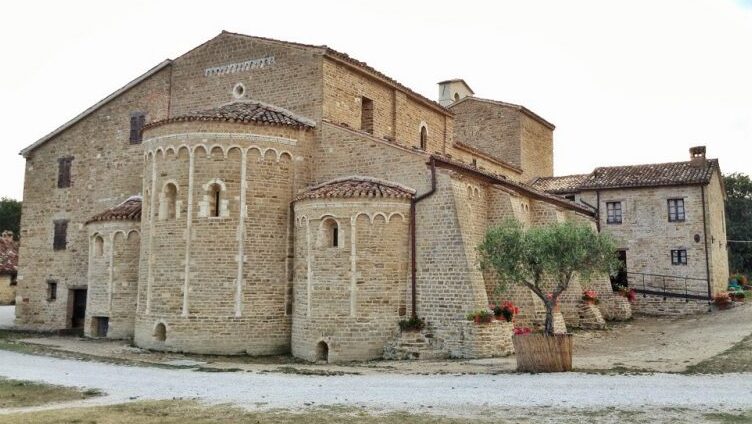


Nestled in the picturesque hills of Apiro, the Abbey of Sant'Urbano all'Esinante stands as a testament to centuries of religious devotion and architectural beauty. This Benedictine Abbey, dedicated to Saint Urban, the patron saint of Apiro, boasts a rich history that traces back to just before the year 1000, marking it as one of the significant ecclesiastical sites in the region.
### History and Origins
The Abbey's origins are steeped in the turbulent history of medieval Italy. Founded in a time when the power of the Church often clashed with local governance, the Abbey quickly became a dominant force in the San Clemente Valley. Its influence extended beyond spiritual realms, intertwining deeply with the civil life of the area. This prominence, however, led to constant tensions with the Municipality of Apiro. By the 13th century, these conflicts reached a peak, resulting in a devastating fire that partially destroyed the church.
Despite this setback, the Abbey was meticulously renovated, transforming into a vital resting place for pilgrims traversing the medieval roads. The arrival of Napoleon Bonaparte in the early 19th century marked a new chapter; in 1810, the Abbey was confiscated by the state, later falling into private hands and converting into a farm. It wasn't until 1978 that the Abbey returned to public ownership, being donated to the Municipality of Apiro, which has since worked to preserve its historical significance.
### Art and Architecture
The architectural style of the Abbey is a beautiful blend of Romanesque and Gothic elements, showcasing the evolution of ecclesiastical architecture in Italy. Upon entering, visitors are greeted by an intriguing layout that separates the secular and sacred spaces. The church's interior is divided into two distinct areas: the laity section and the elevated area dedicated to religious functions, connected by a small door that invites exploration.
The first section, accessible by descending a few steps, features impressive columns and intricately sculpted capitals, embodying the craftsmanship of the era. As visitors ascend to the elevated sanctuary, they are enveloped in a more solemn atmosphere, adorned with religious iconography that speaks to centuries of devotion. Hidden within the Abbey is a crypt that adds an air of mystique, where the echoes of prayers uttered by generations can still be felt.
### Local Culture and Traditions
The Abbey of Sant'Urbano is not merely a historical site; it is a vibrant part of local culture. The community of Apiro holds various festivals throughout the year, many of which are intertwined with the Abbey's heritage. One of the most notable is the Feast of Saint Urban, celebrated in May. The festival attracts locals and visitors alike, featuring traditional music, dances, and a procession that honors the saint with offerings and prayers.
This spiritual connection is palpable, with many locals still considering the Abbey a significant place of worship and reflection. The blend of history and local customs creates a unique atmosphere that is both welcoming and reverent.
### Gastronomy
No visit to Apiro would be complete without indulging in the region's culinary delights. The area is renowned for its Verdicchio wine, a crisp white wine that pairs perfectly with local dishes. One must-try delicacy is the crescia, a type of flatbread, often filled with local cheeses or cured meats, best enjoyed during the feast days.
Other local specialties include tagliatelle al ragù, a hearty pasta dish that embodies the flavors of the region, and porchetta, a succulent roast pork that is a staple at community celebrations. Food in Apiro is not just sustenance but a cultural experience that connects visitors to the land and its people.
### Lesser-Known Curiosities
While the Abbey itself is a focal point of interest, there are lesser-known anecdotes that enrich its story. For instance, the crypt is said to house relics from the Abbey's early days, rumored to be connected to Saint Urban himself. Furthermore, the contrasting architectural styles within the Abbey reflect the changes in religious practices and artistic movements over the centuries, making it a living chronicle of ecclesiastical evolution.
Another curiosity is the small door connecting the laity section to the sanctuary. This door symbolizes the transition from the secular to the sacred, a reminder of the Abbey's function as a bridge between the everyday life of the townspeople and their spiritual aspirations.
### Practical Visitor Information
The best time to visit the Abbey of Sant'Urbano is during the spring and early autumn months when the weather is mild, and the surrounding countryside is in full bloom. Visitors are encouraged to explore not only the Abbey but also the stunning natural landscapes that frame it.
When planning your visit, consider bringing a camera to capture the breathtaking views of the Esinante Valley. Be sure to spend some time in the local cafes and restaurants, soaking in the flavors and the warm hospitality of Apiro’s residents.
### Conclusion
The Abbey of Sant'Urbano is a captivating blend of history, art, culture, and gastronomy, offering a glimpse into the soul of Apiro. As you wander through its hallowed halls, you will find that every stone tells a story, and every shadow holds a memory. For a personalized itinerary that ensures you experience the best of Apiro, consider using the Secret World app.