
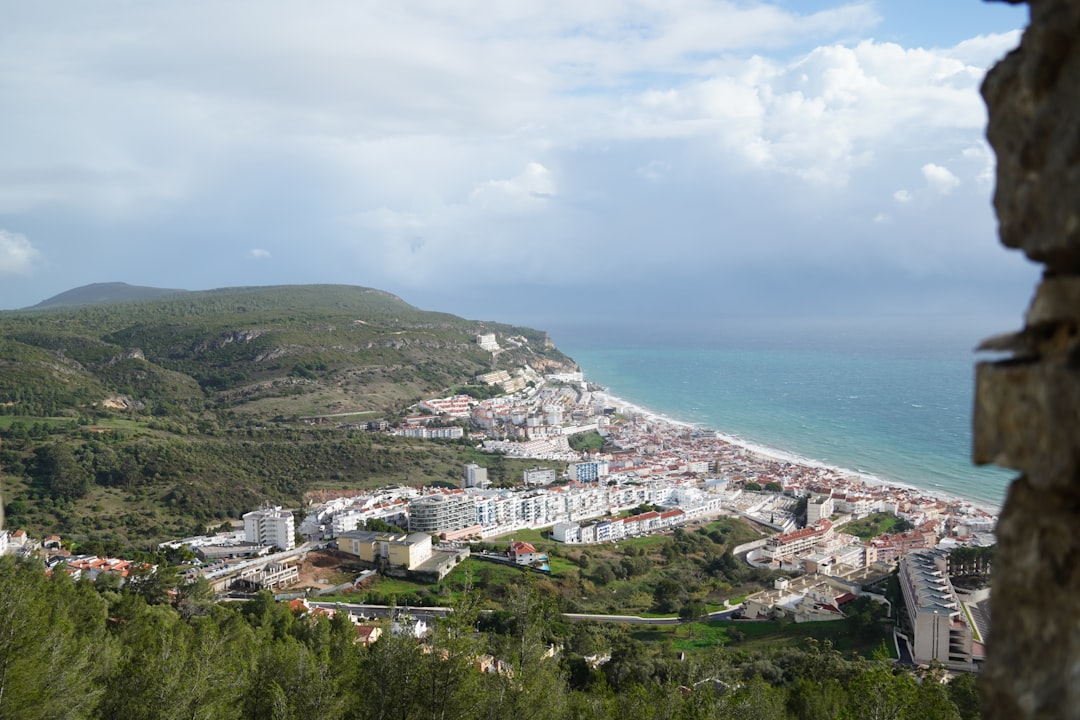

Under your feet, through transparent glass panels, the village of Agulo appears like a miniature glued to the coast: orange roofs, narrow streets, the sea embracing it on three sides. The Mirador de Abrante, clinging to the basalt wall above Agulo in the north of La Gomera, is a cantilevered structure that extends into the void at about 600 meters above sea level, with a viewing platform partially equipped with walkable glass flooring. It is not a place for those who suffer from vertigo — or rather, it is exactly the right place for those who want to challenge it.
The structure is reachable by following the road that climbs from Agulo towards the interior of the island, following the well-marked signs along the roadway. Access to the viewpoint requires the payment of an entrance ticket (the price is around 5 euros for adults, with reductions for children and Canary residents), a modest amount considering the experience it offers. Inside there is also a bar-restaurant, making the place suitable for a longer stop.
What you can see: Agulo, the Atlantic and the Teide
The panorama that opens from the platform is one of the most layered in the Canary Islands. In the foreground, directly beneath the glass floor, the village of Agulo — one of the most characteristic of La Gomera — shows its almost circular layout, with the parish church at the center and pastel-colored houses arranged like in a nativity scene. The aerial view reveals proportions that are impossible to grasp from below: it is clear how compact the village is, almost suspended between the mountain and the sea.
In the background, beyond the blue strip of the Atlantic Ocean, the silhouette of Tenerife stands out clearly, and in favorable visibility conditions — frequent on clear mornings — the cone of the Teide emerges above the clouds that often envelop the base of the island. The volcano, with its 3,715 meters, is the highest point in Spain and its presence on the horizon transforms the landscape into something that seems painted. The distance between La Gomera and Tenerife is about 30 kilometers, enough to give depth to the scene without making the volcano unrecognizable.
The colors that change with the light
The Mirador de Abrante changes appearance depending on the hour. In the early morning, when the light is still slanting, the basalt walls of the cliff below the platform take on warm, almost golden tones, and the long shadows shape the agricultural terraces that descend towards the sea. Agulo appears sharp, the colors of the roofs contrast with the intense green of the subtropical vegetation that covers the slopes.
In the late afternoon, especially in the hours leading up to sunset, the light shifts towards orange and pink, tinting the Atlantic with metallic reflections. The Teide, backlit, becomes a dark silhouette against a sky that can become spectacular. However, it is good to know that the north of La Gomera is subject to clouds and fog, especially in the afternoon: the morning remains the most reliable time to find full visibility.
How to organize the visit
Those arriving in La Gomera by ferry from Los Cristianos (Tenerife) — a crossing of about 50 minutes with fast boats — can reach Agulo and the Mirador de Abrante by car in about 30-40 minutes from the capital San Sebastián de La Gomera. The road is scenic but has narrow bends: it is advisable to drive carefully, especially if renting a large vehicle.
The average visit time at the platform is around 30-45 minutes, but those who stop at the bar or bring a packed lunch can easily stay longer. The place is never as crowded as the larger viewpoints in the more touristy Canary Islands, which contributes to the quality of the experience. It is advisable to arrive in the early morning, between 9 and 11, to combine good light, fresh air, and fewer visitors. Avoid days with strong winds: the cantilevered platform amplifies gusts, making the stop less enjoyable.
Why the trip to La Gomera is worth it
La Gomera is often described as the island for those who want to escape the mass tourism of the Canaries, and the Mirador de Abrante reflects this characteristic: it is a modern and well-designed structure, but set in a context that retains a human scale. Below you, Agulo continues its daily life — the fishermen, the weekly market, the children coming out of school — indifferent to the gaze of visitors observing it from above.
The combination of the glass floor, the vertigo of the drop, the miniature village, and the Teide on the horizon creates an overlap of scales that is hard to find elsewhere. You don't need to be passionate about geology or local history to be impressed: just lean on the railing, look down through the glass, and let the perspective do its work.


