



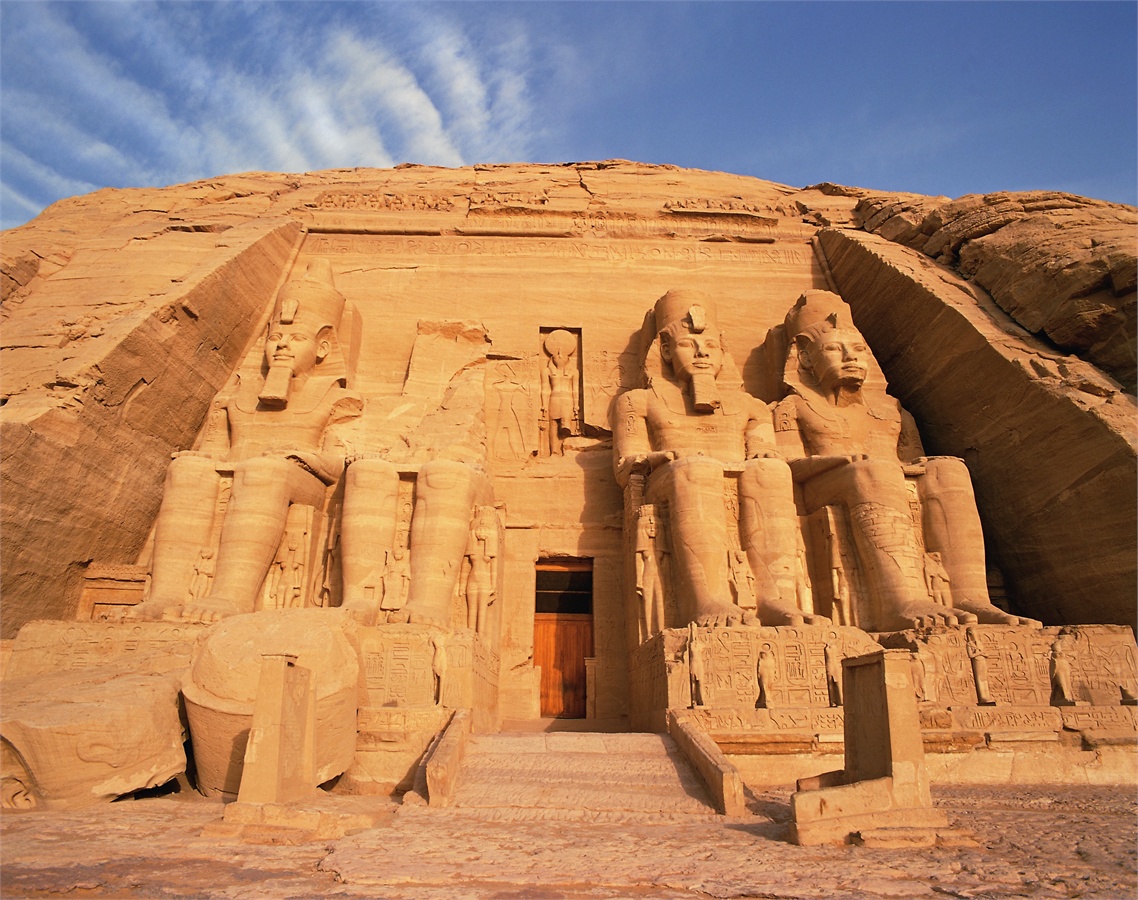
On the edge of the great Lake Nasser, the imposing temples of Abu Simbel rise majestically from the desert landscape, a testament to the grandeur of ancient Egyptian civilization. Carved directly into the mountainside, these temples are an architectural marvel and a symbol of the power of Pharaoh Ramses II.

History and Origins
The story of Abu Simbel begins in the 13th century BC, during the reign of Ramses II, one of Egypt's most celebrated pharaohs. Commissioned to commemorate his victory at the Battle of Kadesh and to honor the gods, the temples were completed around 1264 BC. The grandeur of this site was not merely for religious purposes but also served as a political statement, showcasing Ramses II’s might to both his subjects and potential enemies.
Discovered by the Swiss explorer Johann Ludwig Burckhardt in 1813, the temples were largely hidden beneath the sands of time. However, it wasn't until the 1960s that a more significant threat emerged. The construction of the Aswan High Dam resulted in the creation of Lake Nasser, which threatened to submerge these ancient wonders. In a remarkable feat of engineering, the temples were relocated to higher ground, reassembled stone by stone, ensuring their preservation for future generations.
Art and Architecture
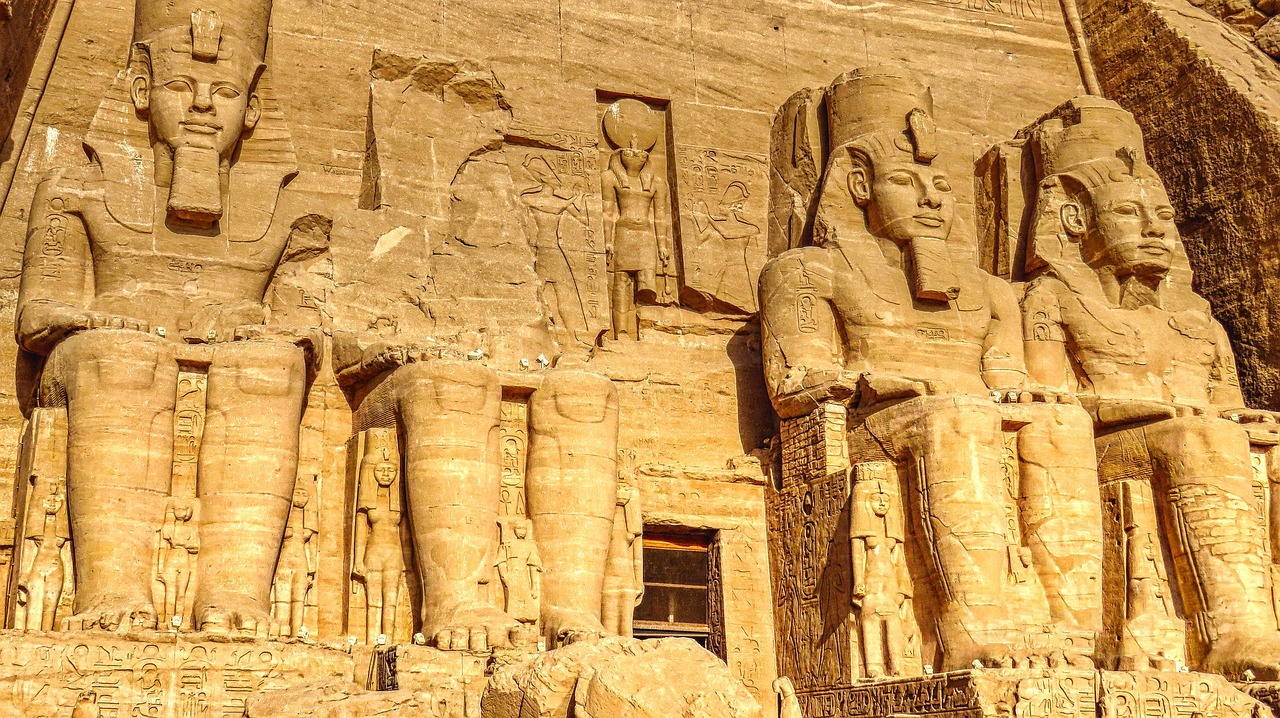
Abu Simbel consists of two temples, the larger dedicated to Ramses II and the smaller to his beloved wife, Nefertari. The Great Temple, with its four colossal statues of Ramses II, each standing over 20 meters tall, is a striking example of New Kingdom architecture. These statues, with their serene expressions and intricate carvings, dominate the entrance, symbolizing the pharaoh's divine status and earthly power.
Inside, the temple is adorned with stunning bas-reliefs depicting scenes from Ramses’ military campaigns, his divine interactions, and religious rituals. The hypostyle hall, with its towering columns, leads to the inner sanctuary, where a statue of the seated Ramses II is illuminated by the sun's rays during the equinoxes, a brilliant display of ancient Egyptian astronomy and spirituality.
Local Culture and Traditions
The area surrounding Abu Simbel is rich in Nubian culture, with its own distinct customs and traditions. The Nubians, known for their vibrant music and colorful handicrafts, celebrate their heritage through festivals and communal gatherings. One of the most notable events is the Nubian Festival, which showcases traditional dances, music, and crafts, drawing visitors from all over the world to experience the warmth and hospitality of the Nubian people.
Visitors will also find that local customs are deeply intertwined with the history of Abu Simbel. Many Nubians regard the temples as sacred, often participating in rituals that pay homage to their ancestors and the ancient gods represented in the carvings.
Gastronomy
No visit to Abu Simbel is complete without indulging in the local cuisine. Nubian food is characterized by its use of spices, fresh vegetables, and unique cooking techniques. Dishes such as fatta, a savory rice dish layered with meat and garlic, and koshari, a mix of rice, lentils, and pasta topped with tomato sauce, are must-tries.
For those looking to quench their thirst, sugarcane juice is a refreshing local beverage, while traditional mint tea offers a taste of Nubian hospitality. Dining at local restaurants provides an authentic experience, often accompanied by the sounds of traditional Nubian music.
Lesser-Known Curiosities
Beyond the grandeur of the temples, there are fascinating details often overlooked by visitors. For instance, the temples were originally designed to be accessible only by boat, a feature emblematic of the Nile's significance in ancient Egyptian culture. Additionally, the alignment of the Great Temple is remarkable; twice a year, on February 22 and October 22, the sun illuminates the inner sanctuary, a phenomenon that has intrigued historians and archaeologists alike.
Another interesting aspect is the intricate carvings that depict Ramses II with his children, emphasizing his role as a family man, which contrasts with the fierce warrior image typically associated with him.
Practical Visitor Information
For the best experience, plan your visit to Abu Simbel in the cooler months, ideally between October and April. Day trips from Aswan are common, with flights available for those looking to maximize their time.
When exploring the temples, take your time to absorb the intricate details of the carvings and the sheer scale of the structures. Be sure to bring a camera, but remember to respect the site by not using flash photography indoors.
To enhance your visit, consider using the Secret World app to create a personalized itinerary that includes all the hidden gems and must-see attractions in the area.
