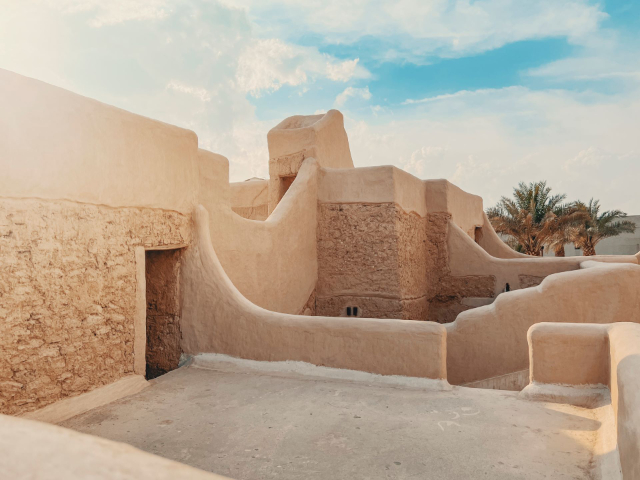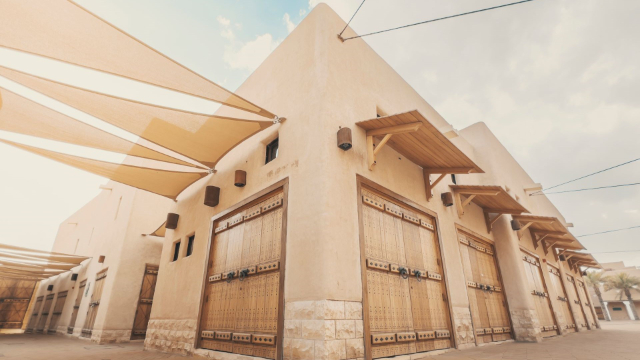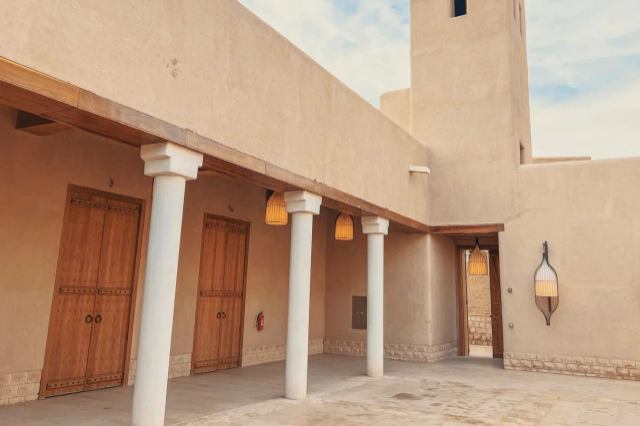

Located about one kilometer southwest of the Government Palace, in the vibrant heart of Riyadh, Addoho is the last remaining historic district that has preserved the traditional Najdi architecture intact. Built over 200 years ago, the neighborhood tells the story of a civilization that lived in perfect harmony with the desert.
A Dive into Tradition Addoho rises near Wadi Hanifa, surrounded by lush palm oases. Here, historic houses were built using local materials: stones for foundations, and mud and plaster for walls — a building technique perfectly adapted to the harsh climate. One of the most unique features you’ll notice are the rounded walls at pedestrian intersections, designed both for aesthetics and practical movement within the narrow alleys. The decorations are the hallmark of Najdi homes: door and window frames adorned with plaster triangles, perforations, and geometric patterns, symbolizing the deep connection between the people and their land.
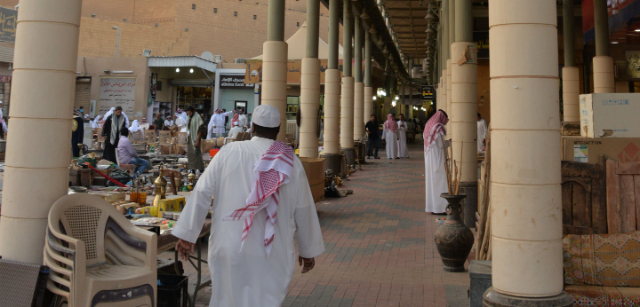
The Origin of the Name In the 1950s, Addoho was located at the very center of Riyadh before the city expanded northwards. The name “Addoho” comes from the Arabic word meaning "crowded and lively", reflecting the energetic life of the district, which was home to both private properties and public spaces like stone mills and grain pestles, as grain was a staple of Riyadh's traditional cuisine.
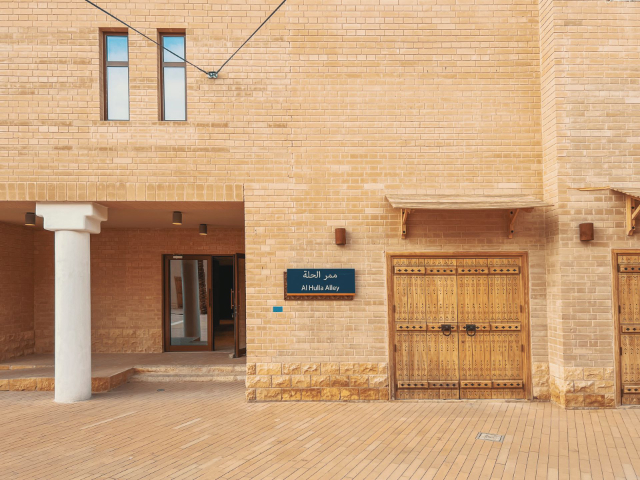
Addoho District Today Today, following a careful project of restoration and revitalization, Addoho stands as a precious living memory of Riyadh’s past. Officially reopened in March 2023, the district now includes a mosque, traditional houses, a typical restaurant, and several cafés and craft shops, preserving the authentic spirit of old Riyadh.