



In the heart of the Sahara Desert, where the golden sands stretch endlessly under the azure sky, lies Agadez, a city steeped in the mystique of the Tuareg culture. Founded before the 14th century, Agadez has long served as a crossroads of cultures, a historical oasis that beckons travelers with its rich tapestry of history, art, and tradition.
The origins of Agadez trace back to its establishment as a key center on the trans-Saharan trade routes. This strategic location facilitated a vibrant exchange between North and West Africa, making it a melting pot of influences. The city saw its golden era during the rule of the Songhai Empire in the 15th and 16th centuries, when it became an important Islamic center. The influence of Islam is still evident today, particularly in the city's architecture and cultural practices. The Agadez Sultanate, with its lineage dating back centuries, continues to play a significant role in the city's cultural and political life.
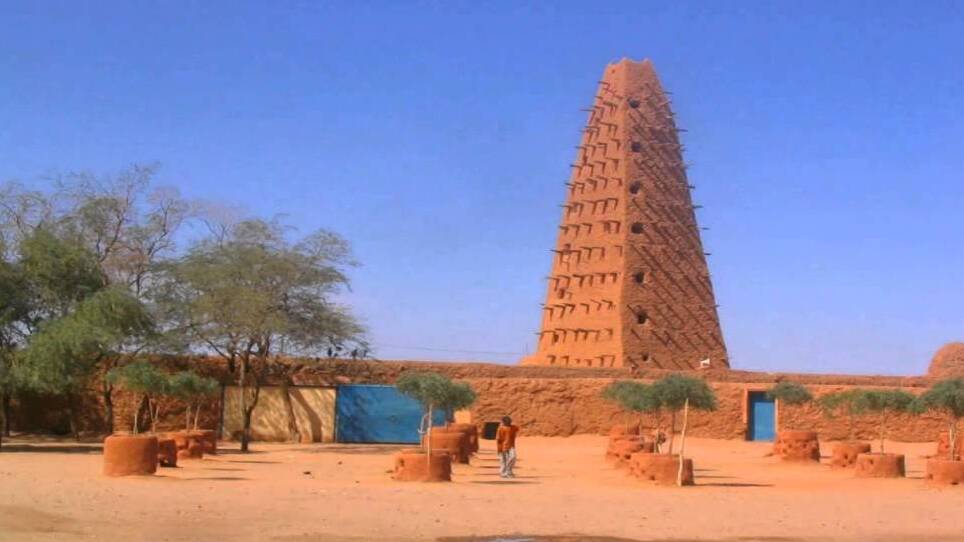
As you wander through Agadez, you'll be captivated by its unique architecture, particularly the iconic Grande Mosquée d'Agadez. This mosque, with its towering minaret, is the tallest adobe structure in the world. Built in 1515, it stands as a testament to the city’s architectural ingenuity. The mosque is constructed from mudbrick and timber, embodying a blend of traditional Sudano-Sahelian and Islamic styles. The intricate geometric patterns and pointed arches reflect the skilled craftsmanship of local artisans. Beyond the mosque, the city's old quarter is a labyrinth of narrow streets lined with earthen buildings that seem to emerge naturally from the desert landscape.
The cultural fabric of Agadez is woven with the vibrant threads of Tuareg tradition. Known as the "Blue People" for their indigo-dyed garments, the Tuareg are semi-nomadic Berber people with a rich oral history and a strong sense of identity. One of the most significant cultural events is the Cure Salée, or "Festival of the Nomads," held each September. This gathering in nearby Ingall celebrates the end of the rainy season, bringing together Tuareg, Fulani, and Wodaabe communities for days of music, dance, camel races, and traditional rituals. It’s a spectacle of color and sound, offering a rare glimpse into the deep-rooted traditions of the region.
No exploration of Agadez would be complete without savoring its gastronomy. The local cuisine is a reflection of the city’s diverse influences. Staple foods include millet and sorghum, often prepared as porridge or flatbread. Taguella, a type of flatbread traditionally baked in the sand, is a must-try. Meals are typically accompanied by meat stews and vegetable sauces, with lamb and camel meat being popular choices. To complete your culinary journey, sip on a cup of Tuareg tea, a ceremonial drink prepared with mint leaves and sugar, symbolizing hospitality and friendship.
For those seeking the lesser-known facets of Agadez, delve into its intriguing curiosities. The city is home to the Agadez Cross, a traditional Tuareg symbol believed to have protective powers. Crafted from silver, these crosses are not only jewelry but also carry deep cultural significance, often passed down through generations. Additionally, the region around Agadez is rich in uranium deposits, a resource that has played a crucial role in the local economy and international geopolitics.
When planning a visit to Agadez, timing is key. The cooler months from November to February are ideal for exploring the city and its surroundings, as temperatures can soar during the summer. While in Agadez, take the time to engage with the local community. Learning a few phrases in Tamasheq, the Tuareg language, can open doors to deeper connections and understanding. Be sure to respect local customs, especially during prayer times, and dress modestly to honor the cultural norms.
Agadez is more than just a city in the desert; it is a living museum of history and culture, an enduring testament to the resilience and creativity of its people. Whether you are drawn by its striking architecture, its vibrant traditions, or its unique position in the world, Agadez offers an adventure like no other, a journey into the heart of the Sahara and the soul of the Tuareg.
