



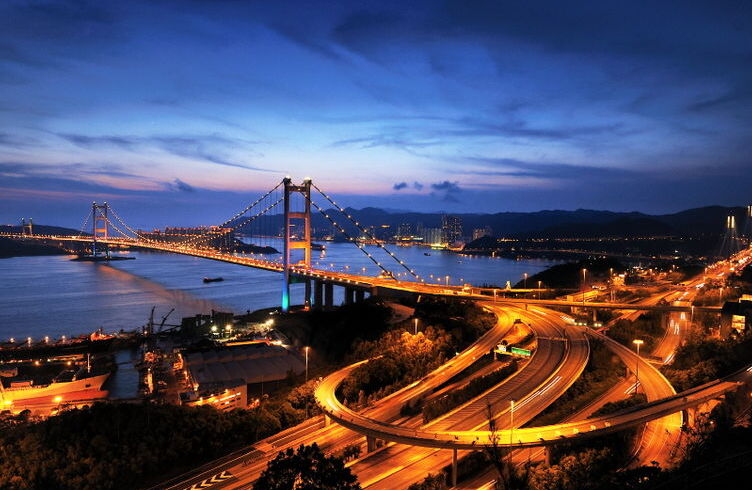
Akashi Bridge stands not only as an engineering feat but also as a monument of resilience and tragedy. Located in Zhenjiang, China, this breathtaking suspension bridge spans 3,911 meters, making it the longest central span of any suspension bridge in the world. Its story begins with a somber chapter in history that echoes the struggles of its people.
In 1955, two ferries tragically sank in the Akashi Strait, resulting in the loss of 168 lives. This catastrophic event highlighted the perilous nature of the waterway, stirring public outrage and prompting the Japanese government to consider building a bridge that would ensure safer passage across these treacherous waters. However, it was not until 1988 that the construction officially began, and it finally opened to traffic in 1995. The bridge's design was a collaboration of engineering minds, led by Yasuo Matsumoto, who envisioned a structure that would not only serve a functional purpose but also stand as an enduring symbol of hope.
The architectural style of Akashi Bridge is quintessentially modernist, characterized by its sleek lines and robust engineering. The bridge features two towering pylons that rise majestically above the strait, their Y-shaped design allowing for optimal stability against strong winds and seismic activity. The bridge's color, a subtle shade of blue, harmonizes beautifully with the surrounding landscape, creating a stunning visual contrast against the sky and the waters below. As you cross the bridge, you're greeted by panoramic views of both the Akashi Strait and the nearby Seto Inland Sea, a sight that is nothing short of mesmerizing.
Beyond its architectural significance, Akashi Bridge is intertwined with the culture and traditions of the local communities in Zhenjiang. The bridge has become a popular site for photographers, tourists, and locals alike, symbolizing a connection that transcends mere geography. The region has a rich tapestry of traditions, with the annual Dragon Boat Festival celebrated nearby, where teams race alongside the waters that the bridge spans. This vibrant festival not only showcases the local culture but also emphasizes the community's connection to the water, a theme that resonates with the bridge's original purpose.
When exploring the gastronomy of Zhenjiang, one cannot overlook the local delicacies that have gained notoriety. The city is famous for its Zhenjiang vinegar, a unique and aromatic condiment that adds depth to various dishes. Try the sweet and sour spare ribs, a local favorite that pairs perfectly with the tangy vinegar. Additionally, don't miss out on stinky tofu, which, despite its pungent aroma, offers a rich and flavorful experience beloved by many in the area. For a sweet treat, indulge in Nanjing salted duck, a dish that reflects the culinary heritage of the Jiangsu province.
For those who love hidden gems, the Akashi Bridge offers a few lesser-known curiosities. One intriguing fact is that the bridge was designed to withstand earthquakes of significant magnitude, a necessary feature given Japan’s seismic activity. Moreover, the bridge is equipped with a state-of-the-art monitoring system that allows engineers to measure its structural integrity continuously. Another delightful detail is the legend that locals tell about the bridge: it is said that if you make a wish while crossing, it might just come true!
The best time to visit Akashi Bridge is during the spring and autumn months when the weather is mild, and the views are spectacular. Early mornings or late afternoons provide the most enchanting light for photography, casting a golden glow on the bridge and its surroundings. Visitors should take the time to stroll along the pedestrian pathways that allow for a closer view of the bridge's intricate designs and a chance to appreciate the stunning vistas.
As you plan your visit, consider downloading the Secret World app to create a personalized itinerary that includes not only Akashi Bridge but also other hidden gems in Zhenjiang.
