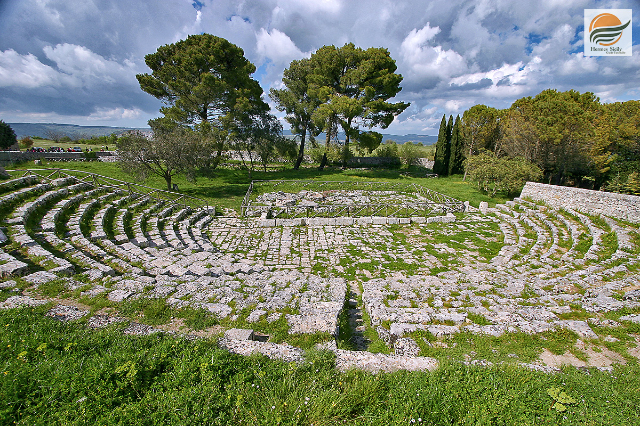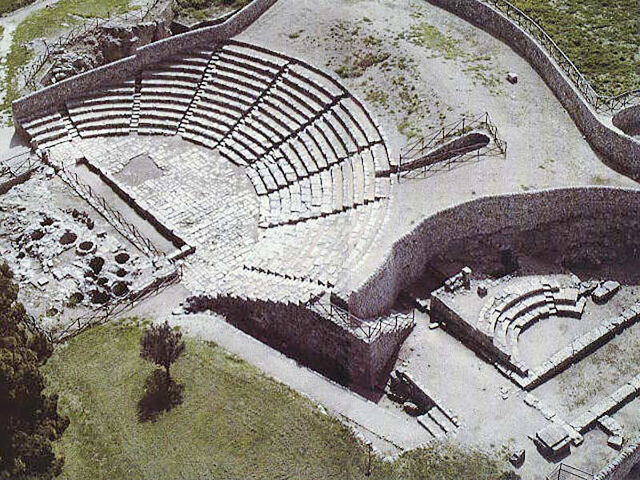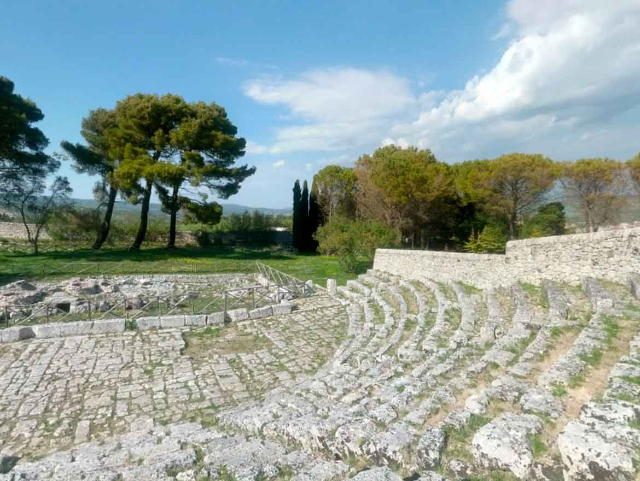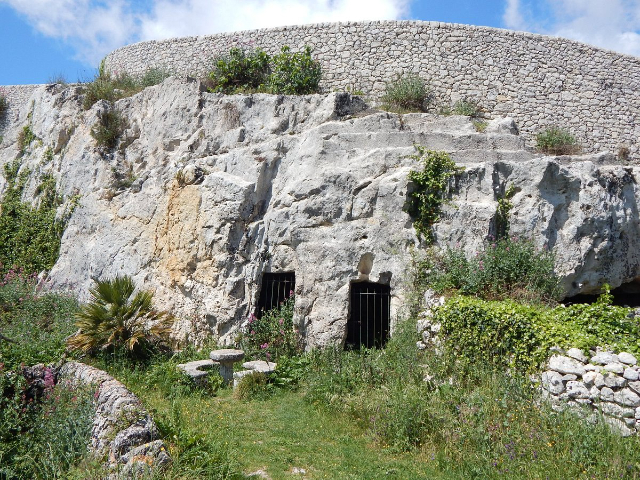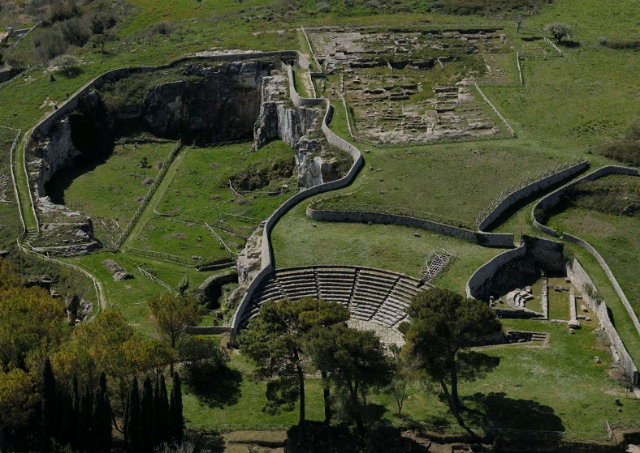

The archaeological area of Akrai is a fascinating place that tells the story and culture of the ancient Greek and Roman city. Located in Sicily, this area is rich in monuments and structures that testify to Akrai's importance and greatness over the centuries.One of the focal points of the area is the Greek theater, dating back to the 4th century BC. This well-preserved theater offered theatrical and musical performances to the inhabitants of Akrai. With its semicircular steps and majestic stone structure, the theater was a place of entertainment and gathering for the community. Even today, the theater is still used for plays and performances during summer events, offering a unique experience in a historic atmosphere.Next to the theater is the bouleuterion, a building that served as a meeting place for the Akrai senate, known as the "boulé." This place represented the political center of the city, where members of the senate met to discuss and make important decisions for the community. The bouleuterion is a covered structure, which housed a small semicircular orchestra and step-seats arranged in three wedges. This building demonstrates the importance of political participation in Akrai life.Ancient temples are another significant part of Akrai's archaeological area. Among them is the Temple of Aphrodite, dedicated to the goddess of love and beauty. This temple, though in ruins, still offers a fascinating sight with its columns and traces of its past majesty. Feral temples, dedicated to the cults of minor deities or local heroes, are also present in the area and contribute to the variety and richness of Akrai's religious tradition.In addition to these main monuments, there are also other interesting structures to explore, such as the latomie. Latomie are stone quarries carved into the rock, which were used for the extraction of building stones. Some of these latomie feature vertical walls and excavated floors, which served as dwellings or burials during the Byzantine period.The pine forest necropolis represents an important funerary site, where graves and buried monuments have been discovered. These remains offer a glimpse into the ritual and funerary practices of ancient Akrai.The archaeological area of Akrai is a place rich in history and charm. As you explore the temples, theater, bouleuterion and other structures, you can immerse yourself in the daily life and art of this ancient civilization. It is a unique experience that allows you to walk among the millennia-old ruins and imagine the grandeur and vibrancy of Akrai in its heyday. Observing the columns and architectural remains will give you insight into the skill and mastery of the ancient builders, while the latomies and necropolis will lead you to reflect on life and death in Akrai society.As you explore the archaeological area, you may also notice traces of the city's historical stratification. Greek and Roman influences are evident in the architecture and details of the structures, while signs of the Byzantine period show transformation and continuity over time.The atmosphere of the Akrai archaeological area is unique, allowing you to immerse yourself in history and better understand the evolution of ancient civilizations. It is a place that enchants archaeology lovers, the curious, and those who are fascinated by history and culture.Note that as you visit the area, respect the signs and restrictions to preserve and protect these important historical sites. Enjoy the magic of ancient Akrai and be transported back in time as you explore the wonders of this fascinating civilization.