



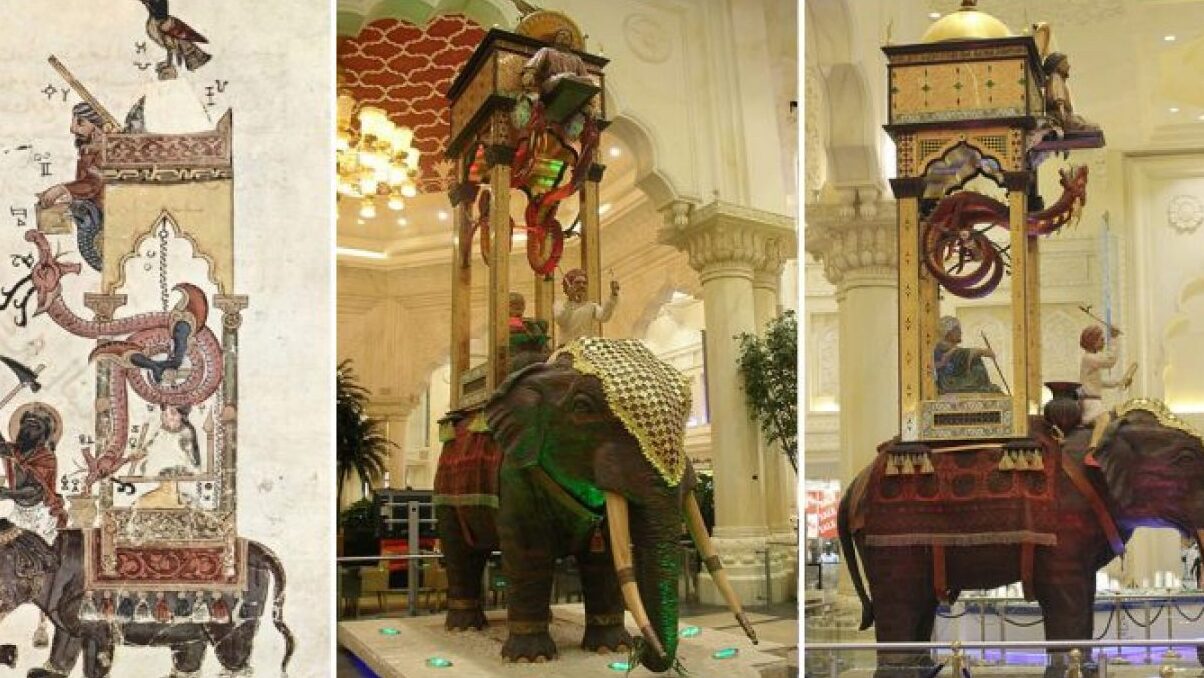
In the heart of Dubai, a city synonymous with innovation and luxury, stands a remarkable tribute to ancient ingenuity: Al-Jazari’s Elephant Clock. This 800-year-old marvel, a replica crafted to the specifications of a 13th-century manuscript, beckons visitors with its intricate design and historical significance, serving as a bridge between cultures and epochs.
History and Origins
The original Elephant Clock was designed by the eminent inventor Ismail al-Jazari, a 12th-century polymath from the region that is now Turkey. His work, documented in the book *The Book of Knowledge of Ingenious Mechanical Devices*, showcases the ingenuity of Islamic civilization in automata and clock-making. This clock exemplifies the fusion of various cultural influences, integrating Greek, Indian, Egyptian, Arabian, and Chinese elements into its design.
The clock itself is a masterful representation of timekeeping technology of its era. It employed a water-raising mechanism derived from ancient Greek innovations, cleverly animated by the use of flowing water, which powered the clock's movements. The elephant, an homage to Indian culture, stands as a central figure, flanked by a phoenix representing Egyptian mythology, and adorned with figures reminiscent of Arabian lore. The clock was not merely an instrument of time; it was a grand statement of the interconnectedness of civilizations.
Art and Architecture
Standing in the Ibn Battuta Mall, the replica of Al-Jazari’s Elephant Clock captivates with its stunning Islamic architectural style. The clock features intricate carvings and colorful motifs that are characteristic of Islamic artistry. The use of geometric patterns and calligraphy, along with detailed depictions of animals and figures, reflects the rich cultural tapestry of the Islamic Golden Age.
The clock is not just a functional timepiece; it is an artistic spectacle. Each hour, the elephant lifts its trunk, releasing a ball that drops into the mouth of a dragon, which subsequently signals the hour. This mechanical dance is a visual feast, showcasing the sophistication of medieval engineering while embodying the artistic spirit of its time.
Local Culture and Traditions
The influence of Al-Jazari’s work resonates deeply within the local culture of Dubai. The city is a melting pot of traditions, where customs from various cultures blend seamlessly. Festivals such as Eid al-Fitr and Dubai Shopping Festival highlight this diversity, with events featuring traditional music, dance, and art that echo the spirit of innovation found in Al-Jazari’s creations.
Visitors might notice that the clock serves as a reminder of the region's commitment to preserving its cultural heritage. Local artisans often pay homage to historical figures like Al-Jazari through workshops that teach traditional crafts, ensuring that the legacy of such ingenuity continues to inspire future generations.
Gastronomy
A visit to Dubai would be incomplete without indulging in its rich culinary offerings. Just as Al-Jazari’s clock celebrates diversity, so too does Emirati cuisine boast a tapestry of flavors influenced by various cultures. Traditional dishes such as Al Harees—a wheat and meat porridge—and Machboos, a spiced rice dish often served with slow-cooked meats, showcase the region's culinary history.
For a sweet ending, try Knafeh, a delectable dessert made of thin noodle-like pastry soaked in syrup and layered with cheese, often enjoyed during festive occasions. Pair your meal with Arabic coffee or Karak tea, both staples in Emirati hospitality, offering a taste of local tradition that complements the experiences at the Elephant Clock.
Lesser-Known Curiosities
While many marvel at the clock's grand design and intricate mechanics, there are lesser-known details that add to its allure. For instance, the clock symbolizes the harmony of different cultures, as it integrates disparate elements into a cohesive whole. Additionally, its design is said to reflect the philosophical musings of Al-Jazari, who believed in the unity of science and art.
Interestingly, the Elephant Clock also serves as a reminder of the importance of time in Islamic culture, where the measurement of time is intricately linked to daily prayers. The clock’s unique functionality, blending artistry with practical use, emphasizes this cultural significance.
Practical Visitor Information
The best time to visit the Ibn Battuta Mall is during the cooler months, from November to March, when Dubai's temperatures are more pleasant. Arriving in the morning allows you to enjoy the clock without the afternoon rush and gives you ample time to explore the various themed courts of the mall that pay homage to different cultures.
When visiting, look for the hourly performance of the clock, which is a spectacle not to be missed. Take the opportunity to engage with local artisans in the mall who often showcase their crafts, drawing inspiration from the legacy of Al-Jazari.
For a truly personalized experience, consider using the Secret World app to plan an itinerary tailored to your interests while exploring the wonders of Dubai.
