



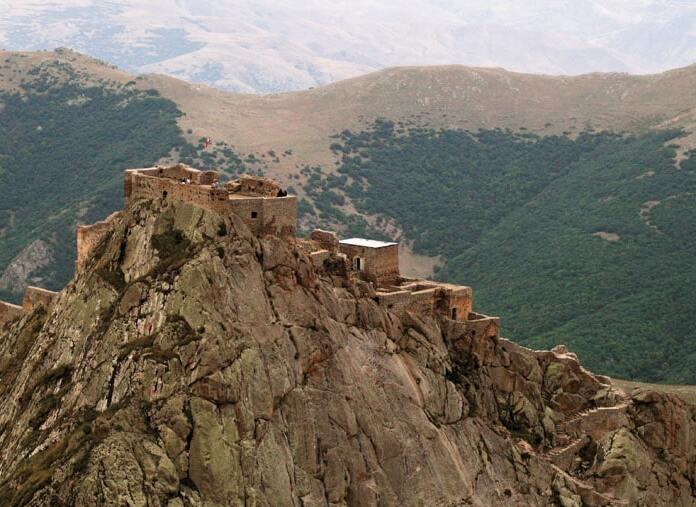
Perched dramatically on a craggy ridge in the Alborz Mountains of northern Iran, Alamut Fortress stands as a testament to the strategic ingenuity and architectural prowess of the Nizari Ismailis. This ancient stronghold, often referred to as the fortress of the Assassins, has a storied past filled with intrigue, political maneuvering, and a rich cultural legacy.
The origins of Alamut Fortress date back to 865 AD, when it was built by the Alavids, a local dynasty. However, it was in 1090 AD, under the visionary leadership of Hasan-i Sabbah, that it gained notoriety. Sabbah, a charismatic scholar and a master manipulator, transformed Alamut into the headquarters of the Nizari Ismailis, a sect of Shia Islam. This fortress became a center for resistance against the Seljuk Turks, with its inhabitants practicing a unique form of political assassination as a means of asserting their power—hence the name "Assassins." The fortress endured numerous sieges, notably falling to the Mongols in 1256, marking the end of its prominence.
Architecturally, Alamut Fortress embodies the rugged beauty of its mountainous surroundings. Constructed from local stone, the fortress features a series of walls and towers that blend seamlessly with the landscape. The most notable structure within the complex is the main citadel, which offers breathtaking panoramic views of the valley below. The fortress showcases an early example of fortification techniques, with narrow passageways and hidden chambers designed to confuse intruders. The craftsmanship and strategic layout speak volumes about the ingenuity of its creators.
The artistic significance of Alamut is not limited to its architecture. The fortress became a hub for intellectual activity during its zenith, attracting scholars and poets. Notably, Omar Khayyam, the celebrated Persian mathematician and poet, is often associated with this period, although his direct connection to Alamut remains a matter of historical debate. The cultural milieu fostered under Sabbah’s rule encouraged the melding of art and philosophy, contributing to the richness of Persian heritage.
Local culture surrounding Alamut is deeply intertwined with its historical significance. The inhabitants of the surrounding areas celebrate their heritage through traditional customs and festivals. One notable event is the Nizari Ismaili community’s observance of Nowruz, the Persian New Year, which symbolizes renewal and rebirth. Celebrations typically involve vibrant music, dance, and the preparation of special dishes, fostering a sense of community and continuity of tradition.
Culinary offerings in the region are as diverse as its history. Visitors to Alamut can savor authentic Persian cuisine, characterized by rich flavors and aromatic spices. Dishes such as kebabs, ghormeh sabzi (a herb stew), and dolmeh (stuffed grape leaves) are popular among locals. Furthermore, sweets like baklava and saffron ice cream offer a delightful end to any meal. Traditional tea houses in nearby villages provide an opportunity to relax and enjoy a cup of chai, often accompanied by local pastries.
Despite its historical prominence, many travelers remain unaware of the lesser-known curiosities associated with Alamut Fortress. For example, the fortress is said to house a number of hidden tunnels, designed for escape during sieges. These secret passages are part of the fortress's lore, fueling tales of heroic escapes and clandestine missions. Additionally, the remnants of ancient libraries within the fortress are believed to have housed texts that contributed to early Islamic philosophy and science, although many of these works have been lost to time.
When planning a visit to Alamut Fortress, the best time to go is during the spring (March to May) or fall (September to November), when the weather is mild and the landscape is particularly stunning. Arriving early in the day allows visitors to explore the fortress in relative solitude and enjoy the sunrise over the mountains. It’s advisable to wear sturdy shoes for the hike up to the fortress, as the terrain can be steep and rocky. Look for the remnants of ancient walls, the breathtaking views from the citadel, and any local guides who can share unique stories about the fortress's past.
As you wander through the ruins of Alamut Fortress, let the whispers of history draw you in. This storied site is more than just a relic of the past; it is a symbol of resilience and a reminder of the enduring spirit of those who once called it home. For a personalized journey through this captivating region, consider using the Secret World app to craft your ideal itinerary.
