



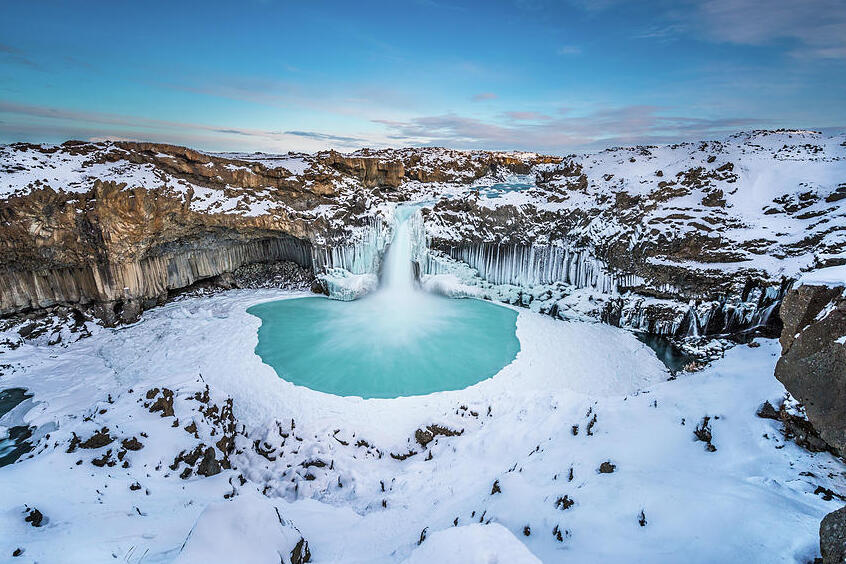
Nestled in the rugged beauty of Iceland's north highlands, Aldeyarfoss is often hailed as one of the most breathtaking waterfalls in the country. With its 20-meter cascade spilling dramatically into a serene blue lagoon, it captivates visitors with both its natural beauty and intriguing geology. The surrounding landscape is dominated by striking hexagonal basalt columns, a testament to the volcanic activity that shaped this area millennia ago.

The history of Aldeyarfoss is deeply intertwined with the geological forces that formed it. During the Late Pleistocene, approximately 12,000 years ago, the volcanic activity associated with the Askja volcano shaped much of the region. The cooling lava that once flowed down the cliffs solidified into the fascinating columnar formations that we see today. This unique geological process, where lava cools quickly and contracts into hexagonal shapes, creates a stunning backdrop that is relatively rare on a global scale.
The basalt columns at Aldeyarfoss are not just visually striking; they tell a story of the Earth’s past. The varying colors of the columns—shades of yellow and red—are due to the presence of sulfur and iron, elements released during the volcanic eruptions. This vibrant palette contrasts beautifully with the dark rock formations, making Aldeyarfoss a photographer's paradise and a subject of study for geologists.

In addition to its geological significance, Aldeyarfoss holds a special place in Icelandic culture. The site is located near the historic Þjórsárdalur valley, which is rich in Norse mythology. Local legends speak of Þór and other gods traversing this rugged landscape, adding a mythological layer to the natural beauty. While there are no specific festivals dedicated solely to Aldeyarfoss, the surrounding highlands play host to various cultural events celebrating Icelandic heritage, including folk music and traditional dance that echo the stories of the past.
When it comes to local cuisine, the nearby communities offer a taste of Icelandic gastronomy that reflects the region's natural bounty. Traditional dishes include lamb soup, made using free-range sheep that graze on the highlands, and harðfiskur, a type of dried fish that has been a staple for centuries. Visitors can also enjoy locally brewed craft beers and the unique Brennivín, an Icelandic schnapps often referred to as "Black Death," which complements the hearty fare. Sampling these foods while surrounded by the dramatic landscapes enhances the experience of visiting Aldeyarfoss.
For those planning a trip, the best time to visit Aldeyarfoss is during the summer months, from June to August, when the weather is milder and the days are long. However, late spring and early autumn can also be beautiful, showcasing vibrant foliage and fewer crowds. Although the waterfall is accessible via a gravel road, a 4x4 vehicle is recommended due to variable conditions. Be prepared for a short hike to the viewpoint, which offers stunning perspectives of the waterfall and its geological formations.
One lesser-known curiosity about Aldeyarfoss is its role as a conservation site. The surrounding area supports various species of flora and fauna, some of which are unique to the highlands. Birdwatchers may spot species such as the gyrfalcon and Arctic tern, making it a hidden gem for nature enthusiasts. Additionally, the waterfall is often less frequented than its more famous counterparts, allowing for a more intimate experience with nature.
While exploring the area, be sure to take a moment to appreciate the diverse colors of the basalt columns, the sound of rushing water, and the profound silence of the highlands. Each visit offers a chance to connect with the powerful forces of nature and the rich cultural tapestry of Iceland.
To make the most of your trip and uncover even more hidden gems in the vicinity, consider using the Secret World app to create a personalized AI itinerary tailored to your interests.
