
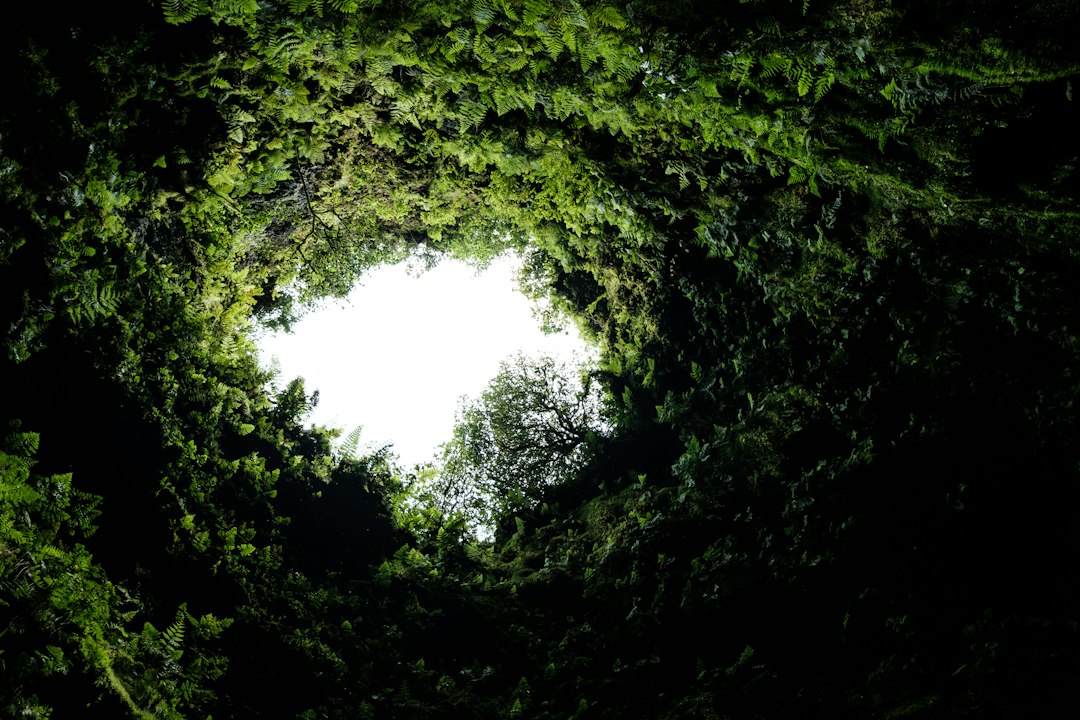

Ninety meters of vertical descent into the belly of the earth, along the walls of a volcanic chimney that opens like a wound in the heart of the island of Terceira. The Algar do Carvão is not just any cave: it is one of the rare examples in the world of a lava tube that can be traversed from the inside, formed about 3,200 years ago by an eruption that left behind a geological structure of extraordinary preservation. Descending here means walking through the geological history of the Azores, with the walls telling the story of each flow, each explosion, every millennium spent in underground silence.
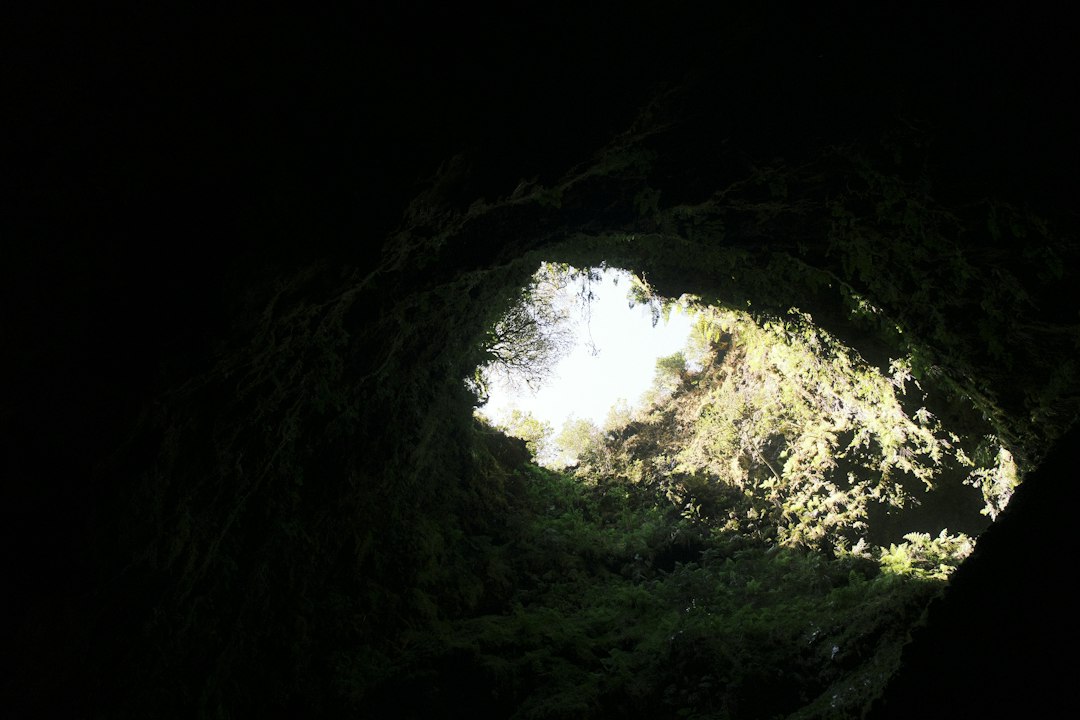
The cave is located near Porto Judeu, in the center of the island of Terceira, easily reachable by car from the capital Angra do Heroísmo in about twenty minutes. The access is marked and the area is managed with care, but the experience retains an authentic character, far from the tourist commercialization that often distorts natural sites. Here, you truly enter the volcano, not into a reconstruction.
The descent: what to expect meter by meter
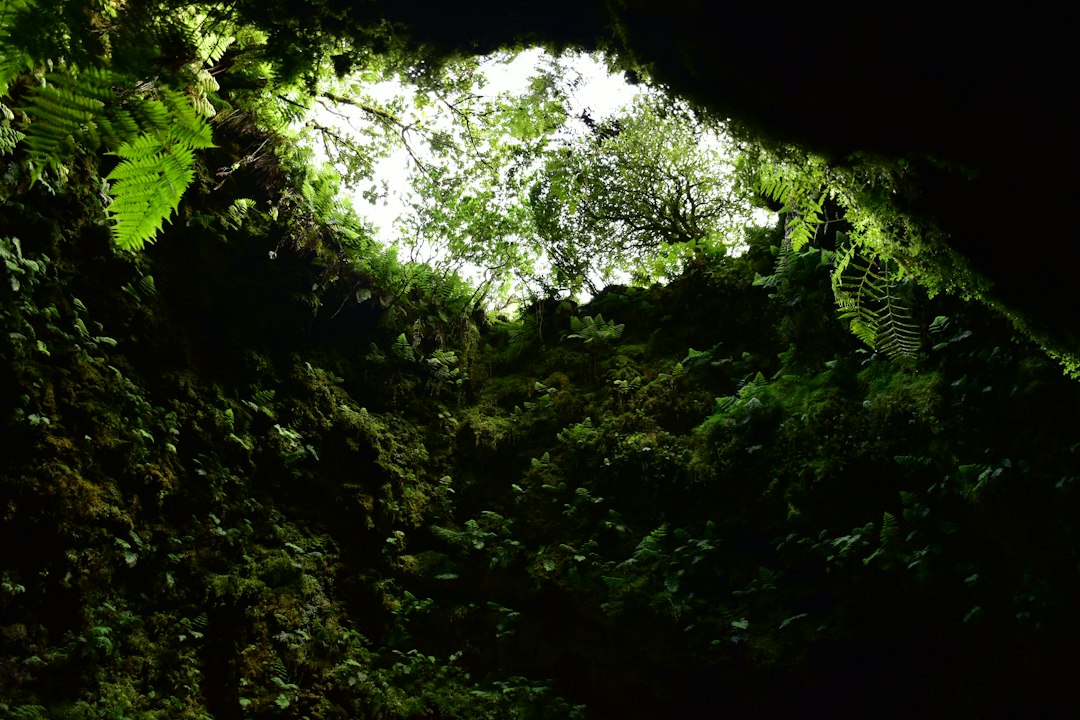
The entrance to the cave occurs through an opening in the ground, protected by a lightweight metal structure. From there, a staircase leads down along the walls of the volcanic chimney, which narrows and widens irregularly, as one would expect from a structure born from the chaos of magma. The walls are covered with white silica stalactites, an unexpected visual detail: the contrast between the black of the basalt rock and the almost luminous white of the mineral formations creates an effect that is almost unreal, as if someone had painted the stone from the inside.
As one descends, the temperature drops significantly compared to the outside, settling around 18 degrees Celsius even in the summer months. The humidity is high, and the air has a mineral, clean, ancient smell. At the bottom of the cavity lies the underground lake, fed by the infiltration of rainwater through the volcanic rock. The water is crystal clear, still, and reflects the walls of the cave with a precision that seems almost artificial. The depth of the lake varies depending on the season, but its presence is one of the most photographed and remembered features by visitors.
The geology that can be seen with the naked eye
Even without being geologists, it is possible to observe on-site the different phases of cave formation. The walls show overlapping layers of solidified lava, with different textures indicating varying cooling rates. In some places, the so-called ribbon flows can be seen, wavy surfaces that form when the outer crust of the lava cools while the internal magma continues to flow, creating folds that resemble the surface of a heavy fabric.
The silica stalactites, technically called opal in their mineral form, form slowly over centuries due to the percolation of water through the rock. Their presence in this cave is particularly abundant and well-preserved, making Algar do Carvão a site of interest not only for tourism but also for science. The Azores, as an active volcanic archipelago located on the Mid-Atlantic Ridge, offer rare geological environments, and this cave is one of the most accessible examples of them.
Practical information for the visit
The cave is open to the public seasonally, generally from spring to autumn, with hours that vary depending on the period. It is advisable to check the updated hours before leaving, as openings may depend on weather conditions and the availability of local staff. The entrance ticket has a low cost, on the order of a few euros, and the self-guided tour usually lasts between thirty and sixty minutes, depending on the pace at which one explores.
The most useful advice is to bring a light sweater or a long-sleeved garment, even in the height of summer: the temperature difference between the outside and inside of the cave is immediate and can surprise those arriving in shorts. Non-slip shoes are essential, as some sections of the staircase can be slippery due to humidity. The cave is not suitable for those suffering from severe claustrophobia, but the paths are well-lit and do not require particular physical abilities.
The context: Terceira beyond the cave
Terceira is an island that deserves at least three or four days of visit, and the Algar do Carvão fits well into an itinerary that includes Angra do Heroísmo, whose historic city has been recognized as UNESCO World Heritage since 1983, and the volcanic calderas in the interior of the island. The combination of Portuguese colonial history, green landscapes cut by walls of basalt stone, and geological phenomena like this cave makes Terceira one of the most complete islands in the Azores archipelago for those who travel with genuine curiosity.
Returning to the surface after descending into the Algar do Carvão has a disorienting effect: the light, the warmth, the intense green of the meadows around the entrance suddenly seem more vivid. It is the effect of having spent even just half an hour in a world where geological time is measured in millennia, and where the earth is not a backdrop but the absolute protagonist.


