


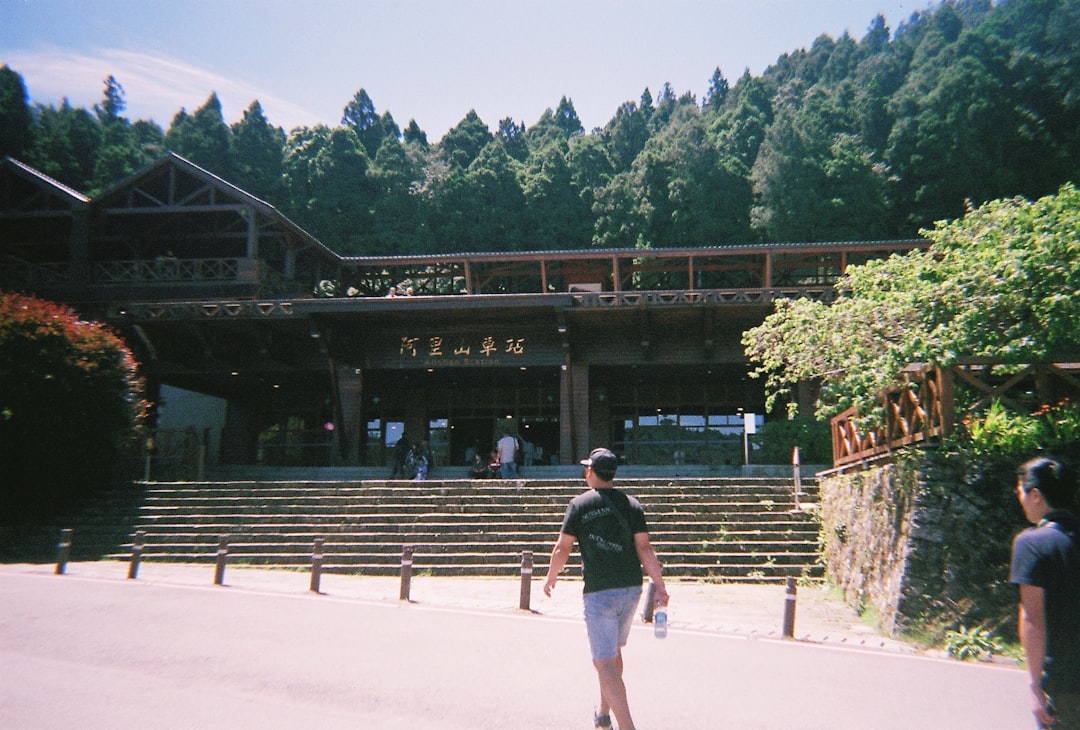
At four in the morning, when the darkness is still thick and the air carries with it a damp cold that surprises even in summer, the small train station of Alishan begins to fill with silent people. Each person brings a flashlight, a thermos of hot tea, a windbreaker. The historic train of the Alishan Forest Railway, a railway built by the Japanese between 1906 and 1912 during the colonial period, moves slowly towards the station of Zhushan, at about 2,451 meters above sea level. It is from there that one can witness one of the most extraordinary natural spectacles in Taiwan.

The Alishan National Forest Recreation Area is located in Chiayi County, in central-southern Taiwan, and covers an area of over 1,400 hectares. It is not a destination invented for tourists: it is a real ecosystem, with red cypress and hinoki cypress trees that in some cases are over a thousand years old. Some of these trees have trunks so wide that five people with their arms outstretched would not be able to embrace them. Walking among them early in the morning, when the fog rises from the valley floor, creates a sense of temporal disorientation that is hard to describe in words.
The train journey at dawn: colors and silences
The train heading towards Zhushan generally departs about an hour before dawn, with schedules that vary seasonally. The journey lasts less than half an hour, but it passes through vegetation that visibly changes with altitude: first the dense forest, then the clearings, then the sky that begins to take on a barely perceptible gray-purple hue. When the train stops, most passengers quickly head towards the viewing platform.
The minutes before dawn are dominated by a palette of cool colors: the midnight blue gives way to a deep indigo, then to a pearl gray that slowly brightens towards the east. The sea of clouds — which in Chinese is called yún hǎi — occupies the valley below like a still ocean. When the sun emerges, often around 5:30-6:00 in the morning during the spring months, the colors shift towards orange and pink so quickly that anyone who looks away even for a few seconds risks missing the moment of maximum chromatic intensity. The tops of the tallest trees emerge from the blanket of clouds like dark islands on a bright sea.
The Sacred Trees and the Paths in the Forest
After returning from dawn, the Alishan forest is explored on foot through a network of well-marked paths. The most famous route leads to the so-called Sacred Trees, millennia-old cypress trees that the Japanese considered objects of veneration during the colonial period. The most famous cypress, known as the Old General's Cypress, collapsed in 1997 during a typhoon, but its trunk is still visible on site, impressive even in its fallen state.
During the central hours of the morning, when light filters through the treetops dozens of meters high, the forest takes on completely different colors compared to dawn. The green becomes intense, almost metallic, and the sun's rays create visible beams in the humid air. The moss covering the oldest trunks has shades ranging from yellow-green to emerald green. Those who walk slowly and quietly have a good chance of observing some species of endemic birds of Taiwan, including the Pheasant-tailed Jacana in the surrounding wetlands.
Practical tips for visiting Alishan
The entrance ticket to the forest area costs about 150 TWD (about 4-5 euros) for adults. The historic railway has a separate cost for the section to Zhushan, generally around 100 TWD per trip. It is strongly recommended to purchase the dawn train tickets in advance, especially on weekends and during the cherry blossom season, which typically falls between February and March: during that time, the area is particularly crowded and train seats sell out quickly.
To reach Alishan from Chiayi, you can take a direct bus from the Chiayi train station, with a journey of about two and a half hours on winding mountain roads. Those who suffer from motion sickness should take precautions. The temperature in Alishan is significantly lower than in the plains: even in the middle of summer, it is advisable to bring a thermal layer, especially for dawn. Staying overnight in the area — there are some guesthouses and a small hotel — allows you to avoid waking up at three in the morning and to experience the forest at sunset as well, when the slanting light transforms the cypress trunks into columns of ancient copper.
The sunset light and the evening in the forest
If dawn is the main spectacle, the sunset in Alishan has a different, more intimate quality. The late afternoon light, between 4:00 PM and 5:30 PM, enters the forest from low angles and creates long shadows that multiply the visual depth of the woods. The warm colors of the golden hour contrast with the cool green of the underbrush in a particularly photogenic way. After sunset, as night falls, the silence of the forest becomes total and the air cools rapidly. It is the moment when Alishan shows its oldest face, the one that existed long before any train began to climb these slopes.


