



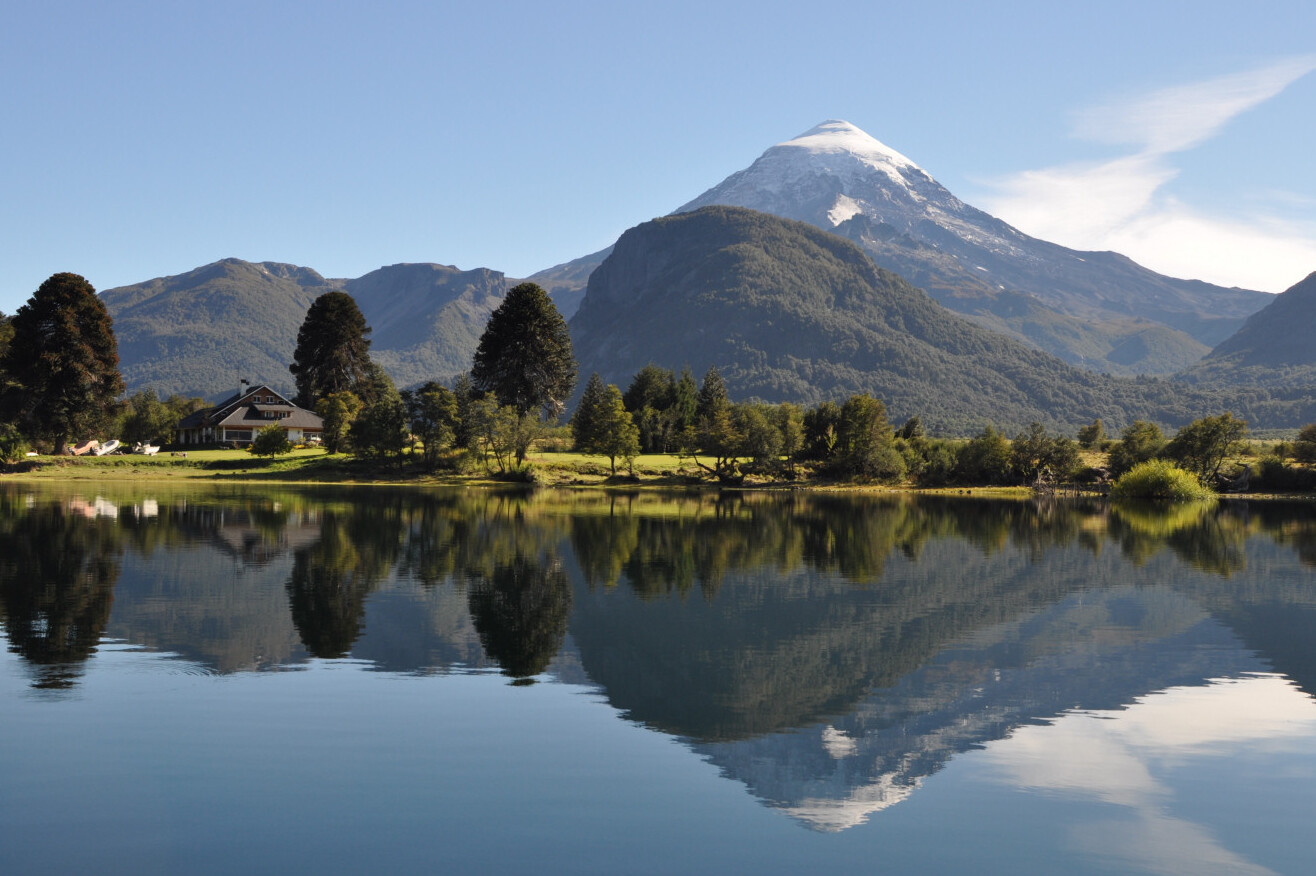
Nestled within the breathtaking landscape of Argentina's Neuquén Province, Lago Paimún is a serene gem embraced by the majestic Andes Mountains. This tranquil lake, shimmering under the watchful gaze of the snowcapped Lanín Volcano, offers a unique blend of natural beauty, rich history, and vibrant local culture that enchants all who visit.
The history of Lago Paimún is deeply intertwined with the indigenous Mapuche people, who have inhabited the region for centuries. The lake is part of the Lanín National Park, established in 1937 to preserve the area's natural beauty and cultural heritage. The park's name and the volcano are derived from the native word "Lanín," meaning "dead rock," a nod to the dormant volcano's imposing presence. The Mapuche have traditionally regarded this landscape as sacred, viewing the towering peaks and tranquil waters as a source of spiritual strength and sustenance.
As you wander the shores of Lago Paimún, the architectural simplicity and natural elegance are striking. The nearby town of Junín de los Andes offers a glimpse into the region’s architectural style, characterized by wooden cabins and stone structures that seamlessly blend into the mountainous backdrop. Though the area is more renowned for its natural rather than human-made artistry, the landscape itself is a living canvas, with the ever-changing light creating dynamic vistas that inspire photographers and painters alike.
The cultural fabric of the region is woven from the traditions of the Mapuche, whose customs and beliefs continue to influence local life. Their annual festival, Nguillatún, is a vibrant celebration held to honor nature and their ancestral spirits. Visitors who time their trip to coincide with this festival can witness traditional dances, music, and rituals that highlight the community's deep connection to the land. The Mapuche also share their rich oral history, passing down stories that speak to the harmony between people and nature.
No visit to Lago Paimún is complete without indulging in the local gastronomy, which offers a flavorful journey into the area's culinary traditions. Curanto, a traditional Mapuche dish, is a must-try. This hearty meal is cooked in a pit over hot stones and typically includes a mix of meats, potatoes, and vegetables. For a taste of Argentina's renowned beef, savor a perfectly grilled asado, accompanied by a glass of locally produced red wine. The region's cuisine reflects its cultural diversity, with influences from European settlers blending seamlessly with indigenous flavors.
For those seeking a glimpse beyond the well-trodden paths, Lago Paimún offers intriguing curiosities. The lake is home to a variety of wildlife, including the elusive Huemul deer, a species native to the Andes and a symbol of conservation in Argentina. Birdwatchers will delight in spotting the Andean condor, which can often be seen soaring high above the lake's crystalline waters. Another lesser-known fact is the presence of ancient Alerce trees, some of which are over a thousand years old, standing as silent witnesses to the region's evolving history.
When planning a visit, consider the seasons to make the most of your experience. The best time to explore Lago Paimún is during the Argentine summer months of December to March, when the weather is pleasantly warm, and the roads are more accessible. Autumn brings a stunning array of colors, with the foliage painting the landscape in hues of red and gold. For those drawn to winter sports, the nearby Chapelco Ski Resort offers excellent skiing opportunities from June to September.
Practical tips for visitors include dressing in layers, as the weather can change rapidly in the mountains. Make sure to bring a camera to capture the awe-inspiring views, and consider hiring a local guide to enrich your understanding of the area’s cultural and natural history. With its blend of stunning scenery, rich heritage, and warm hospitality, Lago Paimún promises an unforgettable journey into the heart of the Andes.
