
← Back

Aphrodite's Rock

Kouklia, Cipro ★★★★☆ 1,775 views
Depika Bafna
Kouklia
🏆 AI Trip Planner 2026

Get the free app

Discover the best of Kouklia with Secret World — the AI trip planner with 1M+ destinations. Get personalized itineraries, hidden gems and local tips. Free on iOS & Android.

🧠 AI Itineraries 🎒 Trip Toolkit 🎮 KnowWhere Game 🎧 Audio Guides 📹 Videos
Scan to download iOS / Android
Scan for AppGallery Huawei users

About Aphrodite's Rock

Aphrodite's Rock - Kouklia | Secret World Trip Planner

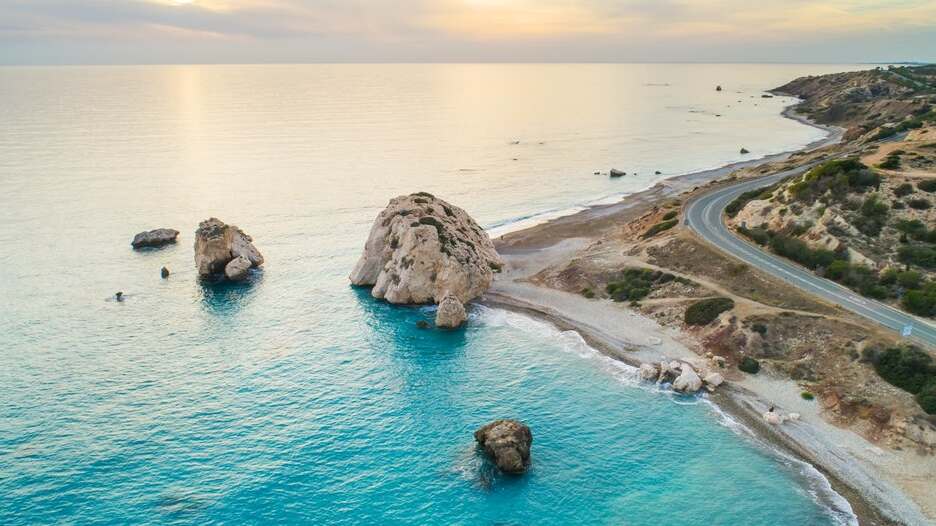
Also known as "Petra tou Romiou", the Aphrodite Rock is one of the many beaches found along the coast of Cyprus. The narrow beach is an ideal tourist destination and unlike other beaches, it is a pebble beach. However, what makes the beach truly exceptional is that it is home to a legendary jetty known as Petra tou Romiou.

Aphrodite's Rock - Kouklia | Secret World Trip Planner

The sea stack is located along the road that connects the cities of Limassol and Paphos. The literal translation of the sea stack is "Rock of the Roman." The sea stack exhibits natural beauty as it sits amidst the waves crashing on the Mediterranean Sea and as a testament to its beauty, the sea stack is also known as Aphrodite's Rock.

The name comes from ancient Greek mythology indicating that the sea stack was the birthplace of the goddess of love, Aphrodite. The mythological history of Petra tou Roumiou makes it a popular tourist destination in Cyprus, attracting thousands of visitors from all over the world. The ancient Greeks believed that the sea stack represented the birthplace of the goddess of beauty and love, Aphrodite. According to ancient Greek mythology, Earth mother "Gaia" instructed her son "Cronus" to cut off the testicles of his father "Uranus." Cronus did as instructed and threw the testicles into the sea, from which a column of white foam rose and from there came a maiden. The waves of the sea carried the maiden to the shore.

Aphrodite's Rock - Kouklia | Secret World Trip Planner

The maiden, who must have been known as Aphrodite, then went to Cyprus where she attracted a large following. The Roman version of the legend has Venus as the goddess of beauty instead of Aphrodite.

A local legend says that the goddess of love and beauty blesses those who swim around the Rock of Aphrodite three times with true love, eternal beauty, fertility and eternal youth. However, turbulent sea conditions in the region discourage visitors from testing the legend.

🗺 AI Trip Planner 2026

Plan your visit to Kouklia

Suggested itinerary near Aphrodite's Rock

MAJ+
500.000+ travelers worldwide
  1. 🌅
    Morning
    Aphrodite's Rock
    📍 Kouklia
  2. ☀️
    Afternoon
    The beach of Petra tou Romiou
    📍 0 km · Kouklia

Buy Unique Travel Experiences

Powered by Viator

See more on Viator.com

Explore nearby · Kouklia

Frequently Asked Questions

According to ancient Greek mythology, Aphrodite's Rock (Petra tou Romiou) is believed to be the birthplace of Aphrodite, the goddess of love and beauty. The legend tells that after Cronus threw his father Uranus's testicles into the sea, white foam rose from the waters and transformed into the maiden Aphrodite, who was then carried to Cyprus's shores by the waves.
Aphrodite's Rock is situated along the coastal road connecting the cities of Limassol and Paphos in Cyprus. The sea stack is easily accessible by car, making it a convenient stop for travelers driving between these two major cities on the island.
Unlike most beaches in Cyprus, Aphrodite's Rock features a pebble beach rather than sand. The beach's true exceptional quality lies in the dramatic sea stack itself—a natural rock formation rising majestically from the Mediterranean Sea, creating a stunning visual centerpiece that has made it one of Cyprus's most popular tourist destinations.
According to local legend, swimming around Aphrodite's Rock three times is said to bless visitors with true love, eternal beauty, fertility, and eternal youth. However, turbulent sea conditions in the region frequently discourage visitors from attempting this tradition, so caution is advised before entering the water.
The sea stack has two names reflecting different cultural traditions: 'Petra tou Romiou' literally means 'Rock of the Roman,' while 'Aphrodite's Rock' comes from ancient Greek mythology. The Roman version of the legend names Venus as the goddess of beauty instead of Aphrodite, though both names are used interchangeably for this iconic landmark.