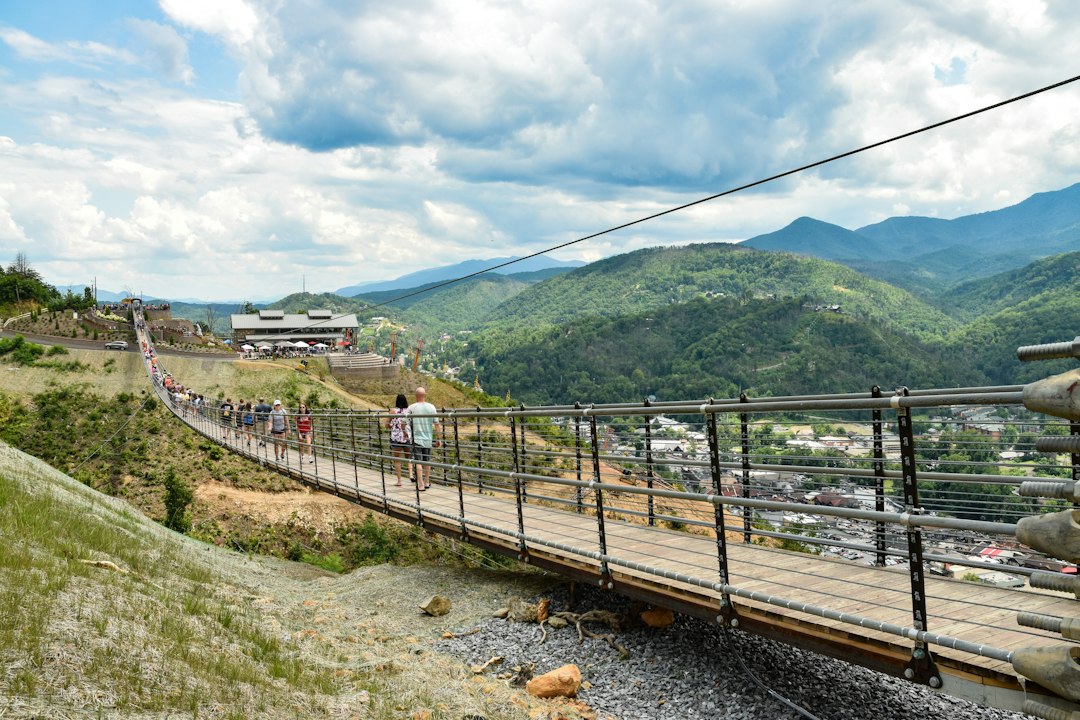

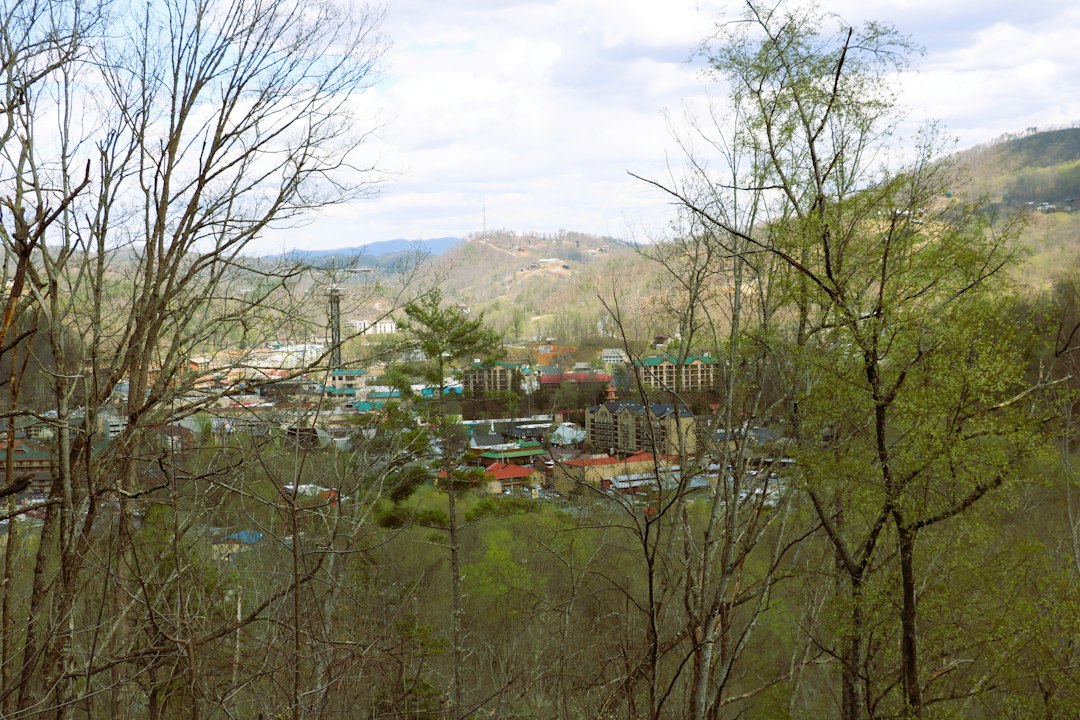
The morning fog envelops the peaks of the Smoky Mountains as the first hikers leave Gatlinburg heading towards the national park. We are in the most frequented section of the Appalachian Trail, the legendary 2,190-mile path that crosses fourteen American states from Georgia to Maine. Here, in the heart of the Great Smoky Mountains National Park, the trail reaches some of its most iconic peaks and offers landscapes that change radically with the seasons and the time of day.
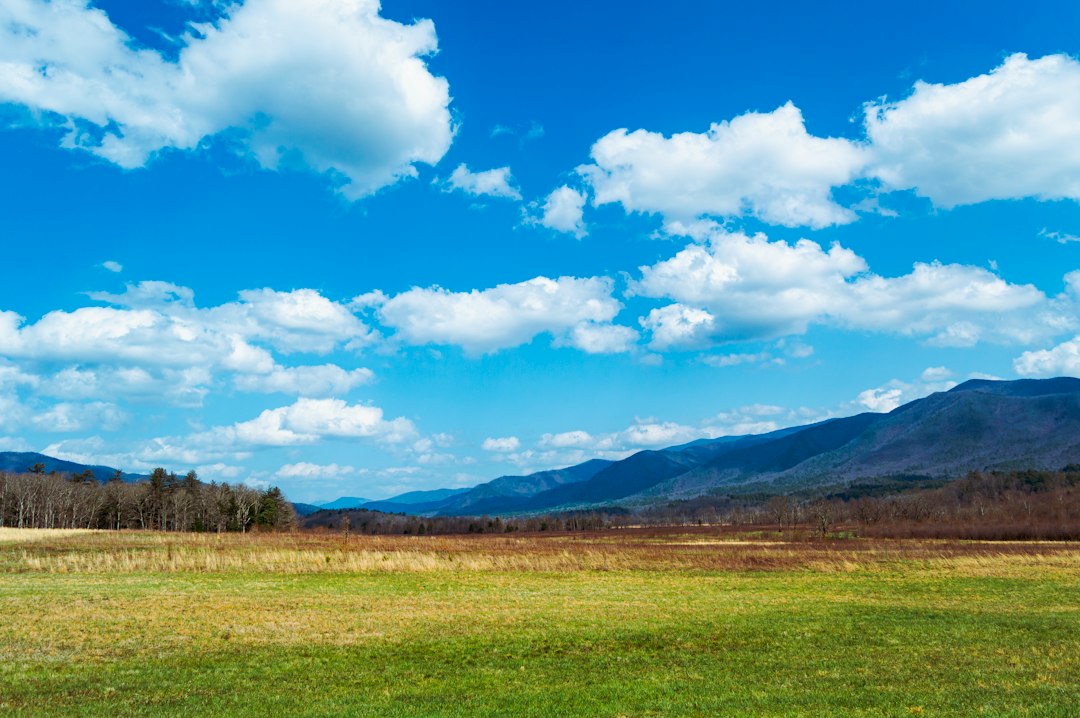
The stretch that starts from the Gatlinburg area is accessible from Newfound Gap Road, the scenic road that cuts through the park and reaches the Newfound Gap pass at about 1,539 meters in altitude. From this point, many hikers choose to trek the section towards Clingmans Dome, the highest peak in the park at 2,025 meters above sea level, which coincides with the highest point of the entire Appalachian Trail. The observation tower at the top, built in 1959, offers a 360-degree view of the forests that stretch to the horizon.
The path and the forest that surrounds it
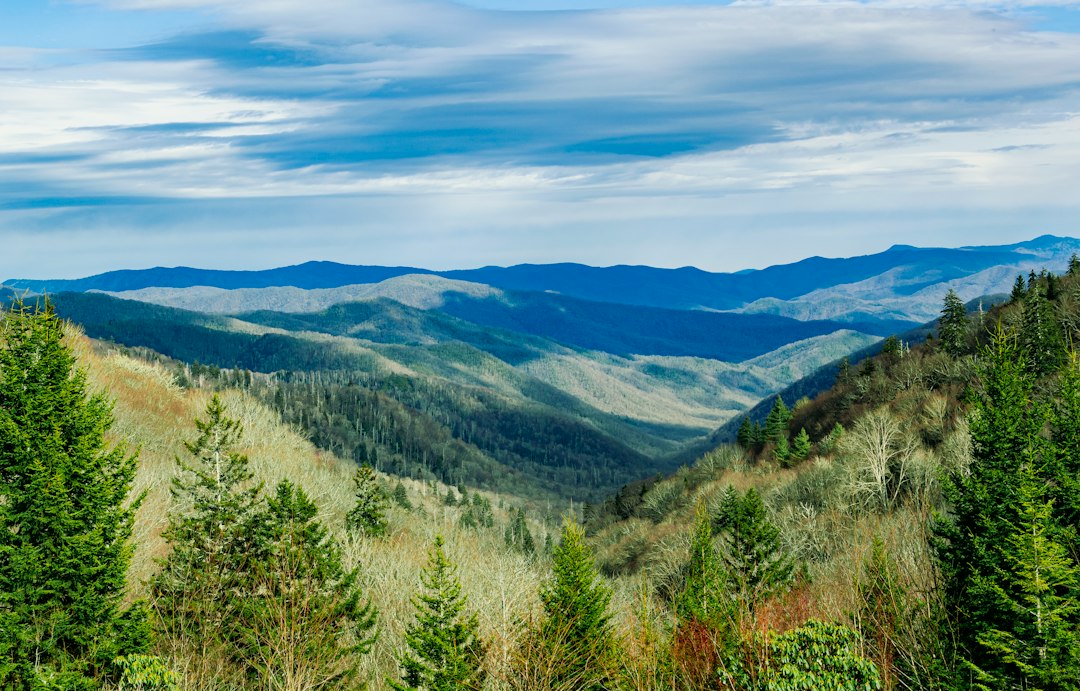
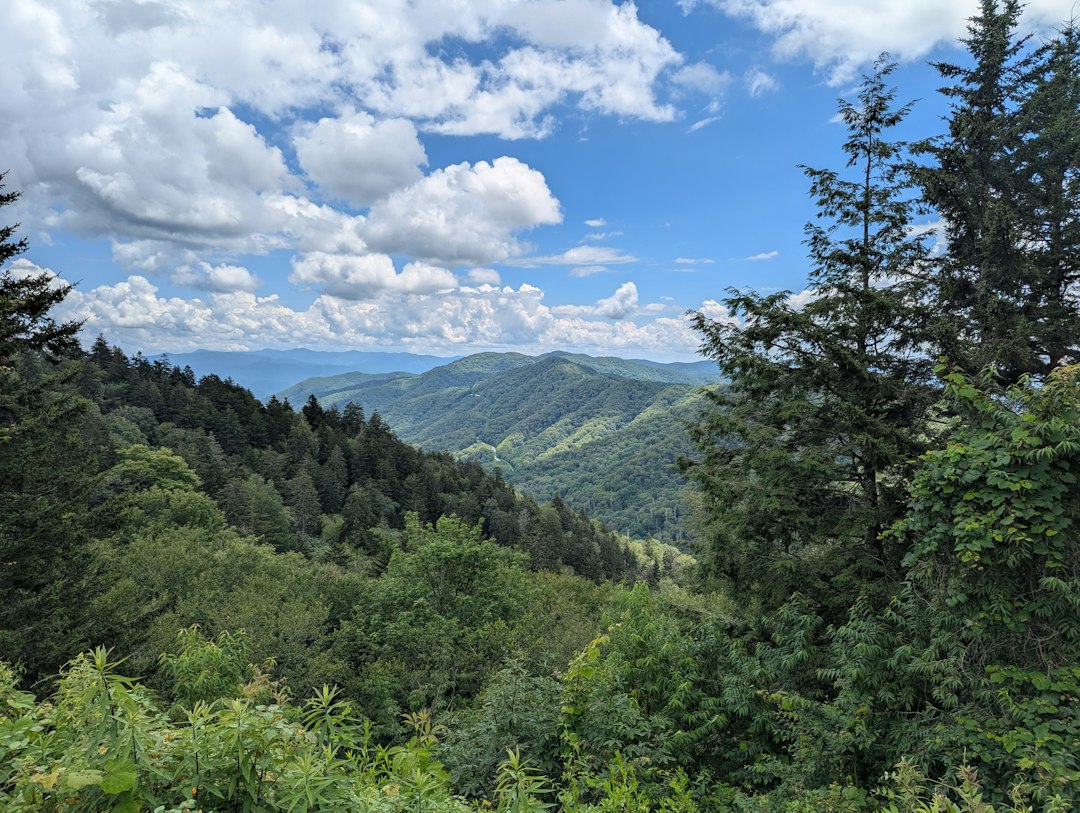
Walking on this stretch of the Appalachian Trail means immersing oneself in an ancient deciduous forest, where maples, oaks, and wild tulips form a canopy so dense that it filters light even on the clearest days. In autumn, between October and November, the leaves paint the landscape red, orange, and yellow in a chromatic display that attracts visitors from all over the country. In spring, however, the flowers of the rhododendron and azalea cover the edges of the trail with splashes of deep purple and pink.
The trail surface varies considerably along the route: it ranges from sections on exposed rock and protruding roots to softer stretches on compact soil. The markings are indicated by white paint bands painted on trees and rocks, the standard marking system of the entire Appalachian Trail. Park signs indicate distances in miles and elevations, allowing even less experienced hikers to navigate with relative ease.
Wildlife: black bears and elk
The Great Smoky Mountains National Park hosts one of the densest populations of American black bears in the eastern United States, with estimates of around 1,500 individuals within the park's boundaries. Sightings on the trail are not rare, especially during twilight hours. The park also hosts a population of elk, reintroduced to the Cataloochee Valley area starting in 2001 after decades of absence. Although this valley is located on the opposite side from Gatlinburg, the animals move around and can also be spotted in other areas of the park.
The park regulations require maintaining a minimum distance of at least 15 meters from bears and 30 meters from elk. Along the trail, there are specific metal structures to hang food out of the reach of bears, and in campgrounds, it is mandatory to use bear-proof containers. Those carrying food in their backpacks must keep this aspect in mind when planning their hike.
History and Identity of the Trail
The Appalachian Trail was completed in 1937, after years of volunteer work coordinated by Benton MacKaye, the regionalist and planner who first proposed the idea of a continuous trail along the Appalachian chain in 1921. The management of the trail is entrusted to the Appalachian Trail Conservancy, a non-profit organization that coordinates thousands of volunteers for the maintenance of the path. The section within the Great Smoky Mountains National Park is one of the most challenging from a logistical standpoint, as there are no frequent side access roads and emergency exit options are limited.
Every year, several thousand hikers attempt the full route of the trail, called thru-hikers. Most take between five and seven months to complete the entire journey. Those who limit themselves to daily sections in the Gatlinburg area can still enjoy memorable experiences without specialized equipment.
Practical tips for visiting
The most convenient starting point to reach the trail from Gatlinburg is the Sugarlands Visitor Center, located a few miles from the park entrance along Highway 441. From there, you can continue by car to Newfound Gap, where the main parking area is located to access the Appalachian Trail. The park does not require an entrance fee, but starting in 2023, a reservation is necessary to access by car at certain times during peak periods: it is advisable to check the updated regulations on the official National Park Service website before departing.
The best time for peaceful hikes is between September and October, when temperatures drop, summer crowds thin out, and autumn colors provide the maximum visual spectacle. In summer, the park can be very crowded, with parking lines forming as early as the morning hours. Bringing enough water is essential: the springs along the trail should always be treated before drinking, and there are no organized refueling points along the route in the park.