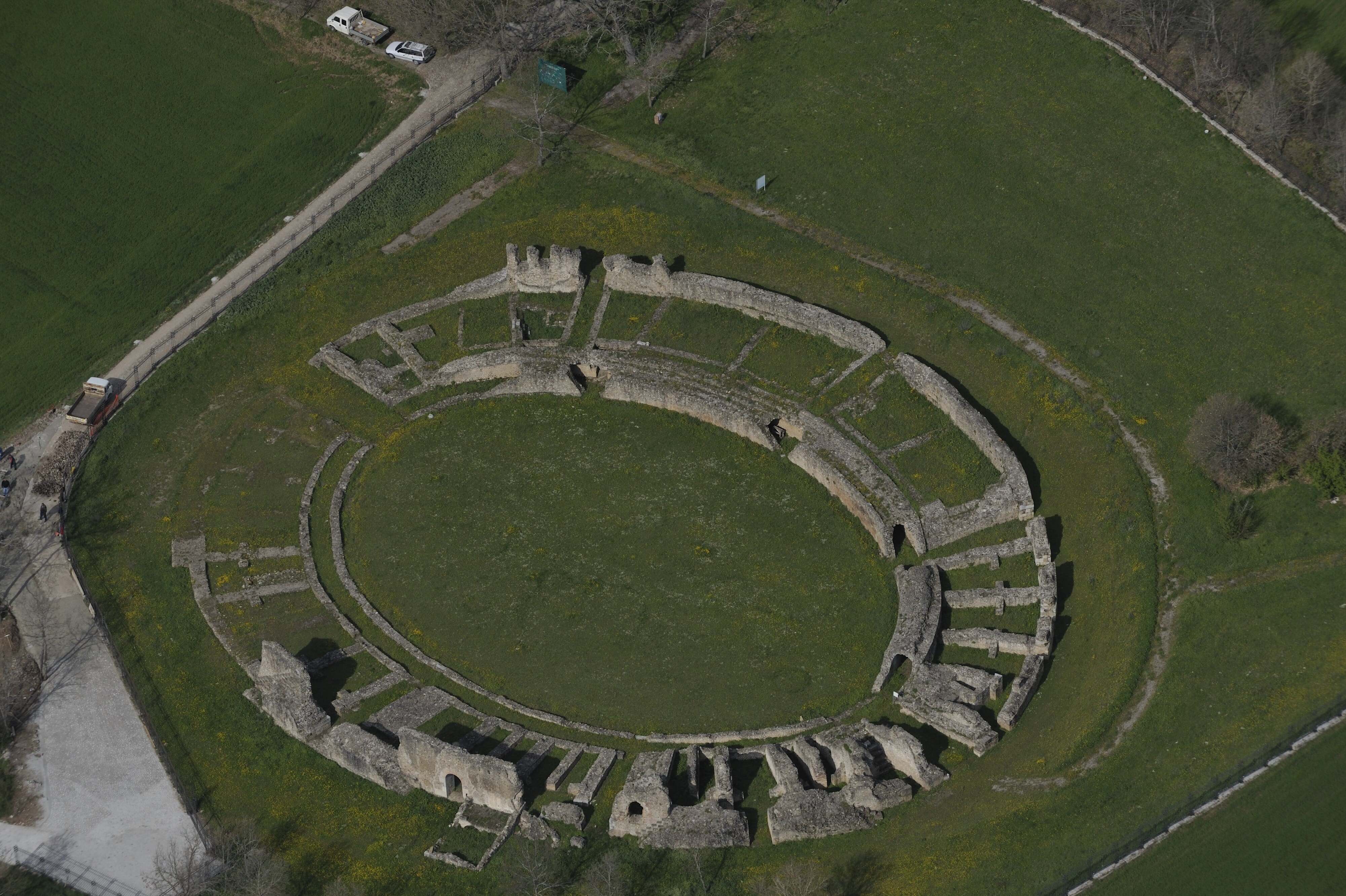

Nestled in the heart of Basilicata, the archaeological area of Grumentum offers a mesmerizing glimpse into ancient history. Founded as a thriving Lucanian center, Grumentum flourished under Roman conquest in the 3rd century B.C., becoming a pivotal urban hub. The remnants of this once-bustling city are remarkably preserved, showcasing a comprehensive Roman urban layout that speaks volumes about its historical significance.
As you wander through the archaeological site, the harmony of public and private spaces unfolds before you, framed by the beautiful landscapes of the surrounding hills. Ancient roads still delineate the city, guiding visitors from the impressive theatre to the small Italic temple. The intricate domus, adorned with exquisite mosaics, whispers stories of the affluent lives once lived here. Along the decumanus—the main east-west street—you’ll find the Forum, a vibrant center for both civic and religious activities. Key structures such as the Capitolium, Cesareo, Porticus, Curia, and Basilica stand as testaments to the architectural prowess of the Romans.
The archaeological site also features the imperial baths, where ancient Romans indulged in relaxation and socializing, and the monumental amphitheatre, strategically perched on the eastern hill, once hosting lively spectacles.
### History and Origins The origins of Grumentum can be traced back to the Lucanians, an ancient Italic people who settled in the region. After its conquest by Rome during the Samnite Wars, Grumentum began to thrive as a Roman colony. By the 1st century B.C., it had blossomed into a significant urban center, reflective of Roman urban planning and architecture.
Throughout its history, Grumentum witnessed various epochs, including periods of decline during the Middle Ages when many towns were abandoned. Yet, its ruins provide a remarkable insight into the daily lives of its ancient inhabitants, from politicians to artisans.
### Art and Architecture The architectural style of Grumentum is a stunning example of Roman urban design. The layout reveals a meticulous plan, with buildings constructed in typical Roman styles, characterized by their grandeur and functionality. The theatre, capable of seating over 3,000 spectators, exemplifies this, showcasing the importance of entertainment in Roman culture.
Among its artistic treasures, the intricate mosaics found in the domus highlight the skill of ancient artisans. These colorful designs, often depicting mythological scenes or daily life, reflect both aesthetic appeal and cultural significance, serving as a reminder of the artistic endeavors of the time.
### Local Culture and Traditions Grumento Nova, the modern town adjacent to the archaeological site, retains a rich tapestry of local customs and traditions. Festivals celebrating the region's heritage, such as the Feast of St. Michael, are vibrant events where locals gather to honor their patron saint with processions, music, and traditional dances.
The cultural importance of these festivals is profound, as they connect the community to their historical roots, fostering a sense of identity and pride among the residents.
### Gastronomy No visit to Grumento Nova would be complete without indulging in the local cuisine. Lucanian gastronomy is renowned for its robust flavors and use of local ingredients. Traditional dishes such as pasta alla grumentina, made with homemade pasta and a rich tomato sauce, showcase the region's agricultural bounty.
Pair your meal with a glass of Aglianico del Vulture, a full-bodied red wine produced in the nearby volcanic hills, which perfectly complements the rustic flavors of the local fare.
### Lesser-known Curiosities While many visitors flock to the main attractions, a few hidden gems often go unnoticed. For instance, the remnants of the ancient Roman roads still visible in the landscape offer a glimpse into the connectivity of the ancient world. Additionally, the nearby Castello di Grumento provides stunning panoramic views of the valley and is steeped in local legends.
One curious fact is that Grumentum was home to an ancient Christian community and features ruins of early Christian churches, which are significant for understanding the transition from paganism to Christianity in this region.
### Practical Visitor Information The best time to visit Grumentum is during the spring and autumn months when the weather is mild, making exploration pleasant. Guided tours are available, providing insightful context to the ruins and enhancing your experience.
When visiting, don't miss the opportunity to capture the stunning vistas from the hilltop amphitheatre or to explore the lesser-known trails around the site that lead to hidden ruins and breathtaking views of the surrounding countryside.
With its rich history, architectural wonders, and vibrant culture, the archaeological area of Grumentum is a treasure waiting to be discovered. For a personalized experience, consider using the Secret World app to plan your itinerary in Grumento Nova.