
← Back

Archaeological complex of Tarraco

C. de Mallorca, 18, 43001 Tarragona, Spagna ★★★★☆ 106 views
Meghan Wilde
Tarragona
🏆 AI Trip Planner 2026

Get the free app

Discover the best of Tarragona with Secret World — the AI trip planner with 1M+ destinations. Get personalized itineraries, hidden gems and local tips. Free on iOS & Android.

🧠 AI Itineraries 🎒 Trip Toolkit 🎮 KnowWhere Game 🎧 Audio Guides 📹 Videos
Scan to download iOS / Android
Scan for AppGallery Huawei users

About Archaeological complex of Tarraco

Archaeological complex of Tarraco - Tarragona | Secret World Trip Planner

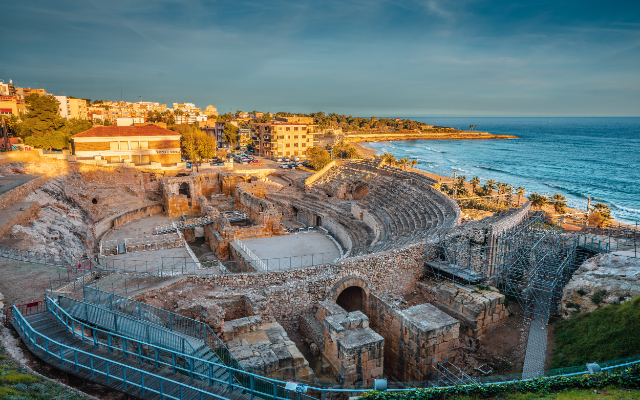
The ancient Roman settlement of Tarraco was founded by the Romans in the 3rd century BC as a military colony, later becoming an important administrative, commercial, and cultural center. During the Roman Empire, Tarraco became the capital of the Roman province of Hispania Citerior (present-day Catalonia) and its port became an important trading point between Spain and the Roman Empire.One of the main attractions of the ancient Roman settlement of Tarraco is the Roman amphitheater, built in the late second century AD and located near the sea. The amphitheater had a capacity of about 14,000 spectators and hosted gladiator shows, wild animal fights, and theatrical performances. Today, the archaeological site houses part of the ancient amphitheater, with sections of tiers and underground corridors still visible.Another important Roman site in the ancient settlement of Tarraco is the Roman circus, which could seat up to 25,000 spectators. The circus was used for chariot races and other equestrian performances. Today, the site houses the Praetorian Tower, an important Roman fortification built to protect access to the circus.The Roman necropolis of Tarraco is a burial area that covers several hectares and contains Roman and Christian tombs. The tombs were carved into the rock and decorated with mosaics and frescoes. The necropolis represents an important archaeological site for understanding the funerary customs of the ancient city of Tarraco.Among the many other Roman sites in the ancient settlement of Tarraco are the torre dels Escipions, which served as a tomb for a Roman noble family; the Roman theater, built in the first century AD and used for theatrical performances; and the Roman aqueduct, which brought water to the city from the Francolì River.Another interesting fact about the ancient settlement of Tarraco is that many of its Roman buildings have been reused over the centuries. For example, stones from the Roman amphitheater were used to build Tarragona Cathedral in the 12th century, while the Roman circus was used to host the city's fair until the 19th century.

🗺 AI Trip Planner 2026

Plan your visit to Tarragona

Suggested itinerary near Archaeological complex of Tarraco

MAJ+
500.000+ travelers worldwide
  1. 🌅
    Morning
    Archaeological complex of Tarraco
    📍 Tarragona
  2. ☀️
    Afternoon
    Weekend in Tarragona with Secret World: The Ultimate Guide
    📍 0.5 km · Tarragona

Buy Unique Travel Experiences

Powered by Viator

See more on Viator.com

Explore nearby · Tarragona

Frequently Asked Questions

Tarraco was founded by the Romans in the 3rd century BC as a military colony, but it quickly evolved into an important administrative, commercial, and cultural center. It eventually became the capital of the Roman province of Hispania Citerior (present-day Catalonia) and served as a crucial trading point between Spain and the Roman Empire.
The Roman amphitheater, built in the late second century AD near the sea, had a capacity of about 14,000 spectators. It hosted gladiator shows, wild animal fights, and theatrical performances, with sections of tiers and underground corridors still visible at the archaeological site today.
The Roman circus at Tarraco could seat up to 25,000 spectators and was primarily used for chariot races and other equestrian performances. The site now features the Praetorian Tower, an important Roman fortification that was built to protect access to the circus.
The Roman necropolis of Tarraco is a burial area spanning several hectares that contains both Roman and Christian tombs carved into rock and decorated with mosaics and frescoes. This archaeological site provides valuable insights into the funerary customs and practices of the ancient city of Tarraco.
Beyond the amphitheater and circus, Tarraco features the torre dels Escipions (a noble family tomb), a Roman theater built in the first century AD for theatrical performances, and a Roman aqueduct that supplied water from the Francolì River. Many of these Roman structures have been reused throughout the centuries, with stones from the amphitheater even being incorporated into the construction of Tarragona Cathedral.
