



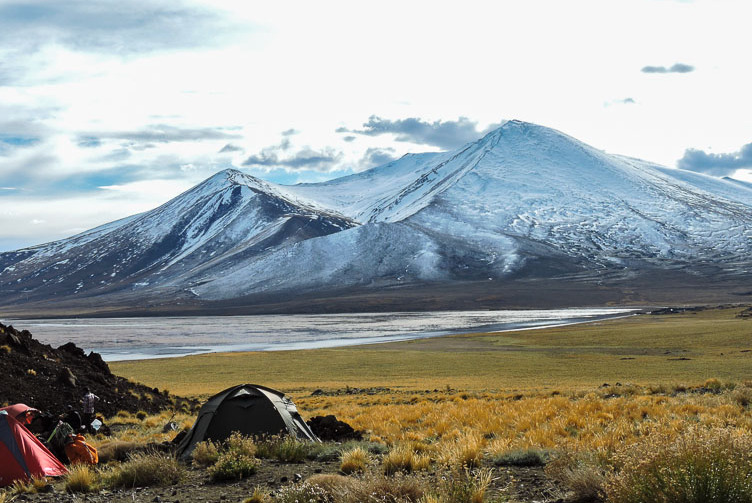
Nestled at the base of the formidable Tromen Volcano, the serene Laguna del Vólcan Tromen offers a captivating blend of natural beauty and rich history. Located approximately 45 kilometers from the town of Chos Malal in the heart of Argentina's Neuquén Province, this pristine lagoon is a hidden gem that beckons intrepid travelers seeking both adventure and tranquility.
The history of Laguna del Vólcan Tromen is deeply intertwined with the ancient Mapuche people, who have inhabited the region for centuries. The Mapuche revered the Tromen Volcano, considering it a sacred entity, embedded with spiritual significance. This reverence is evident in their oral histories and the ceremonial practices that have been passed down through generations. Over the centuries, the area became a crossroads for various indigenous groups, each leaving their mark on the land and contributing to its rich tapestry of cultural heritage.
Architecturally, the region around Laguna del Vólcan Tromen is characterized by rustic, traditional constructions that harmonize with the rugged landscape. The nearby town of Chos Malal features a collection of early 20th-century buildings, showcasing a blend of European and indigenous influences. The Museo Histórico Manuel José Olascoaga in Chos Malal is particularly notable, housed in a building that reflects the simple yet elegant architectural style of the region. It offers visitors a glimpse into the area's past through artifacts and exhibits that highlight the cultural evolution of the Neuquén Province.
Culturally, the area surrounding the lagoon is rich in Mapuche traditions. The Ñamku festival, a celebration of the harvest, is a vibrant display of traditional music, dance, and cuisine, held annually in nearby communities. Visitors during this festival will witness the Mapuche people in traditional attire, performing rituals that honor the land and their ancestors. This deep connection to nature is a recurring theme in Mapuche cultural expressions, emphasizing their respect for the environment and all living beings.
Gastronomically, the region offers a taste of traditional Patagonian cuisine, heavily influenced by indigenous ingredients and practices. Visitors can savor dishes such as asado de chivo (goat barbecue), a local specialty often prepared during community gatherings and festivals. Another culinary delight is curanto, a method of cooking that involves layering meats, potatoes, and vegetables over hot stones in a pit, a technique shared with other indigenous groups across South America. Local drinks like mate, a traditional herbal infusion, are enjoyed in social settings, offering a moment of connection and conversation.
Beyond its more obvious attractions, Laguna del Vólcan Tromen holds several lesser-known curiosities. The lagoon is a vital habitat for various bird species, including the striking Austral Flamingo. These vibrant birds, with their signature pink plumage, can often be seen feeding in the lagoon's shallow waters. Additionally, the area is home to unique geological formations, including natural lava flows from the Tromen Volcano, which provide a fascinating insight into the region's volcanic activity and its impact on the landscape.
For those planning a visit, the best time to explore Laguna del Vólcan Tromen is during the spring and autumn months (October to November and March to April). During these periods, the weather is mild, and the landscape bursts with color as wildflowers bloom. Visitors should pack layers, as temperatures can vary significantly between day and night due to the high altitude. A pair of binoculars is recommended for birdwatching enthusiasts, as the lagoon attracts a wide array of avian species year-round.
As you journey to this remote part of Argentina, take time to immerse yourself in the stories and traditions that define Laguna del Vólcan Tromen. Whether it's walking along the lagoon's shores, savoring a traditional meal, or simply listening to the whispers of the wind across the water, this destination promises an experience that resonates with the soul.
