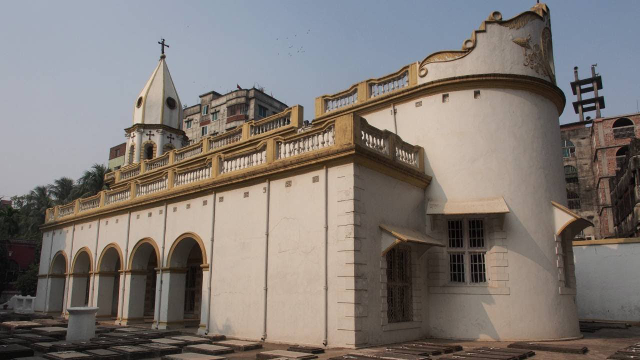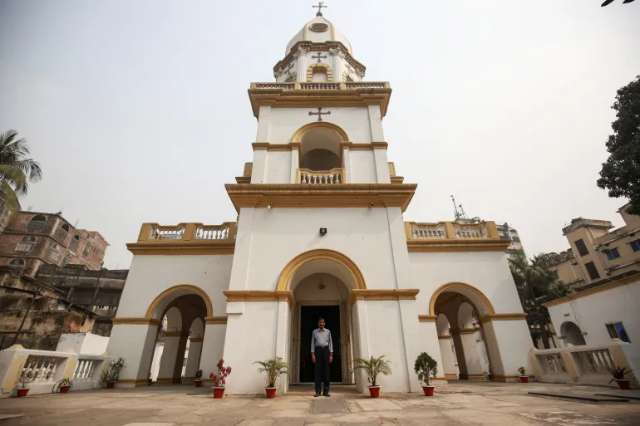

Located amidst the bustling streets of Armenitola, in the heart of Dhaka city, the Armenian Church stands as a glorious testament to the rich history and cultural diversity of the area. Built in 1781 by the Armenian community, which was once a thriving and integral part of Dhaka’s commercial landscape, this church is more than just a place of worship—it's a historical monument that echoes the stories of a bygone era.
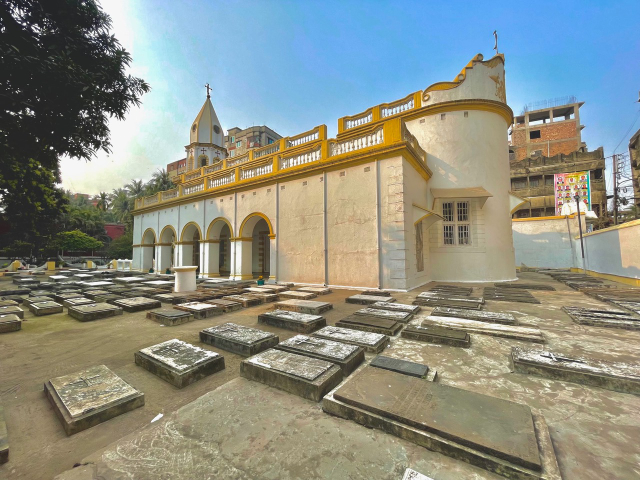
The Armenian Church, officially known as the Holy Resurrection Church, is nestled on Armenian Street, an area named after the influential community that lived there. Despite being surrounded by the modern hustle and bustle of Dhaka, the church premises offer a serene escape with its lush greenery and the old-world charm of its architecture.
The church’s architecture is a beautiful example of the harmonious blend of Armenian and local architectural elements. It features an elegantly simple façade, with arched windows and a bell tower that speaks to the traditional Armenian design. Inside, the church holds intricate tombstones that bear inscriptions in Armenian, providing insights into the lives of the Armenians who once called Dhaka their home.
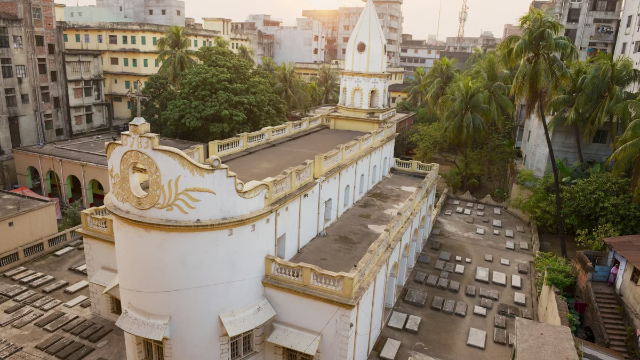
One of the most poignant features of the church grounds is the graveyard, where members of the Armenian community are laid to rest. This cemetery not only serves as the final resting place for many Armenians but also as a historical record of the prominent figures who contributed to the trade and culture of 18th and 19th-century Dhaka.
Today, the Armenian Church is not only a place for occasional religious ceremonies but also a beacon for historians, architects, and cultural enthusiasts who visit to admire its architecture and delve into the fascinating history of the Armenians in Bangladesh. It stands as a reminder of the multicultural tapestry that has shaped Dhaka over the centuries, and it continues to be a cherished heritage site that connects the present with the past.