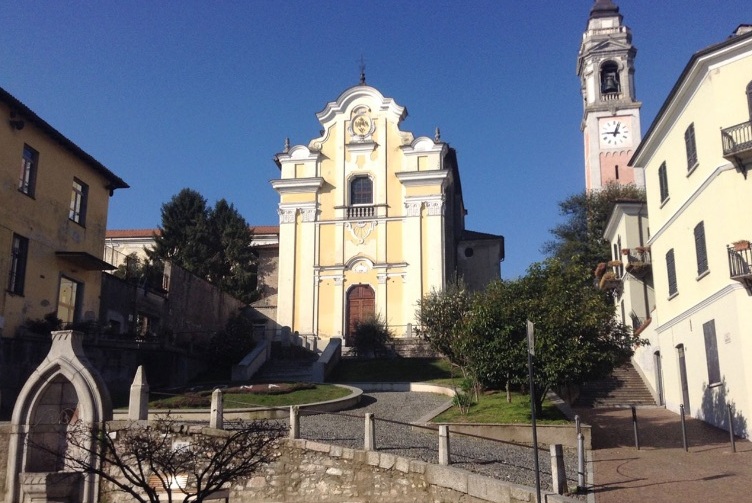

Nestled in the picturesque town of Arona, Italy, the Church of the Holy Martyrs, also known as the Church of St. Gratian, stands as a testament to centuries of history, art, and local culture. Founded in the tenth century, this sacred site has undergone numerous renovations while preserving the revered remains of Arona's patron saints. As you step inside, the majestic atmosphere captures your senses, with its intricate architecture and stunning artworks, particularly the Madonna enthroned among angels and saints painted by Ambrogio da Fossano, better known as Bergognone, in the 15th century. Here, you can immerse yourself in the local culture, experiencing unique customs and vibrant festivals that celebrate the town’s rich heritage. Culinary delights abound, with local specialties that reflect the flavors of the region, making any visit to Arona unforgettable. Don't miss the lesser-known stories and hidden details that bring this remarkable church to life, offering insight into its spiritual significance. The best time to visit is during the summer months when local festivals enliven the town. For a truly personalized experience, consider using the Secret World app to craft your own itinerary in Arona.
### History and Origins
The Church of the Holy Martyrs has roots that trace back to the 10th century, a period marked by the consolidation of Christian communities in northern Italy. Initially built as a modest parish church, it was dedicated to St. Gratian, the patron saint of Arona. Over the centuries, it has undergone extensive renovations, particularly in the 17th century, when the Baroque style was introduced, transforming its interior into a more opulent space. One of the most significant historical events associated with the church is the veneration of its patron saints, whose relics are preserved within its walls. This has made the church a pilgrimage site for many devout visitors seeking blessings.
### Art and Architecture
Architecturally, the Church of the Holy Martyrs is a blend of styles reflecting its long history. The structure showcases elements from Romanesque origins, evident in its sturdy stonework, while Baroque influences are prominent in the interior decor. Visitors are often drawn to the high altar, where the breathtaking painting of the Madonna enthroned among angels and saints captivates the eye. This masterpiece by Ambrogio da Fossano (Bergognone) from the 15th century is not just a religious artwork; it serves as a narrative, illustrating heavenly intercession and the town's deep-rooted faith. The intricate frescoes and altarpieces throughout the church further enhance its artistic significance, capturing the essence of the spiritual journey.
### Local Culture and Traditions
In Arona, local customs are deeply intertwined with the church's heritage. The town celebrates the Feast of St. Gratian every September, attracting both locals and visitors. This vibrant festival features processions, music, and traditional dances, reflecting the community's devotion and pride in their patron saint. Additionally, the church often hosts concerts and cultural events, fostering a sense of unity and celebration among residents. Such traditions provide an authentic glimpse into the local way of life and the profound influence of faith in shaping community identity.
### Gastronomy
No visit to Arona would be complete without indulging in its culinary offerings. The region is famous for its risotto, particularly risotto al pesce persico, a dish made with perch from Lake Maggiore, which lies just a stone's throw from the church. Pair this with a glass of local Nebbiolo wine, and you have a meal that encapsulates the flavors of Piedmont. For dessert, don’t miss the chance to try torta di nocciole, a hazelnut cake that reflects the region's agricultural bounty. Local trattorias often serve these specialties, providing a warm and inviting atmosphere that complements the rich history surrounding the church.
### Lesser-Known Curiosities
Among the many stories surrounding the Church of the Holy Martyrs, one lesser-known fact is the legend of the miraculous spring located near the church, believed to have healing properties. This spring draws pilgrims who seek not only spiritual solace but also physical healing. Additionally, the church is home to an ancient wooden crucifix that dates back to the 11th century, often overlooked by visitors. This artifact is a poignant reminder of the church's enduring legacy and connection to the past.
### Practical Visitor Information
The best time to visit Arona is during the warmer months, particularly from May to September, when the weather is pleasant, and local festivals are in full swing. Be sure to explore the surrounding areas, including the stunning Lake Maggiore, which offers breathtaking views and recreational activities. When visiting the church, take time to admire the intricate details of its architecture and artworks, and consider attending a mass to experience the spiritual ambiance firsthand. For those looking to craft a personalized itinerary, the Secret World app can help you discover the hidden gems of Arona.
In a town rich with history, art, and culture, the Church of the Holy Martyrs stands as a beacon of faith and community.