



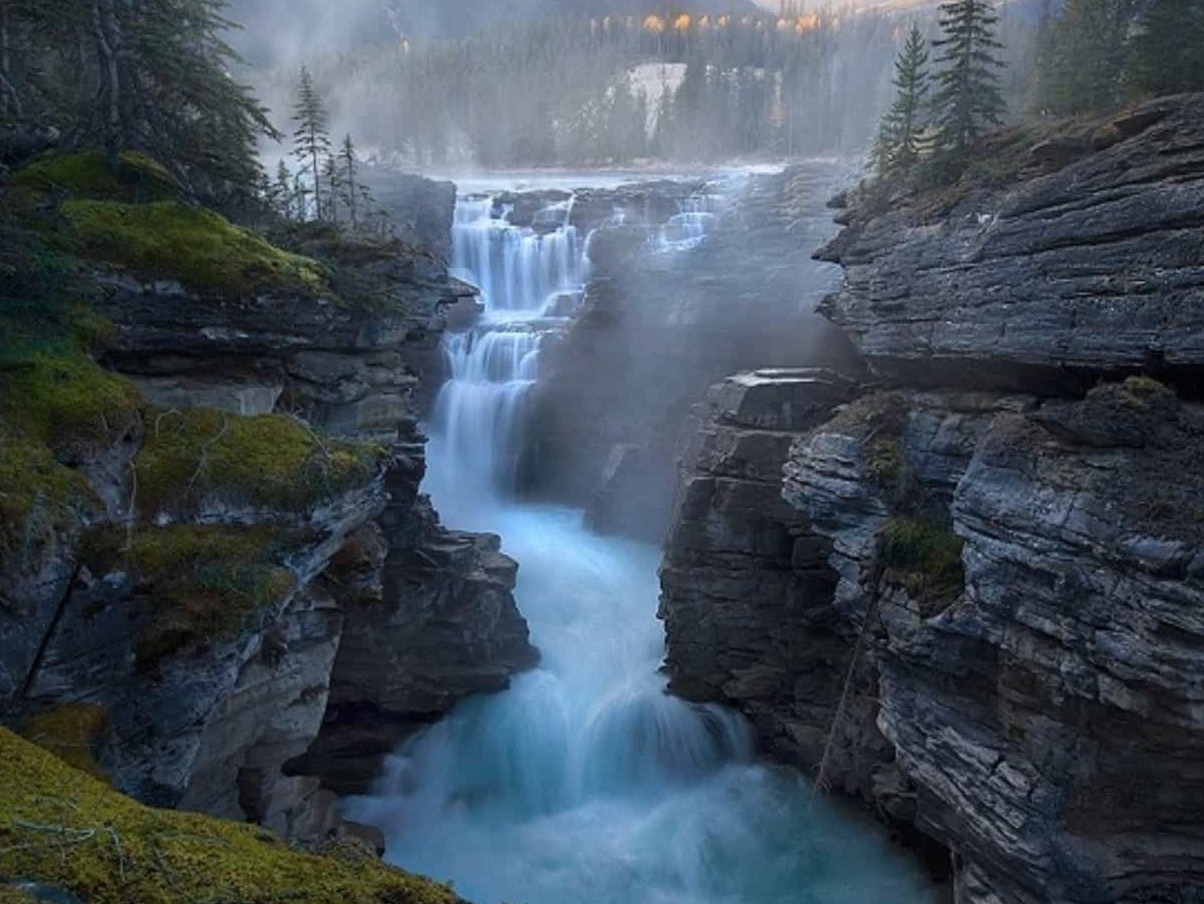
Athabasca Falls in Jasper National Park is a stunning natural wonder that captivates visitors with its breathtaking beauty and potent force. While it may not claim the title of the highest or widest waterfall in the Canadian Rockies, its sheer power makes it a must-see destination. Located approximately 30 kilometers south of the town of Jasper, Alberta, and just west of the picturesque Icefields Parkway, Athabasca Falls draws in travelers from near and far, eager to witness its magnificent cascade.
History and Origins The history of Athabasca Falls is intertwined with the rich tapestry of Indigenous culture and the natural environment. The area has been inhabited by the Nehiyawak (Cree) and Tsuu T'ina (Sarcee) peoples for thousands of years, who revered the land for its abundance. The name 'Athabasca' itself is derived from the Cree word ‘ahtahbasak’, meaning “grass or reeds”. The falls were first documented by European explorers in the late 19th century, with David Thompson, a renowned fur trader and explorer, noting the waterfall during his expeditions in 1810. Over the years, as tourism began to flourish in the early 1900s, Athabasca Falls became a popular attraction, leading to the establishment of Jasper National Park in 1930.
Art and Architecture While Athabasca Falls is a natural marvel, its surroundings have inspired artistic expression over the years. The stunning landscapes and the dynamic flow of water have been captured in various paintings and photographs, showcasing the Romanticism of nature's raw power. Artists like Robert Bateman have depicted the falls in their works, emphasizing the harmony between the natural world and humanity. Although there are no significant architectural structures at the falls, the viewing platforms are designed to blend seamlessly into the landscape, allowing visitors to experience the beauty without disruption.
Local Culture and Traditions The culture surrounding Athabasca Falls is heavily influenced by Indigenous traditions. The area is not only a site of natural beauty but also of cultural significance. In summer, visitors might encounter local Indigenous groups showcasing traditional crafts, storytelling, and dance. Festivals in Jasper National Park, such as the Jasper Dark Sky Festival, celebrate the natural environment and Indigenous heritage, providing insights into the connection between the land and its first inhabitants. These events offer a glimpse into the vibrant cultural mosaic that defines the region.
Gastronomy When visiting Athabasca Falls, indulge in the local gastronomy that reflects the flavors of the Canadian Rockies. The nearby town of Jasper is home to several eateries that highlight regional ingredients. Savor dishes like bison burgers or elk stew, which pay homage to the local wildlife. Pair your meal with a craft beer from one of the local breweries, such as Jasper Brewing Company. Don’t miss out on wild berry desserts that showcase the region's natural bounty, often made with local blueberries and raspberries.
Lesser-known Curiosities Many visitors flock to the main viewpoint of Athabasca Falls, but few venture further to discover hidden gems. A short hike along the Valley of the Five Lakes trail leads to breathtaking views and unique perspectives of the falls. Another curious fact is that the rocks surrounding the waterfall are over 1.5 billion years old, formed during a time when the region was covered by a vast ocean. Additionally, the powerful flow of water has carved out deep gorges over centuries, providing a fascinating glimpse into the geological history of the area. Be sure to look for the unique glacial striations on the rocks, evidence of the region's icy past.
Practical Visitor Information The best time to visit Athabasca Falls is during the summer months from June to September when the weather is mild and the waterfalls are at their fullest. Arriving early in the morning or late afternoon offers the best lighting for photography, while the vibrant autumn foliage in September adds an extra layer of beauty. For a less crowded experience, consider visiting on weekdays. Wear sturdy shoes for walking along the trails and be prepared for sudden weather changes in the mountains. Look out for local wildlife, such as elk and mountain goats, as you explore the surrounding areas.
In conclusion, Athabasca Falls is not just a waterfall; it is a symbol of the raw beauty and cultural richness of Jasper National Park. From its powerful cascades to the stories woven into the landscape, every visit reveals something new and awe-inspiring. To make the most of your trip to Jasper, consider using the Secret World app to create a personalized itinerary that guides you through this stunning destination.
