



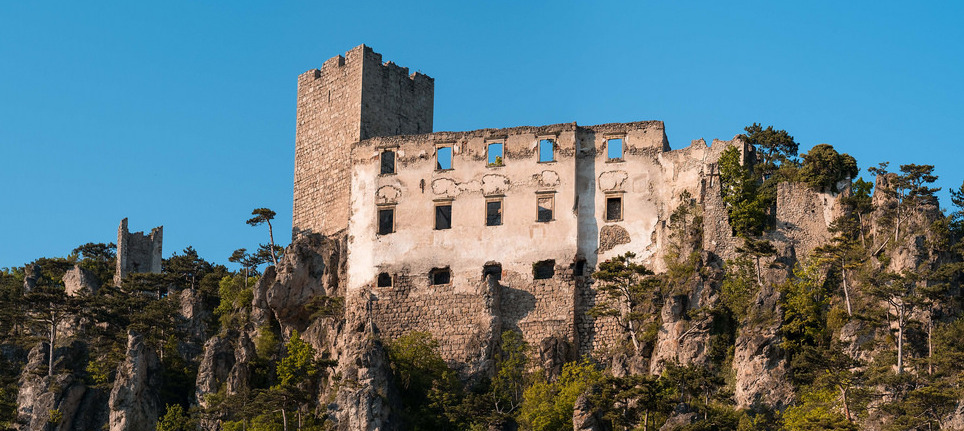
Nestled amidst the rolling hills of Baden, a quaint yet vibrant town in Austria, the ruins of Rauhenstein Castle whisper tales of medieval knights and barons. Perched strategically over the valley, these ruins are a testament to the tumultuous and storied past that shaped the region. The castle's origins trace back to the 12th century, meticulously crafted by the knights of Tursen, a lineage known for their valor and ambition.
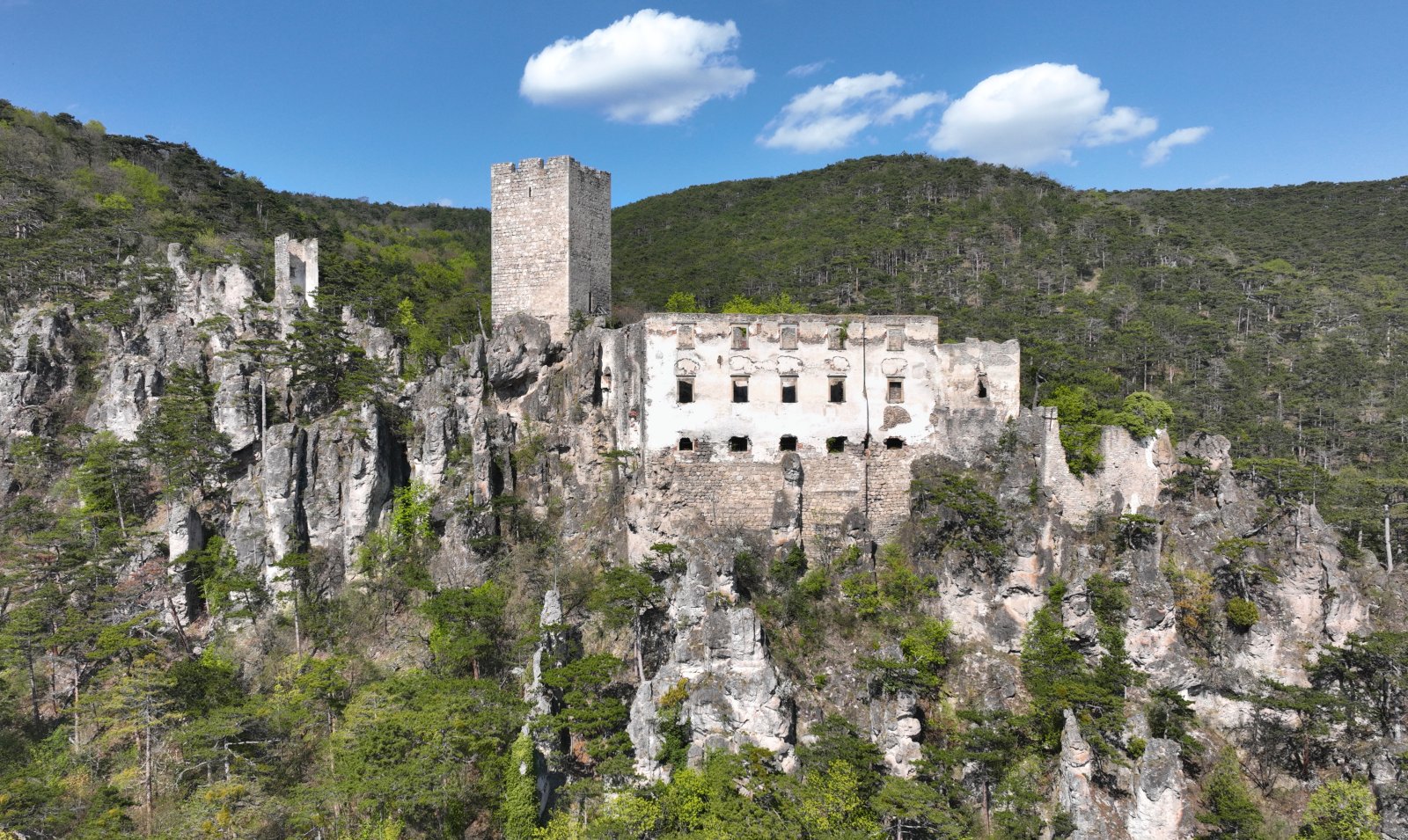
Historically, Rauhenstein has been a focal point in local lore, often owned by notorious robber barons who wielded power and influence. These barons were not just local lords but figures of fear and respect, embroiled in the complex feudal dynamics of the time. The castle was frequently besieged and rebuilt, a reflection of the turbulent times that saw it ravaged and restored until its final decay in the 18th century. The remnants of its walls still stand today, silent witnesses to the passage of time and the myriad of stories etched into its stones.
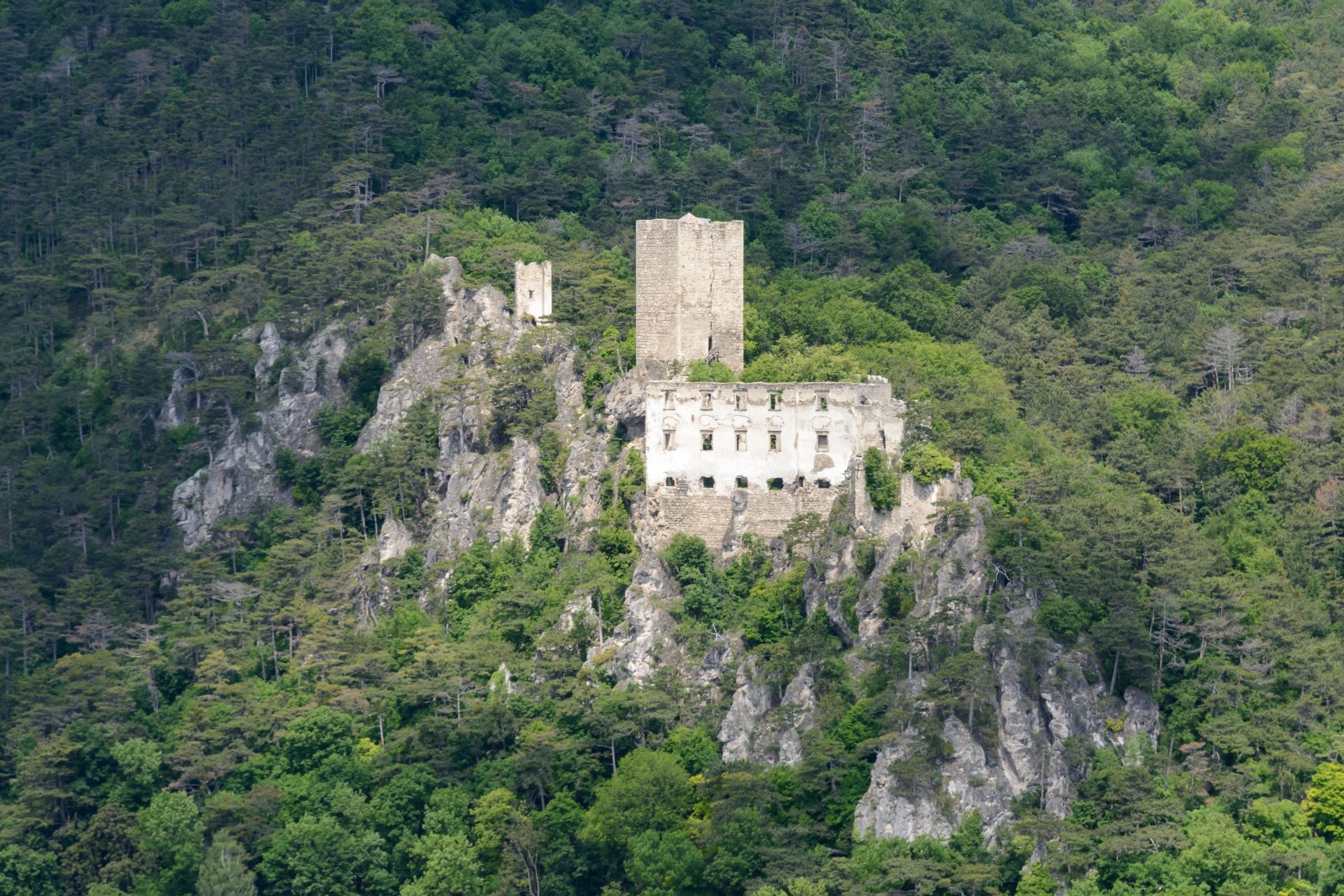
Architecturally, Rauhenstein Castle is an intriguing example of medieval fortification, with Romanesque and Gothic influences apparent in its design. While much of the structure lies in ruins, the surviving sections offer a glimpse into its past grandeur. The thick stone walls and remnants of the towers suggest a fortress designed for defense, yet certain details hint at a more refined side, perhaps once adorned with tapestries and wooden carvings reflecting the artistic sensibilities of its era.
The cultural tapestry of Baden is enriched by its proximity to Vienna, which infuses the town with a blend of traditional Austrian customs and cosmopolitan influences. Festivals such as the Baden Wine Festival celebrate the region's rich viticultural heritage, drawing locals and visitors to partake in lively celebrations. The town's cultural calendar is dotted with events that showcase its music and dance traditions, often set against the breathtaking backdrop of the surrounding hills and vineyards.
Gastronomically, Baden offers a taste of authentic Austrian cuisine, with specialties that have been enjoyed for generations. Visitors can savor Wiener Schnitzel, a classic dish that pairs well with a glass of local Heuriger wine. The region is also known for its delectable pastries, such as the Apfelstrudel, which provides a sweet contrast to the hearty main courses. Dining in Baden is not just about food; it's an experience that captures the essence of Austrian hospitality.
For those keen on discovering lesser-known facets of Rauhenstein, the castle holds secrets that are often overlooked. Among these is a legend of hidden tunnels said to connect Rauhenstein with its sister castle, Rauheneck, creating an underground passageway used during times of siege. Though largely unproven, this tale adds an air of mystery and allure to the site.
The best time to visit Rauhenstein is during the spring and autumn months when the landscape bursts into color, offering a picturesque setting for exploration. Visitors should wear sturdy footwear, as the terrain can be uneven and challenging. The ruins are accessible via a scenic hiking trail from Baden, providing an opportunity to immerse oneself in the natural beauty of the area.
As you explore the ruins, take a moment to absorb the panoramic views of the valley below, imagining a time when knights and barons gazed upon the same horizon. Listen to the whispers of history carried on the wind, and let the stories of Rauhenstein transport you to a bygone era where legend and reality intertwined.
