



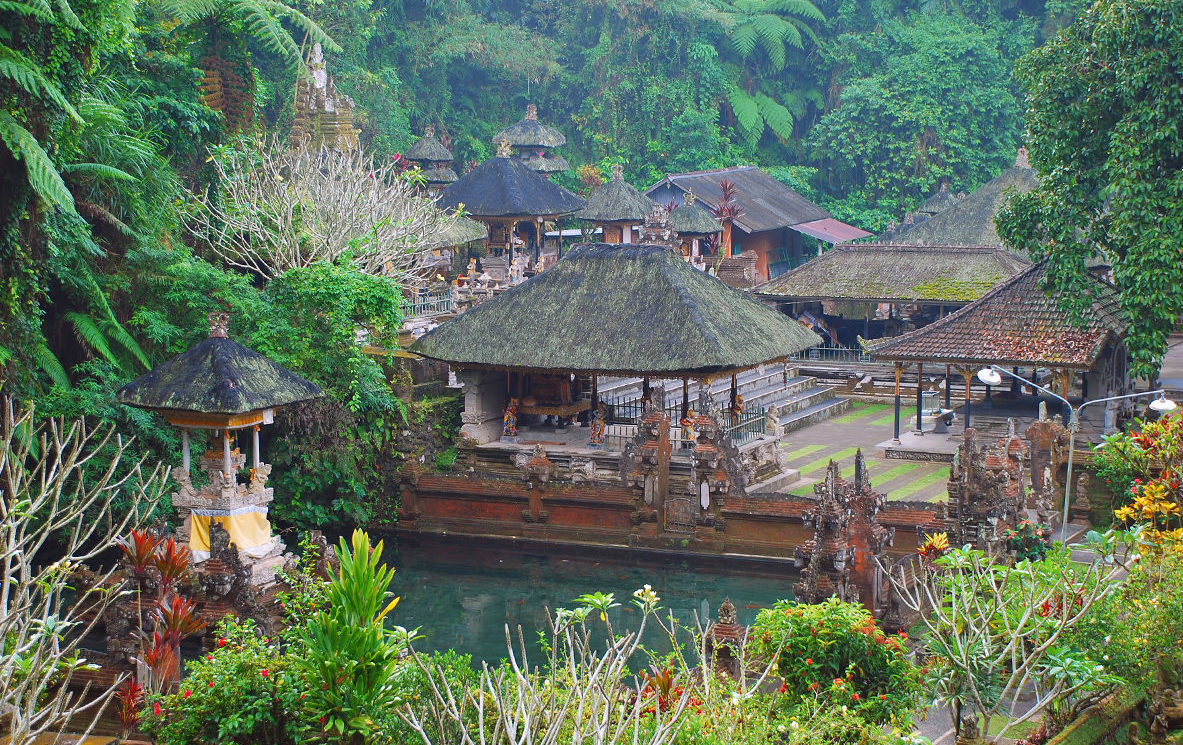
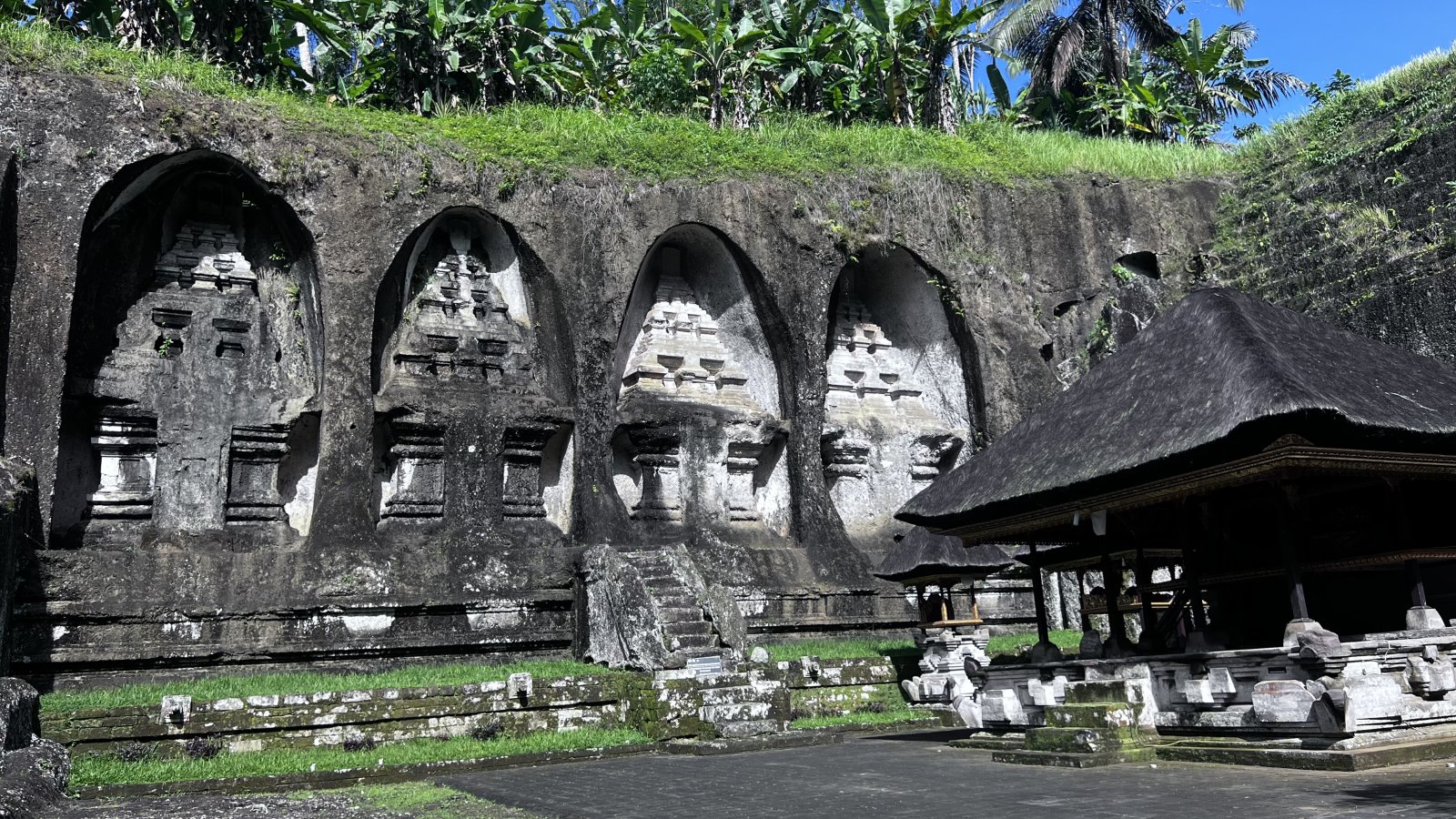
Nestled within the lush greenery of Bali’s uplands, the Gunung Kawi Temple complex is a captivating testament to the island's rich cultural heritage. This ancient site, known locally as Pura Gunung Kawi, features intricately carved shrine reliefs that are literally etched into the rock face of a cliff, creating a breathtaking visual spectacle that beckons both pilgrims and curious travelers alike.

### History and Origins
The origins of Gunung Kawi date back to the 11th century, during the reign of King Marakata, who is believed to have commissioned its construction. The temple complex was dedicated to the royal family, serving as a memorial for the king and his queen. It reflects the influence of Hindu-Buddhist culture that thrived in Bali during this period, showcasing the island's historical significance as a crossroads of spirituality and governance.
Over the centuries, the site has witnessed numerous rituals and ceremonies, with the Pakerisan River—which flows just below the temple—considered sacred by locals. This river is not only a physical marker of the landscape but also a symbol of life and purification, playing a vital role in the spiritual practices observed at Gunung Kawi. The temple complex continues to be a focal point for local worship, especially during significant religious events.
### Art and Architecture
Gunung Kawi is renowned for its unique architectural style, characterized by the rock-cut shrines that stand over 7 meters tall. These shrines, or candi, are adorned with intricate carvings that depict deities, mythical creatures, and floral motifs, all of which exemplify the artistry of Balinese craftsmanship. The site comprises a total of 10 shrines, with the main ones dedicated to the royal family, while others honor various Hindu deities.
The reliefs are not just artistic expressions; they carry deep spiritual significance, embodying the essence of Balinese beliefs. The contrast between the ancient rock carvings and the more contemporary temple courtyard on the opposite bank of the river adds a layer of complexity to the site, showcasing the evolution of Balinese temple architecture over the centuries.
### Local Culture and Traditions
The cultural importance of Gunung Kawi extends beyond its physicality. It is a site where traditional Balinese customs flourish, particularly during the piodalan ceremonies held to celebrate the temple's anniversary. These festivals attract devotees from across the island, who come to offer prayers and partake in vibrant celebrations filled with traditional music, dance, and offerings.
Visitors can witness the intricate rituals that accompany these events, such as the preparation of canang sari—small, decorative offerings made from various natural materials. This practice reflects the Balinese philosophy of harmony with nature and the balance between the spiritual and physical worlds.
### Gastronomy
No visit to Gunung Kawi would be complete without indulging in the local gastronomy that enriches the experience. The region is known for its delectable Bali cuisine, particularly dishes such as nasi campur, a mixed rice dish served with an array of sides, including satay, grilled meat skewers marinated in spices.
For those looking for something sweet, pisang goreng, or fried bananas, offer a delightful treat, often enjoyed with a drizzle of honey or a sprinkle of sugar. Local drinks like Bali coffee, known for its robust flavor, are perfect companions after a long day of exploring the temple complex.
### Lesser-Known Curiosities
While many tourists flock to Gunung Kawi for its stunning vistas and spiritual ambiance, there are intriguing details often overlooked. For instance, the Pakerisan River is believed to flow through the sacred landscapes of Bali, connecting various holy sites, including the famous Tirta Empul Temple just a kilometer north.
Additionally, hidden within the lush vegetation surrounding the temple complex are ancient subak irrigation systems, which showcase the traditional Balinese approach to agriculture. These systems are not only innovative but also reflect the harmonious relationship between the Balinese people and their environment.
### Practical Visitor Information
For those planning a visit to Gunung Kawi, the best time to explore is during the dry season, from April to October, when the weather is pleasant and conducive for walking. Visitors should wear comfortable footwear, as the pathway leading down to the temple complex is lined with steps and can be slippery after rain.
Pay attention to the intricate carvings throughout the site, as they tell stories of Balinese mythology and history. Don't forget to bring a sarong and sash to wear while visiting, as a sign of respect for the sacredness of the temple.
To enhance your journey through Bali's rich cultural tapestry, consider using the Secret World app for personalized itineraries that can guide you to hidden gems and unforgettable experiences.
