



Nestled in the verdant hills of central Bali, Tirta Empul Temple is a sanctuary steeped in history, spirituality, and the rich tapestry of Balinese culture. Recognized as a significant cultural heritage site, this temple complex, founded around 960 AD, is not just an architectural marvel but also a living testament to the island's ancient traditions and beliefs.
History and Origins
The origins of Tirta Empul are intertwined with the legendary tales of good versus evil prevalent in Balinese mythology. According to local lore, the temple was established by the Hindu god Indra, who created the holy spring to purify his weary soldiers during a fierce battle against the evil king Mayadenawa. This narrative encapsulates the essence of the temple, symbolizing the triumph of purity over malevolence.

During the reign of the Warmadewa Dynasty, the temple became a pivotal site for royal ceremonies and rituals. The complex has witnessed the evolution of Balinese society through centuries, serving as a backdrop for cultural and religious practices. The nearby Istana Tampaksiring, a presidential palace built in the mid-20th century during President Soekarno's era, adds a layer of historical significance, showcasing the blend of Indonesia's colonial and post-colonial heritage.
Art and Architecture
The architectural style of Tirta Empul reflects the intricate craftsmanship of Balinese design. Visitors are greeted by ornate stone carvings depicting Hindu deities, mythical creatures, and floral motifs, all meticulously crafted by local artisans. The temple is characterized by its candi bentar (split gateway), which serves as an entrance to the inner sanctum, leading to the sacred water springs.
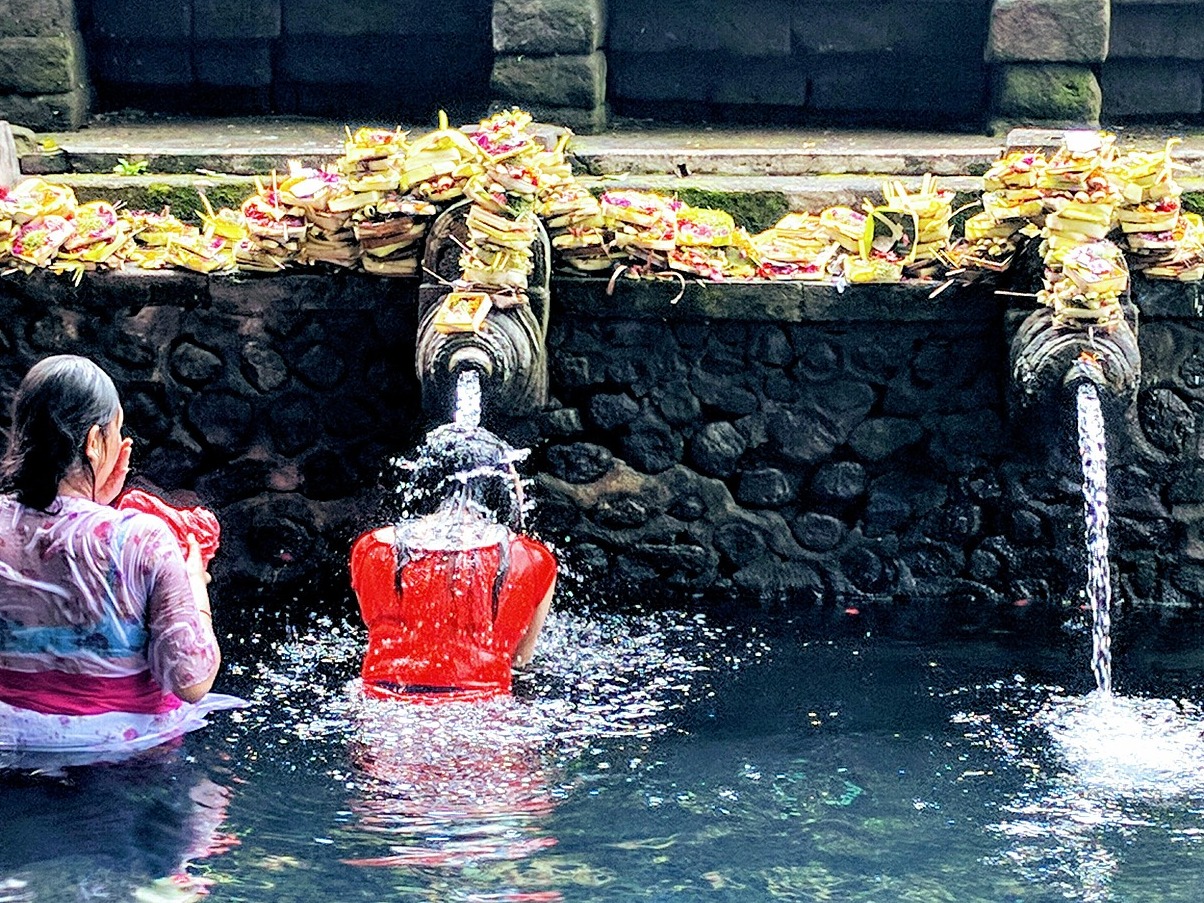
One of the most striking features is the purification baths, where crystal-clear water flows from stone spouts, each representing a different aspect of purification. This unique bathing area is not only a place for spiritual cleansing but also an artistic display, blending functionality with aesthetic beauty. The temple's layout, harmonizing with the natural landscape, embodies the Balinese philosophy of Tri Hita Karana, emphasizing the balance between humans, nature, and the divine.
Local Culture and Traditions
At Tirta Empul, spirituality and community intertwine through various rituals and ceremonies. Locals and visitors alike participate in the melukat, a traditional purification ritual performed in the sacred waters. This practice is integral to Balinese culture, offering a sense of renewal and connection to the divine.
Festivals such as Pagerwesi and Galungan see the temple bustling with activity, as offerings of fruits, flowers, and incense are made to honor the gods. These events vividly showcase the deep-rooted spiritual beliefs that shape the local way of life, providing a glimpse into the vibrant and colorful traditions of the Balinese people.
Gastronomy
Exploring the culinary delights surrounding Tirta Empul adds another layer to the cultural experience. Local dishes such as Babi Guling (suckling pig) and Nasi Campur (mixed rice) reflect the island's rich agricultural bounty and culinary heritage. Many visitors enjoy a meal at the nearby warungs, where traditional Balinese flavors are infused with fresh ingredients sourced from the lush surroundings.
Don't miss out on trying Jamu, a traditional herbal drink made from turmeric and other local spices, known for its health benefits. This invigorating beverage connects visitors not only to the local palate but also to the wellness traditions that are integral to Balinese life.
Lesser-Known Curiosities
While many visitors flock to the purification baths, few are aware of the enchanting fish ponds that grace the temple grounds. These tranquil pools are home to vibrant koi and goldfish, symbolizing prosperity and good fortune. Additionally, the temple's proximity to the Tukad Pakerisan River serves as a reminder of the region's spiritual significance, as water is revered in Balinese culture.
Another fascinating detail is the Brahmana statue located within the temple complex, which is said to grant wishes to those who display genuine intent. Such hidden gems within Tirta Empul often go unnoticed, offering a sense of discovery for the curious traveler.
Practical Visitor Information
The best time to visit Tirta Empul is during the dry season, from April to October, when the weather is more favorable for exploration. Arriving early in the morning allows visitors to experience the temple's serene atmosphere before the crowds descend. Dress modestly, as this is a sacred site; sarongs are available for rent at the entrance.
Look for the stone carvings that tell stories of Balinese mythology, and take a moment to observe the daily rituals that unfold within the temple. Engaging with local priests or guides can enrich your understanding of the spiritual practices that define Tirta Empul.
As you plan your journey to this sacred site, consider using the Secret World app to create a personalized itinerary that will help you uncover the many facets of Bali's rich culture.
