
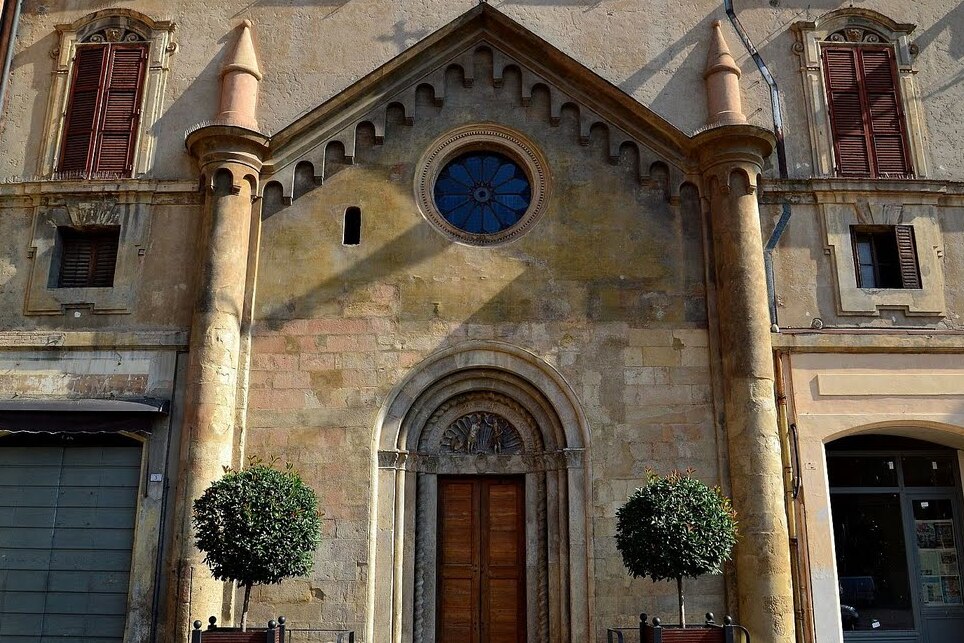

Nestled in the heart of Reggio Emilia, the Baptistery stands as a testament to the city's rich history and artistic heritage. This sacred space, with its striking architecture and storied past, offers a fascinating glimpse into the medieval and Renaissance periods of Italy.
The origins of the Baptistery of Reggio Emilia can be traced back to 1040 or 1049, making it one of the oldest religious structures in the region. Initially built as a place for the community to perform baptisms, its key historical events include numerous renovations and artistic additions that reflect the changing tides of style and faith. Notably, in the late 15th century, under the guidance of Bishop Bonfrancesco Arlotti, the Baptistery underwent significant transformations, marking its transition from a medieval edifice to a Renaissance masterpiece. This period saw the adaptation of the facade, which now prominently features a lunette above the portal that depicts the Baptism of Christ—a stunning example of religious art that invites contemplation.
Architecturally, the Baptistery is designed in a Latin cross plan, a layout that emphasizes its sacred purpose. The interior is equally captivating, showcasing a baptismal font crafted from red Verona marble, adorned with intricately designed marble panels dating back to 1494. Visitors will find themselves drawn to the fresco painted by Francesco Caprioli in 1497-98, which beautifully captures the moment of Christ’s baptism. Caprioli’s work, with the possible assistance of the Milanese artist Cesare Cesariano, adds an ethereal quality to the space, enhancing its spiritual ambiance.
Beyond its artistic significance, the Baptistery holds a vital place in local culture and traditions. It has been a focal point for religious ceremonies and community gatherings for centuries. One of the enduring customs associated with the Baptistery is the celebration of San Giovanni Battista (St. John the Baptist), the patron saint of Reggio Emilia. This festival, held every June, features processions, music, and communal feasting, reflecting the deep-rooted ties between the city’s spirituality and its social fabric. The phrase “St. John shows the deceptions” reflects the historical significance of the Baptistery as a place where people sought truth and clarity in their lives, emphasizing its role beyond mere baptism.
When exploring the area around the Baptistery, one cannot overlook the local gastronomy that enriches the experience of visiting Reggio Emilia. The city is renowned for its culinary delights, particularly Parmigiano Reggiano cheese and traditional balsamic vinegar. Visitors should make time to indulge in local dishes like Tortelli di zucca, a pumpkin-stuffed pasta, or cappelletti, a type of filled pasta that embodies the region's rich culinary tradition. Pairing these dishes with a glass of Lambrusco, a sparkling red wine native to Emilia-Romagna, will provide a sensory feast that complements the visual splendor of the Baptistery.
For those seeking lesser-known curiosities, the Baptistery offers intriguing details often overlooked by casual visitors. On one of the left columns outside the building, ancient reference points for commercial measurements can still be found—the “reggiano” arm, measuring 0.641 m, and the “pertica,” equivalent to six arms at 3.846 m. These remnants hint at the region's historical trade practices and the evolution of measurement systems leading up to the introduction of the metric system in 1803. Today, only the agrarian measurement known as the biolca is still used, which equals 0.2922 hectares, a nod to the agricultural roots that define the region.
The best time to visit the Baptistery is during the spring and early autumn months, when the weather is mild and the gardens surrounding the structure are in full bloom. Arriving early in the day can also help avoid crowds, allowing for a more intimate experience. As you explore, take the time to appreciate the fine details, from the intricate carvings on the facade to the serene atmosphere within.
In your journey through Reggio Emilia, don’t miss the opportunity to delve into the depths of the Baptistery’s history and artistry. This architectural gem is not merely a relic of the past; it is a vibrant part of the city's identity, echoing the stories of generations before us. For a personalized exploration of Reggio Emilia's treasures, consider using the Secret World app to plan your itinerary.


