
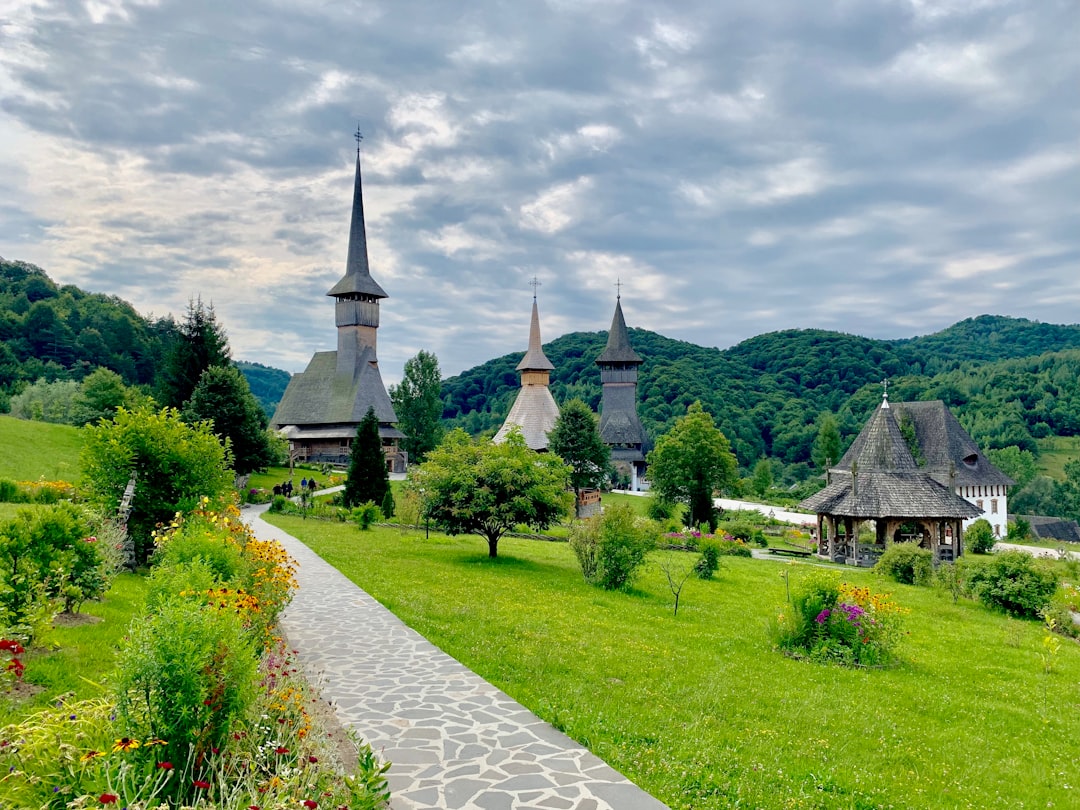

The spires sharp as needles rise above the rolling hills of Maramureș, visible from afar among the oak and fir forests. The Monastery of Bârsana does not announce its presence with grand avenues or tourist signs: it is found by following narrow roads that cut through villages where horse-drawn carts are still an ordinary means of transport. When the complex appears beyond a carved wooden gate, the effect is immediate and tangible — a series of dark wooden structures that seem to have grown from the very ground, with the main church rising over 57 meters in height, one of the tallest wooden churches in Europe.
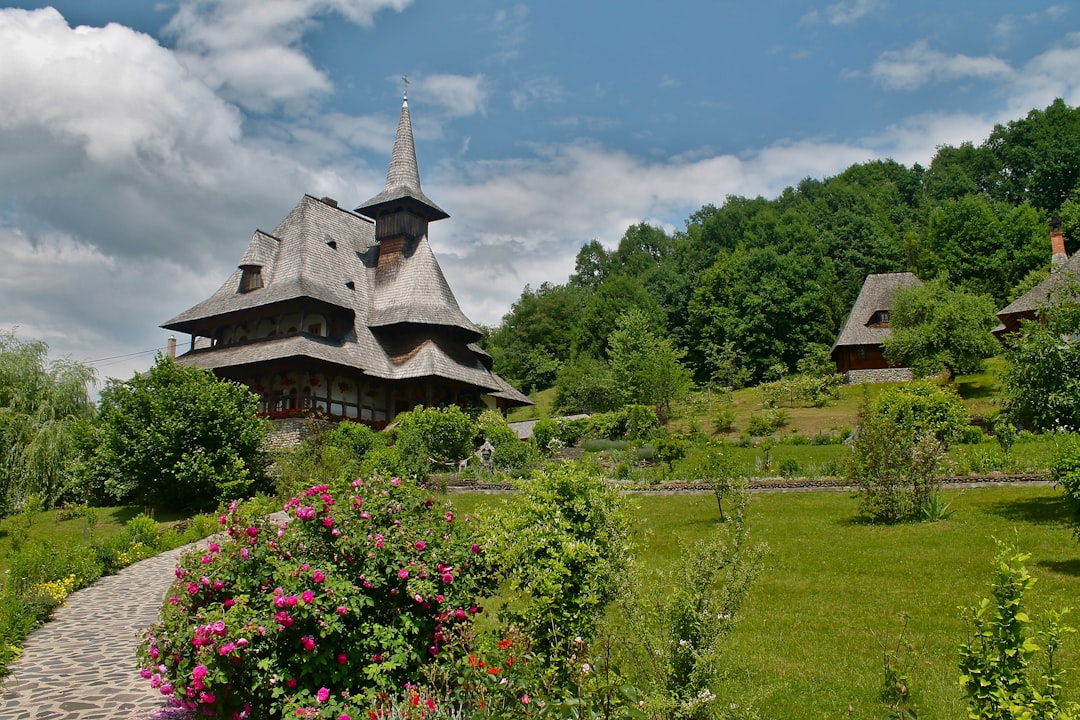
The monastery that is visited today is the result of a relatively recent re-establishment: the monastic community was restored in 1993, after decades in which the communist regime had suppressed organized religious life in Romania. But the historical roots of the site date back to the 14th century, when an initial Orthodox foundation arose in this valley. This broken and then resumed continuity is an essential part of what makes Bârsana significant: not a monument frozen in time, but a living architectural and spiritual tradition.
An architecture born from the forest
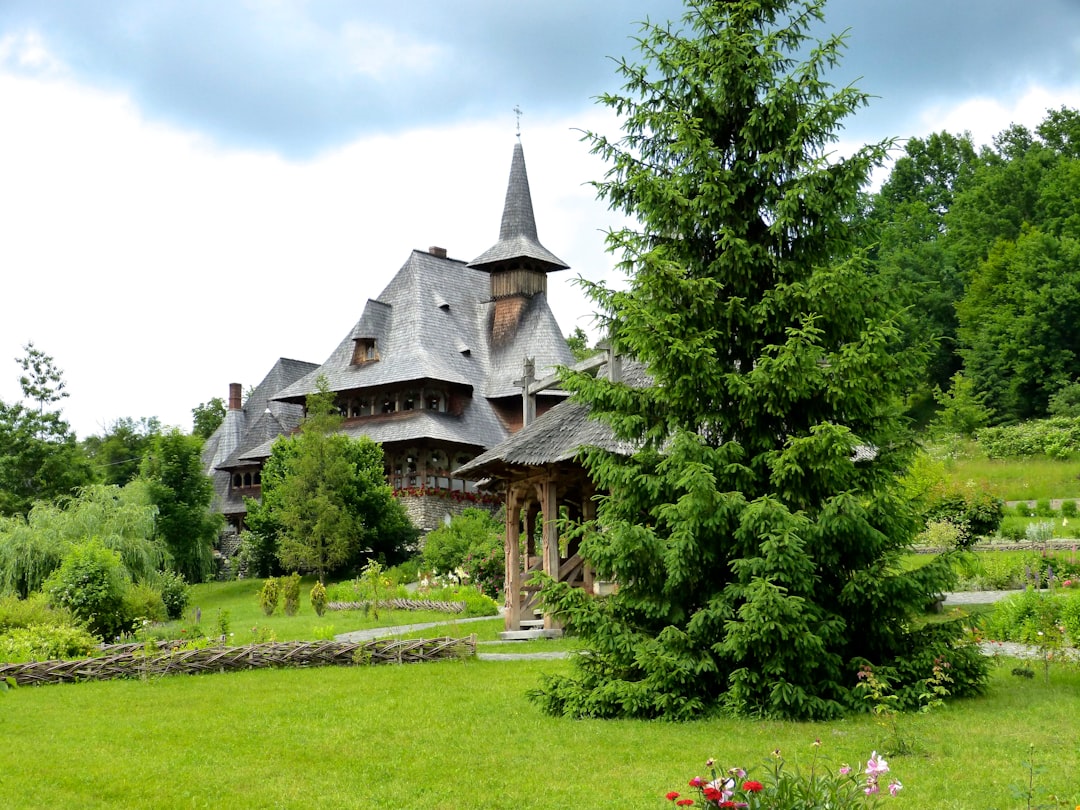
The wooden churches of Maramureș belong to a construction tradition that UNESCO has recognized by including eight of them in the World Heritage list. Bârsana is not among these eight — the original historic church is located elsewhere in the village — but the monastic complex built after 1993 represents the same architectural grammar taken to its boldest consequences. Local master carpenters, heirs to a wisdom passed down from generation to generation, have used solid oak for the load-bearing structures and fir for the cladding, without resorting to metal nails in the main joints.
Approaching the main church, one can observe the details that distinguish this style: the horizontal beams interlocked at the corners with dovetail cuts, the portals carved with geometric motifs of intertwined rope that also recur on the gates and the railings of the stairs. The spire, covered with wooden shingles, narrows in four progressive stages before ending in an Orthodox cross. Inside, the painted iconostasis separates the nave from the presbytery according to the traditional Orthodox rite, and light enters filtered through small windows that keep the interior in a golden twilight.
The monastic complex and the community of nuns
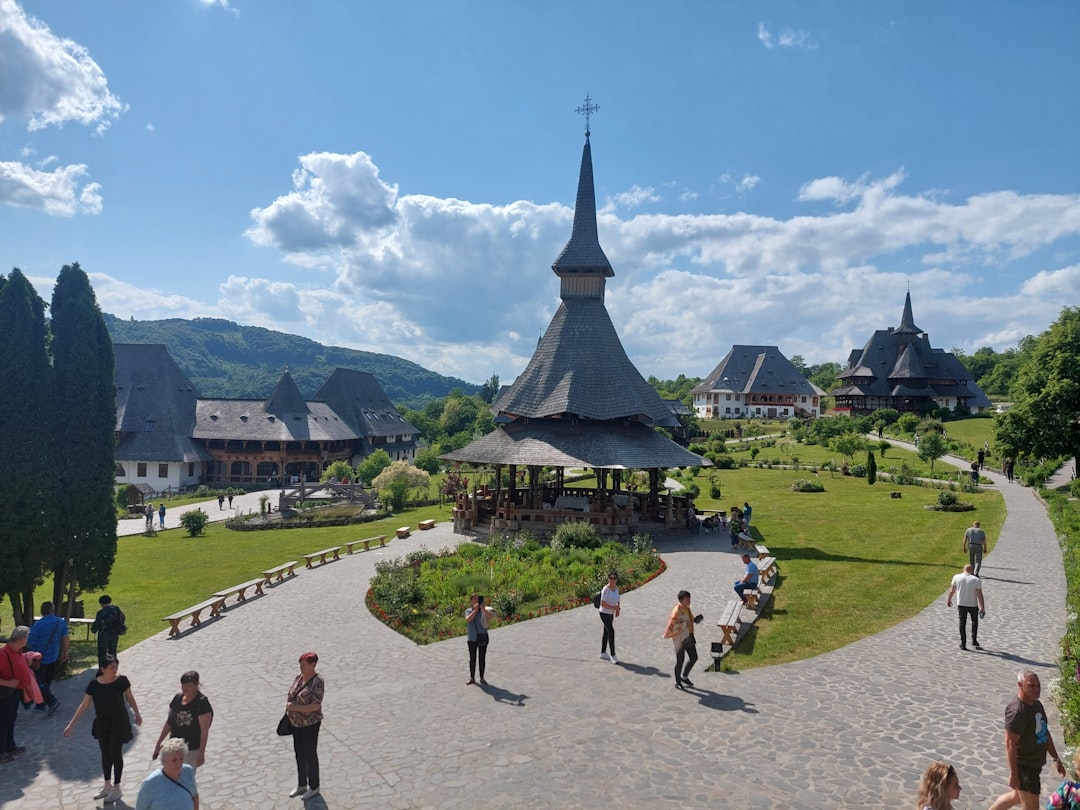
Bârsana is an active monastery, inhabited by a community of Orthodox nuns. This means that the visitor moves in a space still in daily liturgical use, not in a museum. Around the main church are other wooden buildings — the refectory, the cells, a secondary chapel — all built in the same coherent style, so that the entire complex appears as a miniature village perched on the hillside. The gardens tended by the nuns add an element of plant order among the wooden structures: roses, hydrangeas, and aromatic herbs grow along the cobbled paths.
The presence of the religious community is palpable in the atmosphere of the place. It is not uncommon to witness a brief service or hear the sound of the toaca, the wooden board struck with a hammer that traditionally replaces bells in Orthodox churches to summon the faithful. For those coming from secular backgrounds or other religious traditions, this contact with a practice still rooted in everyday life is often the most memorable part of the visit.
How to organize the visit
Bârsana is located about 30 kilometers from Sighetu Marmației, the main city in the area, reachable by car in less than an hour along the road that runs alongside the Iza River. There is no convenient direct public transport service for tourists, so a car or a taxi are the most practical options. The monastery is generally open to visitors during daylight hours, with free access or a voluntary contribution; it is advisable to check the updated hours before departing, as they may vary during Orthodox religious holidays.
The best time to visit is early in the morning, when the slanting light illuminates the wooden shingles of the spire and organized groups have not yet arrived. A visit to just the monastic complex takes about an hour, but those who want to explore the village of Bârsana and the original historic church — located a short distance away — should plan for at least half a day. In summer, the Maramureș area attracts an increasing number of visitors: arriving before ten in the morning ensures a more intimate experience. Respectful clothing is required for entry into the church — covered shoulders and, for women, a headscarf are appreciated.
Why the trip here is worth it
The Maramureș requires a logistical commitment that many travelers avoid: there are no nearby airports, the mountain roads can be challenging, and the region lacks the tourist infrastructure of Romania's more celebrated destinations. Precisely for this reason, Bârsana preserves something increasingly rare — the feeling of being in a place that exists primarily for its own reasons, not for tourism. The oak spires of the monastery point towards a sky that changes color with the seasons, and the tradition that generated them is still alive enough to be observed, not just imagined.


