
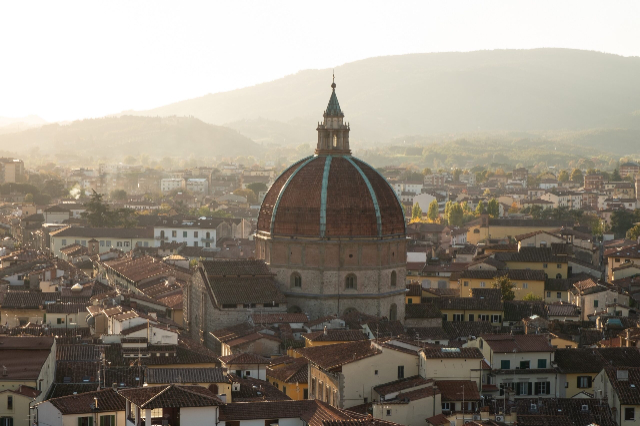

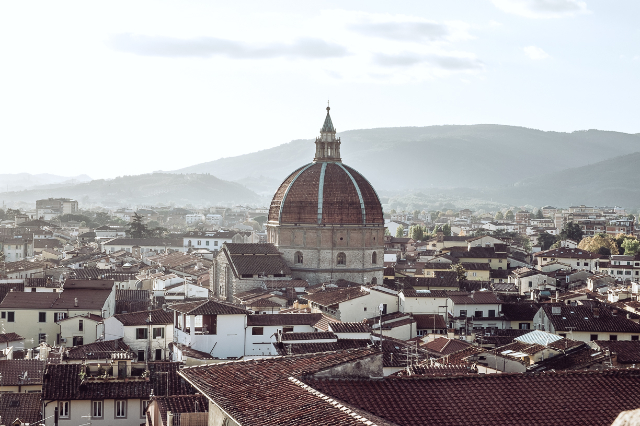
With its Renaissance dome, it is the basilica of Our Lady of Humility that delineates, along with the bell tower in Piazza Duomo, the striking skyline of the city of Pistoia. The shrine was founded in 1495 on the foundations of the church of S. Maria Forisportam, which, located at the gates of the first circle of walls, was a landmark for pilgrims and travelers.
On July 17, 1490, while infighting was raging in the city, some of the faithful saw the image of Our Lady of Humility, preserved there, tear up. Thus, the local authorities decided to honor this event by building a grandiose temple, in which to place the sacred fresco of the miracle. The initial project was the work of architect Giuliano da Sangallo and included the creation of a large vestibule and an octagonal hall with a dome. A few years later, however, with the interruption of the Medici seigniory, Sangallo moved away from the area and so the direction of the work was entrusted to the Pistoiese Ventura Vitoni.
The building process was, however, very long and had to be interrupted several times for financial reasons or related to the internal vicissitudes of the city, such as the bitter struggle between the Panciatichi and Cancellieri families, who were vying for political power.
The dome, which so characterizes the city's appearance, is, however, not Vitoni's feat but Giorgio Vasari's. In fact, the Grand Duke of Tuscany, Cosimo I de'Medici, asked him to complete the work when Vitoni died in 1522. To create the great domed roof, now the third largest in Italy, Vasari was manifestly inspired by the Florentine and Brunellesque S. Maria del Fiore.


