
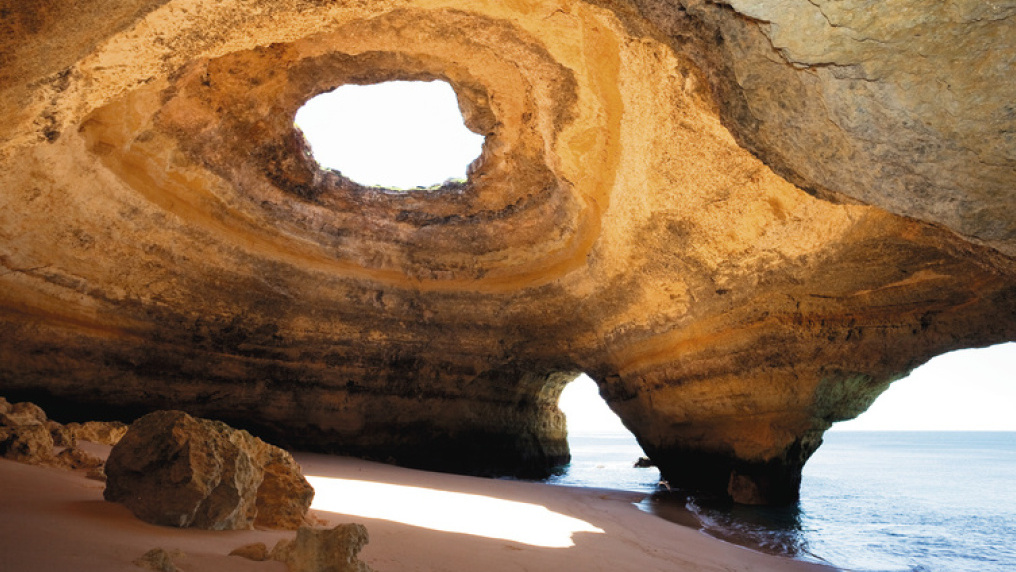

Beneath the cerulean skies of the Algarve lies one of Portugal’s most breathtaking geological marvels: the Benagil Sea Cave. This awe-inspiring formation, located near the quaint coastal village of Carvoeiro, is a testament to nature's artistry, captivating visitors with its sun-drenched interior and secluded sandy floor. As the tide ebbs and flows, the cave's natural oculus opens up to the heavens, casting ethereal light that dances across its rugged walls—a sight so mesmerizing that it feels almost otherworldly.
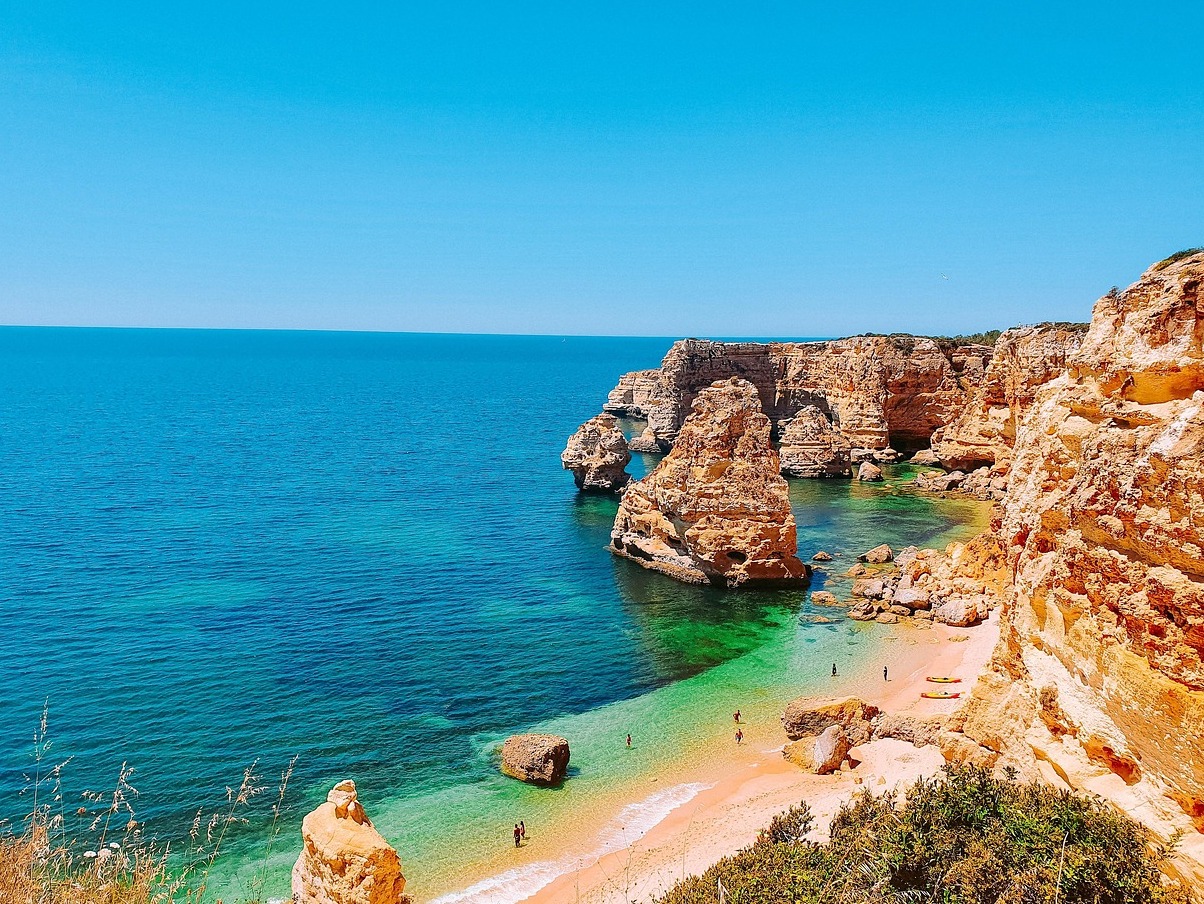
The origins of this natural wonder trace back to millions of years ago, shaped by the relentless forces of the Atlantic Ocean. Over time, the erosion of the limestone cliffs gave birth to this enchanting cave, with its distinct dome and opening, known locally as the "Algar de Benagil." While the cave itself is a natural spectacle, the surrounding region is steeped in history. The Algarve was once a hub of maritime exploration during the Age of Discoveries, with nearby towns like Lagos serving as launch points for voyages that would change the world. Although the Benagil Cave wasn’t a part of these grand narratives, its presence adds to the rich tapestry of the region’s geological and historical significance.
In terms of art and architecture, the cave is a masterpiece created by nature rather than human hands. Yet, it has inspired countless artists and photographers who seek to capture its beauty. The play of light and shadow within the cave has been a subject of fascination, offering a unique canvas that changes with the time of day and the seasons. While there are no man-made structures within the cave, its architectural splendor lies in its natural symmetry and the organic curves of its walls, reminiscent of a grand, ancient amphitheater.
The local culture around Carvoeiro is deeply influenced by the sea. Fishing has been a way of life for generations, and this maritime heritage is celebrated in local festivals such as the Festa do Pescador (Fisherman's Festival). This annual event, held in nearby towns, showcases traditional fishing techniques and celebrates the fruits of the sea with music, dance, and, of course, an abundance of seafood.
Gastronomy in the region is a delightful reflection of the Algarve’s coastal bounty. Visitors can savor dishes like cataplana, a seafood stew cooked in a traditional copper pot, and sardinhas assadas—grilled sardines that are a staple in local eateries. The fresh, salty air of the Atlantic pairs perfectly with a glass of Vinho Verde, a slightly effervescent wine that’s as refreshing as the sea breeze.
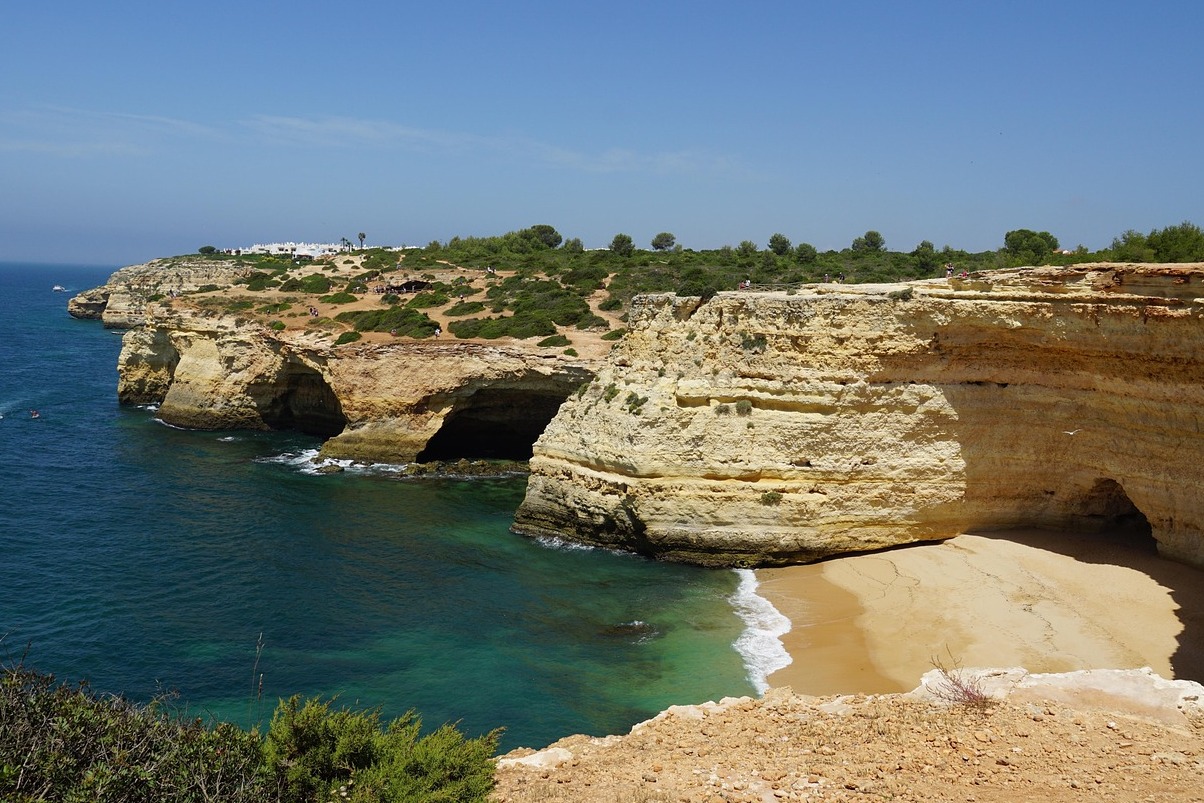
Beyond the celebrated cave itself, the region is full of lesser-known curiosities. Just a stone’s throw from Benagil, the coastline is dotted with hidden grottoes and secret beaches, accessible only by kayak or paddleboard. These secluded spots offer a chance to escape the crowds and experience the Algarve’s raw, untouched beauty. Local legends speak of pirate hideouts and ancient shipwrecks, adding a layer of mystery and intrigue to these coastal waters.
For those planning a visit, practical tips can make all the difference. The best time to visit the Benagil Sea Cave is early in the morning or late afternoon, when the sun’s angle creates the most dramatic lighting inside the cave. Access is typically by boat, with numerous tours departing from Benagil Beach and nearby Portimão. Adventurous travelers might opt for a kayak or stand-up paddleboard for a more intimate experience. It’s important to check tidal schedules, as high tides can limit access to the cave’s sandy beach.
In summary, the Benagil Sea Cave is not just a destination but an experience—a place where the Earth's history is etched in every curve of rock, and where the light of the sun plays an eternal game of hide and seek with the shadows. It is a natural cathedral, a testament to the power and beauty of nature, and a must-visit for anyone drawn to the wonders of the world.


