


Steam rises from the ground even before arriving in the city. Approaching Beppu by train, the first things you see are the white columns rising from the residential areas, parks, and alleys: they are the fumes from over 2,000 hot springs that make this city in Ōita Prefecture one of the most unique destinations in Japan. Beppu is the second city in the world for the volume of hot water that flows from the underground, after Yellowstone in the United States, with a flow rate exceeding 130,000 liters per minute.
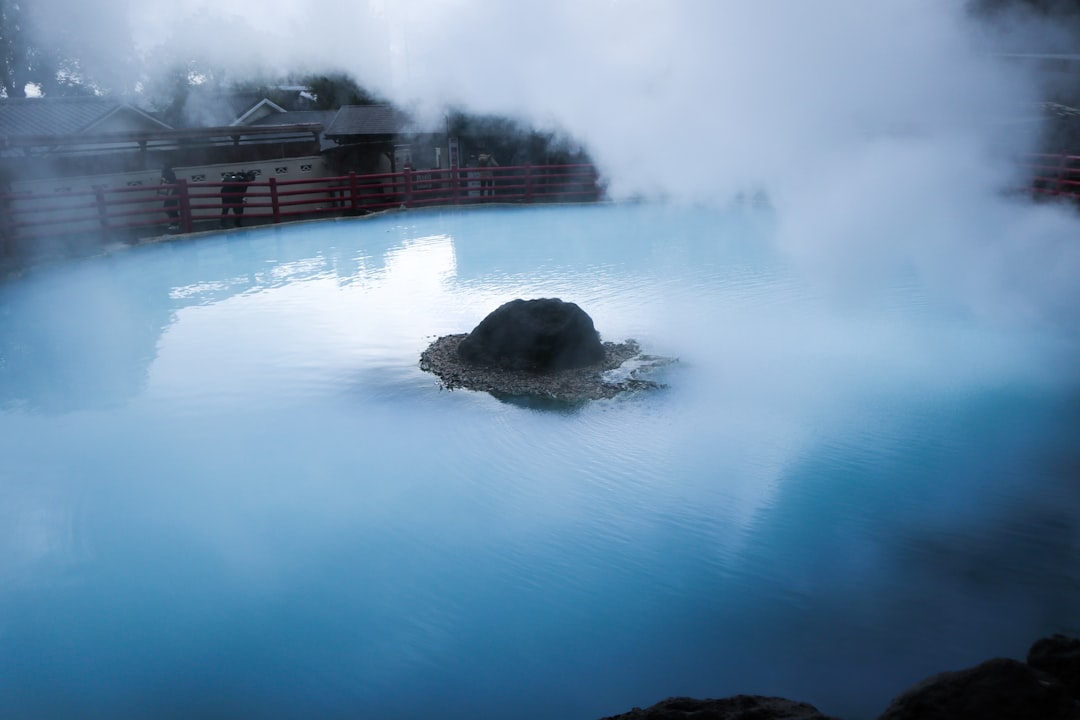
The water here is not just a scenic backdrop: it is the center of daily life. Residents cook vegetables with geothermal steam in local markets, children grow up accustomed to the smell of sulfur in the air, and visitors come from all over Japan to immerse themselves in the public onsen baths, where the water temperature varies between 40 and 50 degrees Celsius depending on the source.
The Hell of Beppu: the pools that cannot be touched

The main tourist attraction of the city is the circuit of the Jigoku, literally "Hells", a group of hot spring pools with spectacular visual characteristics and temperatures too high for bathing. The most visited are located in the neighborhoods of Kannawa and Shibaseki, and a combined ticket allows access to seven of the main sites for about 2,000 yen per person. Among these, the Umi Jigoku — "Sea Hell" — is probably the most photographed: its water is a deep cobalt blue, caused by the presence of iron sulfate, and reaches 98 degrees Celsius.
The Chi no Ike Jigoku, "Blood Pond Hell", is instead a deep brick red, a coloration due to the iron oxide and red clay present on the bottom. There is historical documentation that attests to the presence of this spring for over 1,300 years, making it one of the oldest in Japan. A short walk away is the Tatsumaki Jigoku, a geyser that erupts regularly every thirty or forty minutes, reaching a height of about 30 meters before a stone structure limits its projection for safety reasons.

The therapeutic experience: from public baths to hot sand
In addition to the Hell experiences, Beppu offers a variety of hot spring experiences that go well beyond the simple bath. In the area of Beppu Kaihin Sunayu, along the coast, it is possible to practice sunamushi, the bath in geothermally heated hot sand. Visitors lie on the beach dressed in a cotton yukata and are covered with sand by attendants: the heat penetrates deeply into the muscles and the experience is described by many as more intense and relaxing than bathing in a tub. The service is available year-round and costs approximately between 1,000 and 1,500 yen.

Traditional public baths, called kōshū yokujō, are spread throughout the city and represent an authentic alternative to facilities designed for tourists. In many of them, the price is under 200 yen, and the atmosphere is that of local neighborhoods: elderly people meeting every morning, families with children, an everyday normality that tells how integrated hot spring water is in the life of Beppu.
How to Organize Your Visit Practically

Beppu can be reached from Fukuoka in about two hours by the limited express Sonic train operated by JR Kyushu, which departs from Hakata Station. The train journey is comfortable and covered by the Japan Rail Pass. Once in the city, most of the main attractions can be reached by local buses from Kamenoi Bus, which issues discounted daily tourist tickets.
The best time to visit the Hells is early in the morning, between 8:00 and 9:00, when the sites open and crowds have not yet formed. On weekends and during Japanese national holidays, the number of visitors increases significantly. It is advisable to avoid wearing light-colored clothing when visiting the hot springs: the smell tends to cling to fabrics. For bathing in the onsen, it is important to know that tattoos are still prohibited in most traditional public facilities in Beppu, as in much of Japan.
The atmosphere of the city outside the hot springs
Beppu is not just steam and baths. The district of Kannawa retains an atmosphere of bygone times, with narrow alleys, wooden houses, and small shops selling hard-boiled eggs cooked in geothermal steam — the onsen tamago — and local sweets. Walking through the streets of Kannawa at twilight, when the steam mixes with the low light and the air smells of sulfur, is one of those experiences that are hard to describe and easy to remember.


