
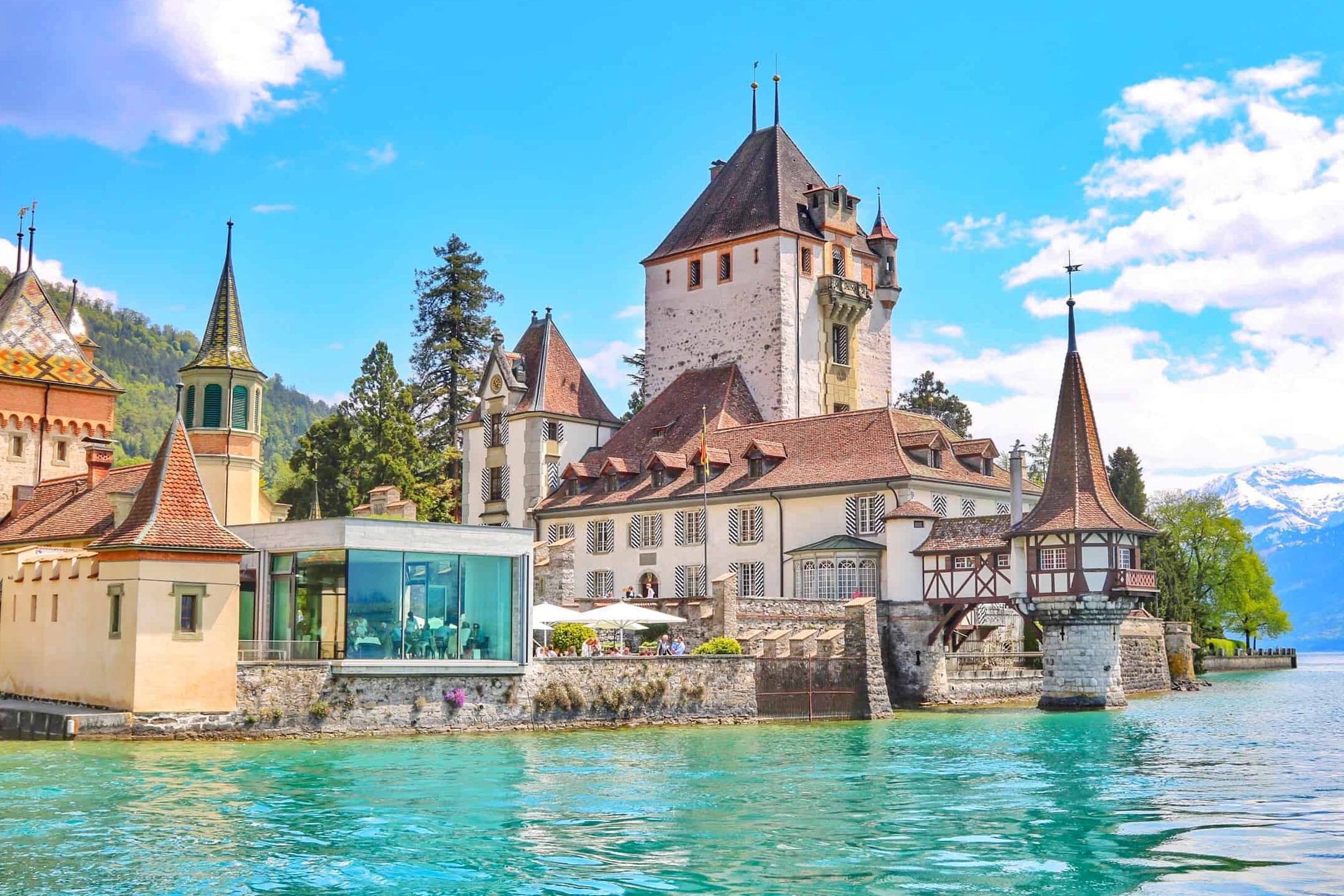

Nestled on the shores of Lake Thun, Oberhofen Castle enchants visitors with its rich history and stunning architecture. This romantic castle complex, which dates back to around 1200 AD, has evolved through centuries of ownership and architectural styles, making it a captivating destination for history enthusiasts and casual visitors alike.
History and Origins The origins of Oberhofen Castle trace back to the 13th century, when it was first established as a fortified residence. Initially owned by the Counts of Thun, it was strategically placed to oversee the important trade route along Lake Thun. Over the centuries, the castle changed hands among various noble families, including the Barons of Hohenzollern, who were instrumental in its expansion and renovation. One of the critical historical events occurred in 1530 when the castle was partially destroyed by fire, leading to a significant reconstruction that introduced various architectural styles, including Gothic and Renaissance elements.
The castle’s rich history is further illustrated by its unique features, such as the 13th-century chapel housing remarkable Romanesque frescoes and the Turkish smoking parlor, showcasing the influence of different eras and cultures on the castle’s evolution.
Art and Architecture The architectural charm of Oberhofen Castle lies in its eclectic blend of styles, which narrate the tale of its storied past. The castle's turrets, gables, and balconies reflect the Gothic Revival style, while the interiors transport visitors to different historical periods. Each room is a canvas of artistry, adorned with exquisite woodwork, antique furnishings, and decorative art that speak to the craftsmanship of bygone eras.
The Turkish smoking parlor, an unusual feature for a Swiss castle, was designed in the 19th century as a nod to the era's fascination with the exotic. Visitors can also admire the chapel's frescoes, which are not only religious depictions but also important works of art that provide insight into the medieval artistic style of the region. The castle gardens, meticulously landscaped, offer a serene backdrop where visitors can enjoy the tranquility of nature framed by the stunning Alps.
Local Culture and Traditions The village of Oberhofen am Thunersee is rich in cultural traditions. The locals celebrate various festivals throughout the year, including the Lake Thun Festival, which features traditional music, performances, and delicious local cuisine. This festival reflects the vibrant spirit and hospitality of the community, showcasing the close-knit relationships among its residents.
Another important tradition is the annual Fasnacht, or carnival, where locals don colorful costumes and masks, parading through the streets with music and merriment. This lively celebration, held before Lent, is a wonderful opportunity for visitors to embrace the local culture and participate in the festivities.
Gastronomy The culinary scene around Oberhofen is as captivating as its architecture. Traditional Swiss cuisine shines through local specialties such as Rösti, a crispy potato dish often served with cheese or meats. Visitors can also savor Älplermagronen, a hearty pasta dish made with potatoes, cream, and cheese, illustrating the region's agricultural bounty.
Don’t miss the chance to indulge in Berner Platte, a platter of various meats, sausages, and pickled vegetables, representative of the Bernese culinary tradition. Pair your meal with a glass of Fendant, a delightful white wine produced in the nearby Valais region, or opt for a local craft beer to experience the flavors of Switzerland fully.
Lesser-Known Curiosities One fascinating aspect of Oberhofen Castle is its connection to the romantic legends of the region. Whispers of ghostly sightings among its turrets and the enchanting stories of star-crossed lovers permeate local folklore, adding a mystical allure to the site. Additionally, the castle’s gardens are said to feature rare plant species, some of which are believed to have medicinal properties, showcasing the historical significance of herbal knowledge in the region.
Another curiosity is the castle’s strategic role during the World Wars, serving as a refuge for local families during times of conflict, further embedding it into the local narrative.
Practical Visitor Information The best time to visit Oberhofen Castle is during the late spring and summer months, from May to September, when the gardens are in full bloom and the weather is perfect for exploring the surrounding area. Visitors can enjoy guided tours that delve deeper into the castle’s history, architecture, and art.
Make sure to check the castle’s website for seasonal events and exhibitions, which often feature local artists and craftsmen. Parking is available nearby, but arriving early is recommended, especially during peak tourist seasons.
As you wander through the castle’s historic halls and lush gardens, take a moment to soak in the stunning views of Lake Thun and the Bernese Alps, adding to the fairytale charm of this magnificent site.
To plan your personalized itinerary to explore the enchanting Oberhofen Castle, consider using the Secret World app for tailored recommendations.


