
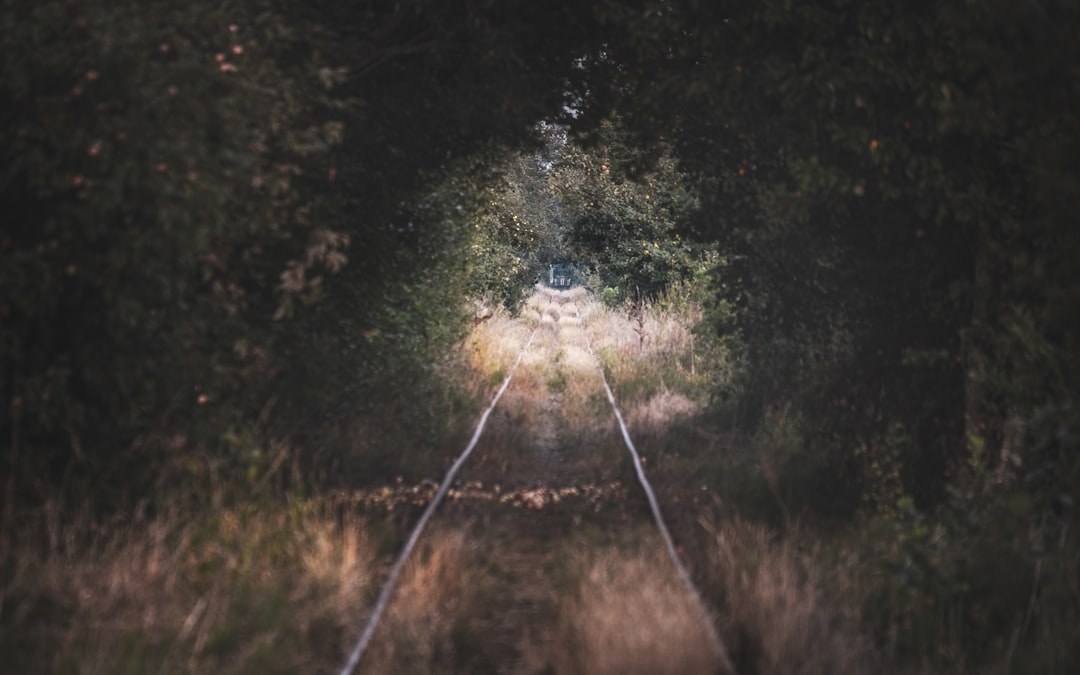

A dense silence, interrupted only by the crackling of branches and the distant call of a black woodpecker. Walking in the Białowieża Forest means entering an ecosystem that has remained virtually unchanged since the last Ice Age, a place where oak trees with circumferences exceeding three meters and an estimated age of over 500 years cast shadows on an untouched undergrowth. We are at the border between Poland and Belarus, in what is recognized as the last example of primeval lowland forest remaining in Central Europe.

The Białowieża National Park was included in the UNESCO World Heritage List in 1979, and the protected area extends for about 3,000 hectares on the Polish side, while the cross-border area with Belarus brings the total surface area to over 140,000 hectares. But numbers alone do not convey the physical sensation of walking among trees that no lumberjack has ever felled, among fallen trunks left to decompose for centuries according to the natural rhythm of the forest.
The European bison: a return from near extinction

The animal symbol of Białowieża is the European bison (Bison bonasus), the heaviest land mammal on the continent. The species was completely extinct in the wild after World War I — the last wild specimen was shot in 1921 right in this forest. The reintroduction, initiated in the 1930s thanks to specimens that survived in captivity, has today led to a wild population of about 600 bison in the Polish area of the park alone. Spotting them is not guaranteed, but in the early hours of the morning, along the paths that border the clearings, the chances increase significantly.
In addition to bison, the forest is home to wolves, lynxes, moose, and otters. The birdlife is extraordinarily rich: over 250 species of birds have been recorded, including the rare white-backed woodpecker and the Eurasian eagle-owl. The decaying trunks — a characteristic element of a primeval forest — are a fundamental habitat for over 8,000 species of insects and fungi, many of which are not found in any other European forest.

The strictly protected area: where nature does not wait for the tourist
Not all of the forest is freely accessible. The Strict Reserve, the oldest and most intact core of the park, can only be visited with an authorized guide. Guided tours typically depart from the center of the village of Białowieża and last between two and four hours. Walking in this area means moving along narrow paths among ash, hornbeam, and linden trees that have never known selective logging, with the ground covered by layers of foliage, moss, and exposed roots intertwining like in a vegetal cathedral.
The Nature Museum of the park, located in the village, offers a useful introduction to the ecosystem before venturing into the forest: here, taxidermied specimens of local wildlife are preserved, along with panels documenting the history of the reserve, including the period when the forest was a royal hunting ground for Polish kings and, later, Russian tsars.
How to get there and when to visit
Białowieża can be reached from Warsaw in about three and a half hours by car, traveling east towards Hajnówka, the nearest town with regular train connections from the capital. From Hajnówka, the village of Białowieża is about 20 kilometers away and can be reached by local buses or taxi. There are no direct flights or train stations in the village itself, so private transport or organized transport remains the most convenient solution.
The best season to visit is late spring (May-June), when the vegetation is in full bloom and the wildlife is more active. Autumn, between September and October, offers extraordinary colors and ideal conditions for spotting bison in the clearings. Winter, with snow covering the underbrush, transforms the forest into an almost unreal landscape, but the trails can be difficult without proper equipment. It is highly recommended to book authorized guides in advance, especially during the summer months, as access to the Strict Reserve is limited to protect the ecosystem.
What to observe while walking among the trees
One of the most concrete and surprising aspects of Białowieża is the timescale that is physically perceived. The oldest pedunculate oaks in the forest have trunks so massive that they require more people to embrace them, and they bear visible signs of centuries of undisturbed growth: natural cavities, broken branches never removed, aerial roots emerging from the ground like fingers. Some of these trees were already adults when Columbus crossed the Atlantic.
The soil itself is an object of observation: the layers of humus accumulated over the centuries, the fungi growing on fallen trunks, the hoof prints in the soft earth near the waterways. Białowieża is not a forest to contemplate from afar — it is a place that can only be understood by walking through it, slowly, paying attention to the details that nature has taken millennia to build.


