



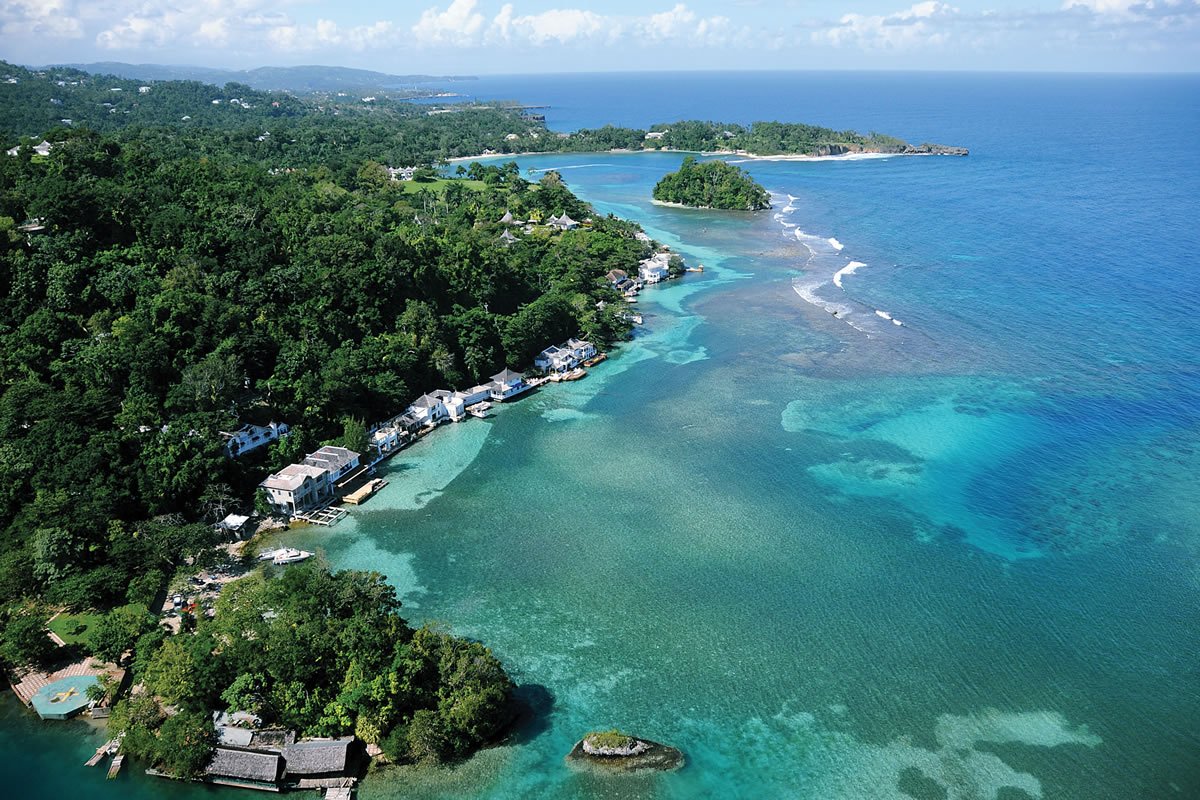
Nestled just outside Port Antonio in Jamaica, the Blue Lagoon is a mesmerizing natural wonder that captivates with its vibrant hues and tranquil waters. Known as a cinematic backdrop for the 1980s film "The Blue Lagoon," this enchanting location is steeped in history, culture, and a touch of Hollywood magic.

The Blue Lagoon has long been a part of Jamaican lore. Originally known as The Blue Hole, it's said that ancient Arawak and Taino peoples considered these waters sacred. These indigenous tribes were the first to recognize the lagoon's natural beauty, using it as a site for both sustenance and spiritual reflection. With the arrival of European explorers in the late 15th century, the lagoon's allure was noted in maritime logs, marking it as a navigational landmark for those venturing into the Caribbean.
Architecturally, Port Antonio and its surrounding areas, including the Blue Lagoon, reflect a blend of colonial influences and Jamaican vernacular styles. The nearby Folly Ruins, once a grand mansion built in the early 20th century, echo the opulence of Jamaica's colonial past. Though the ruins themselves are not part of the lagoon, they contribute to the region's historical tapestry, offering a glimpse into the lives of the island's early elite.

Culturally, the Blue Lagoon and its environs are a microcosm of Jamaican vibrancy. Local traditions are alive in the rhythmic beats of reggae and dancehall music, often heard reverberating around the lagoon's shores. Festivals like Port Antonio's Marlin Tournament bring a festive air, celebrating both the sea's bounty and the island's rich maritime history. Visitors might also encounter the practice of Nyabinghi drumming, an integral part of Rastafarian rituals, which underscores the deep spiritual roots found in this part of Jamaica.
The gastronomy of the region tantalizes the senses, with local dishes offering a true taste of the island. At the lagoon, visitors can savor jerk chicken or curried goat, accompanied by staples like rice and peas. Street vendors near Port Antonio serve freshly caught fish escovitch and bammy, a traditional cassava bread, providing an authentic culinary experience. To refresh, try a glass of coconut water or sip on a local Red Stripe beer while basking in the lagoon's serene beauty.
Beyond its cinematic fame, the Blue Lagoon holds lesser-known wonders. The lagoon's waters are fed by both the sea and mineral-rich springs, creating a unique blend that changes color with the sun's position. Some locals believe the lagoon is bottomless, a myth that adds to its mystique, although its actual depth is approximately 55 meters. The lagoon's temperature can vary, offering cool currents in some areas and warmer pockets in others, a delightful surprise for swimmers.
For visitors, the best time to experience the Blue Lagoon is during Jamaica's dry season, from December to April, when the weather is most favorable. To fully appreciate the lagoon's splendor, consider renting a kayak or taking a guided boat tour. This allows for exploration of hidden nooks and the opportunity to witness the interplay of light and water that gives the lagoon its famous azure glow. While the site is accessible year-round, mornings often provide a quieter, more intimate encounter with this natural gem.
Packing essentials include a good pair of water shoes for navigating rocky areas and a waterproof camera to capture the lagoon's stunning vistas. Visitors should also be mindful of local customs; showing respect and engaging with the community enriches the experience and fosters a deeper connection with the locale.
The Blue Lagoon is more than just a picturesque setting; it is a confluence of natural beauty, storied history, and vibrant culture that invites discovery and reverence. Whether drawn by its cinematic legacy or its tranquil waters, visitors leave with an indelible impression of this Caribbean paradise.
