
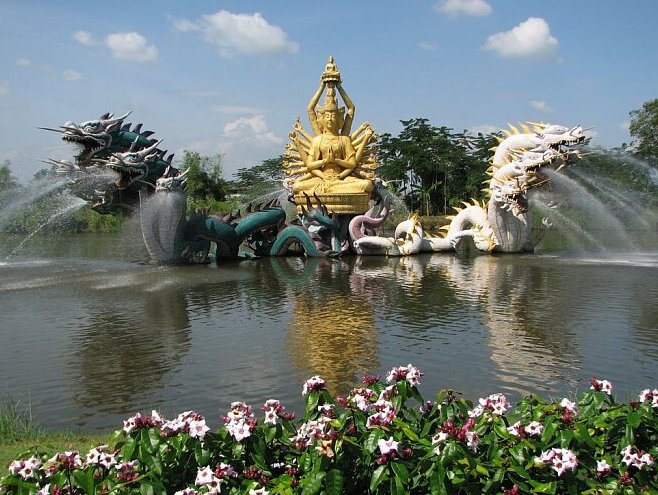

Nestled within the verdant expanse of Ancient Siam (Mueang Boran), the Bodhisattva Avalokiteshvara Fountain stands as a marvel of artistry and spirituality in Tambon Bang Pu Mai, Thailand. This remarkable site blends history, culture, and architecture in a way that captivates visitors and invites contemplation.
History and Origins Ancient Siam, established in 1963 by the visionary entrepreneur Khun Phutthipong Chaiyakan, is considered the world's largest outdoor museum. Spanning 320 hectares, this remarkable park showcases 116 structures that replicate Thailand’s most famous monuments and architectural attractions. The fountain features the statue of Bodhisattva Avalokiteshvara, revered as the goddess of mercy, also known as Guan Yin in Chinese tradition. This connection underscores the rich tapestry of spirituality in Thai culture, where Buddhist beliefs intertwine with local customs.
Originally, the statue and fountain were intended not just as ornamental pieces but as symbols of protection and benevolence. The surrounding water-spouting dragons, which represent Avalokiteshvara's magical powers against evil spirits, enhance this aura of divinity, making the fountain a focal point for both locals and visitors seeking solace and inspiration.
Art and Architecture The Bodhisattva Avalokiteshvara Fountain is a stunning example of Thai architecture, characterized by intricate designs and attention to detail. The statue itself, standing gracefully beside Sumeru Mountain, is adorned with symbolic motifs reflecting Buddhist teachings. Artisans meticulously crafted the dragons, which not only serve a decorative purpose but also symbolize strength and protection.
Visitors may notice the exquisite ceramic tiles that form the fountain's basin, each tile reflecting the traditional craftsmanship that is a hallmark of Thai artistic expression. The harmonious blend of water and stone creates a serene atmosphere, inviting contemplation and appreciation of the beauty surrounding this sacred site.
Local Culture and Traditions The presence of Bodhisattva Avalokiteshvara resonates deeply within the local community, embodying a blend of both Buddhist and Hindu traditions. Festivals such as Songkran, the Thai New Year, see locals visiting the fountain to make merit and seek blessings. During this time, the park transforms into a vibrant space filled with water blessings, traditional music, and dance, providing an immersive experience for those wishing to understand local customs.
Moreover, the Thai culture surrounding this site emphasizes respect for nature and spirituality. Visitors often engage in rituals such as lighting incense and offering flowers at the statue, fostering a deep connection with the spiritual essence of the site.
Gastronomy While the fountain itself does not feature dining options, the surrounding areas of Tambon Bang Pu Mai are rich in culinary delights. Visitors can indulge in local dishes such as Pad Thai, a stir-fried noodle dish that embodies the flavors of Thailand, and Tom Yum Goong, a hot and sour shrimp soup that tantalizes the taste buds. Street vendors often offer Khao Niew Mamuang, a sweet sticky rice with mango, providing a perfect treat after a day of exploration.
Don’t miss the chance to sip on Thai iced tea, a refreshing beverage that balances the richness of black tea with sweetened condensed milk, perfect for cooling off amidst the tropical heat.
Lesser-known Curiosities Although many visitors are drawn to the visual splendor of the Bodhisattva Avalokiteshvara Fountain, fewer explore the deeper meanings behind its features. For example, the dragons are not merely decorative; they are believed to ward off negativity and embody the transformative power of water. It is said that those who meditate by the fountain often experience heightened states of tranquility and awareness.
Another intriguing aspect is the lack of crowds at certain times of the day. Early mornings or late afternoons provide not only cooler temperatures but also a chance to experience the fountain's serene beauty in a peaceful setting.
Practical Visitor Information The best time to visit Ancient Siam and the Bodhisattva Avalokiteshvara Fountain is during the cooler months from November to February. The weather is more temperate, making outdoor exploration enjoyable.
When planning your visit, consider wearing comfortable walking shoes, as the park's expansive layout encourages exploration. Bring a camera, but also take time to put it down and soak in the peaceful atmosphere. Look for informative plaques that detail each structure's significance, offering deeper insights into Thailand's cultural heritage.
In conclusion, the Bodhisattva Avalokiteshvara Fountain is not just a stunning visual attraction but a profound representation of Thailand's rich spiritual and cultural landscape.
For a personalized journey through Tambon Bang Pu Mai, consider using the Secret World app to craft your own unique itinerary.


