
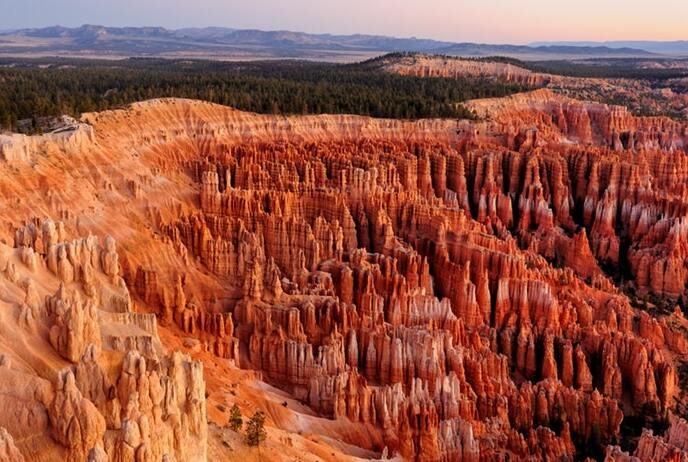

At dawn and dusk, mule deer graze the forested plateau along the winding road into Bryce Canyon National Park. This national treasure, located in Utah, is renowned for its breathtaking red rock pillars, known as hoodoos, which rise dramatically from the earth, creating a landscape that seems almost otherworldly. Carved by the forces of water and wind over millions of years, these unique formations draw visitors from around the globe, eager to witness the stunning interplay of light and shadow that occurs at sunrise and sunset.
The history of Bryce Canyon is as layered as its geology. Indigenous peoples, including the Paiute tribe, have inhabited the area for thousands of years, naming it “Bryce Canyon” after Ebenezer Bryce, a Mormon settler who homesteaded in the late 1800s. In 1928, the area was designated as a national monument, and it was later elevated to national park status in 1928, a testament to its natural beauty and ecological importance. The park was established to preserve its remarkable landscapes, rich biodiversity, and cultural history, ensuring that future generations could marvel at its wonders.
Art and architecture within Bryce Canyon are less about human creations and more about nature's artistry. The park's hoodoos, formed from the erosion of sedimentary rock, showcase a variety of colors, primarily vibrant reds, oranges, and yellows. The largest and most famous of these formations is the Thor's Hammer, standing 150 feet tall. Artists have long sought to capture the ethereal beauty of this landscape. Notable works include those by photographers like Ansel Adams, whose black-and-white images immortalized the dramatic contrasts of light and shadow within the canyon.
Local culture is deeply intertwined with the natural environment. The Paiute people still celebrate their connection to the land through storytelling and traditional ceremonies. Visitors can participate in cultural events, such as the Bryce Canyon Winter Festival, which features local artists, crafts, and winter activities, celebrating the unique beauty of the park in the colder months. The festival provides an opportunity to engage with local customs and appreciate the significance of nature in the Paiute culture.
When it comes to gastronomy, the region offers a taste of the American Southwest. While dining options within the park are limited, nearby towns like Tropic and Bryce Canyon City serve up hearty fare that reflects the local culture. Visitors can indulge in traditional dishes such as Navajo tacos, made with fry bread topped with various ingredients, or sample locally sourced game meats. Pairing these dishes with a refreshing Utah craft beer can elevate the dining experience, allowing guests to savor the flavors of the region.
For those willing to explore off the beaten path, Bryce Canyon holds many lesser-known curiosities. One fascinating detail is the park's night sky, recognized as one of the darkest skies in the continental United States. Stargazing here reveals a stunning canvas of stars, planets, and the Milky Way, an experience that often surprises visitors who come for the daytime views. Additionally, the park hosts a unique geological phenomenon known as “bristlecone pines,” some of the oldest living trees in North America, which add a sense of timelessness to the landscape.
The best time to visit Bryce Canyon is during the spring (April to June) and autumn (September to October), when temperatures are mild, and the crowds are thinner. Summer can be crowded, with peak visitor numbers, while winter offers a serene, snow-dusted landscape that is equally captivating. When visiting, be sure to hike the Navajo Loop Trail, where you can get up close to the hoodoos and experience the park's stunning formations firsthand. Don’t forget to pack plenty of water, wear sturdy shoes, and bring a good camera to capture the breathtaking views.
Bryce Canyon National Park is a stunning blend of natural beauty, rich history, and vibrant culture, making it a must-visit destination for any traveler. To fully immerse yourself in this enchanting landscape and plan your personalized adventure, consider using the Secret World app for a tailored itinerary.


