
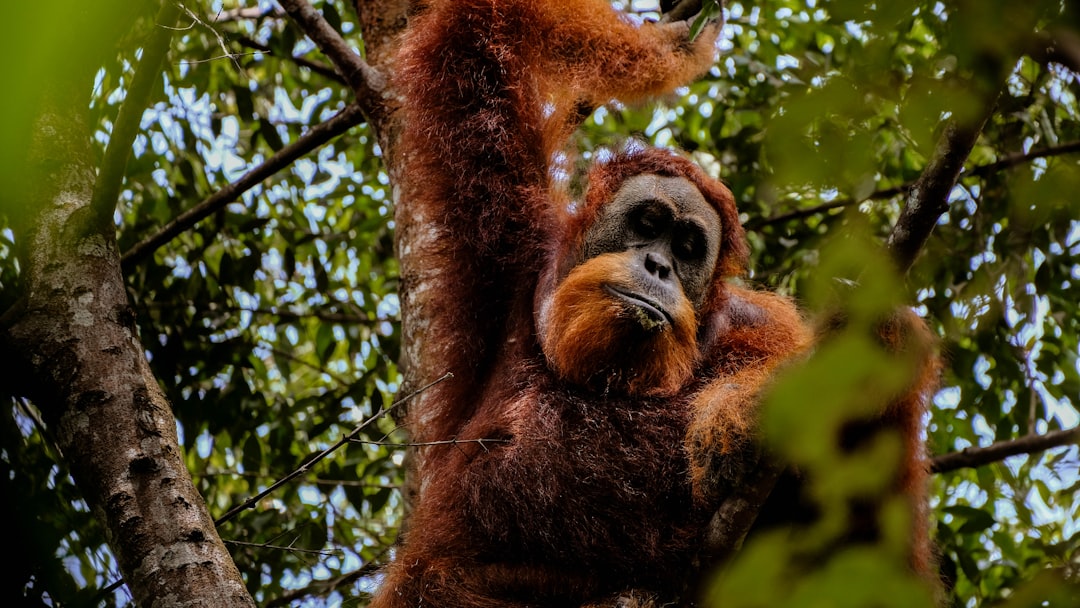

An adult male orangutan stares at you from the top of a dipterocarp tree, just a few meters away, with that absolute calm that belongs only to those who have no natural predators. We are in Bukit Lawang, in the Bohorok district, in the North Sumatra province, on the eastern edge of the Gunung Leuser National Park, one of the largest green lungs in Southeast Asia with its approximately 7,927 square kilometers of rainforest.
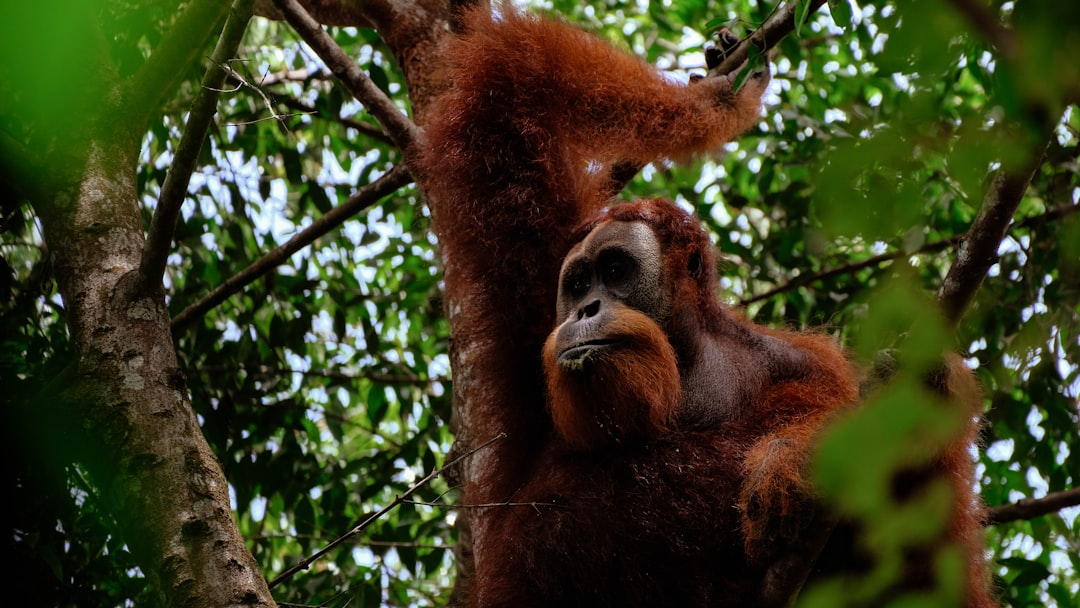
This small village along the Bohorok River has become over the years the main access point for multi-day treks into the park. The reason is simple: here the density of wild orangutans (Pongo abelii), the genetically distinct Sumatran species from that of Borneo, is among the highest on the entire island. The proximity to a former orangutan rehabilitation station, active since 1973 and then closed in the 1990s, has helped maintain a population of primates relatively accustomed to human presence, making sightings frequent and close.
The forest that you feel before seeing it
The trekking begins by crossing the Bohorok River on a bamboo raft or a simple motorboat, and even in this passage, you can sense the change of world. The Gunung Leuser rainforest is a lowland and hill forest, with trees exceeding 40 meters in height and an undergrowth so dense that it reduces sunlight to just a few oblique rays. The heat is humid and constant, around 28-32 degrees Celsius during the day, and the sound is dominated by the song of the Müller's gibbons and the calls of birds.
Walking on the muddy and slippery paths, the local guides — trained and certified through programs related to park management — point out traces of animal activity that an untrained eye would never notice: bark scratches left by orangutans to reach the cambium, leaf nests built high up for sleeping, footprints in the mud. The biodiversity here is tangible, measurable at every step: the park is home to over 400 species of birds and more than 100 species of mammals, including the Sumatran rhinoceros and the Sumatran tiger, both critically endangered and rarely spotted.
The encounter with wild orangutans
Sighting orangutans is not guaranteed, but it is frequent in the more interior areas of the park, especially in the early morning hours. The animals move through the forest canopy with deliberate slowness, using their arms that can reach up to two meters to navigate between the branches. Adult males, recognizable by the large fleshy expansions called flanges on the sides of their faces, can weigh up to 90 kilograms and tend to move alone.
The guides maintain a recommended minimum safety distance of at least five meters from the animals, and trekking groups are limited to reduce stress on the animals. It is important to know that wild orangutans can be unpredictable: they are not domesticated animals, and the guides are there to manage situations where an individual may approach the group too closely. In addition to orangutans, it is common to encounter pig-tailed macaques, monitor lizards, tree snakes, and, with luck, the rare Thomas's leaf monkey with its distinctive dark crest during two or three-day treks.
Logistics and Practical Tips
Bukit Lawang can be reached in about 3-4 hours by bus or minivan from Medan, the provincial capital of North Sumatra. The cost of transportation is modest, with frequent departures from the Pinang Baris station. For trekking, it is mandatory to be accompanied by a licensed guide: local agencies in the village offer packages from one to four days with overnight stays in tents or forest lodges, with prices ranging approximately between 50 and 150 euros per person depending on the duration and number of participants.
The best time to visit is between May and September, during the relatively dry season, when the trails are less dangerous and visibility in the forest is better. Avoid the months of November and December, when heavy rains make the trails impassable and the risk of flooding along the Bohorok is real — the village was severely affected by a flood in 2003 that caused over 200 casualties. Bringing waterproof trekking shoes, DEET-free insect repellent to avoid harming wildlife, and clothing that covers the arms is a minimal but essential precaution.
Why the Discomfort is Worth It
Bukit Lawang is not a comfortable destination. The trails are physically demanding, the heat is exhausting, and the services in the village are basic. But the contact with an untouched primary rainforest, with the real possibility of observing one of the most intelligent primates on the planet in its natural habitat, is an experience that is hard to replicate elsewhere. The Gunung Leuser forest is not a backdrop: it is a living system that moves, breathes, and changes every hour of the day.


