



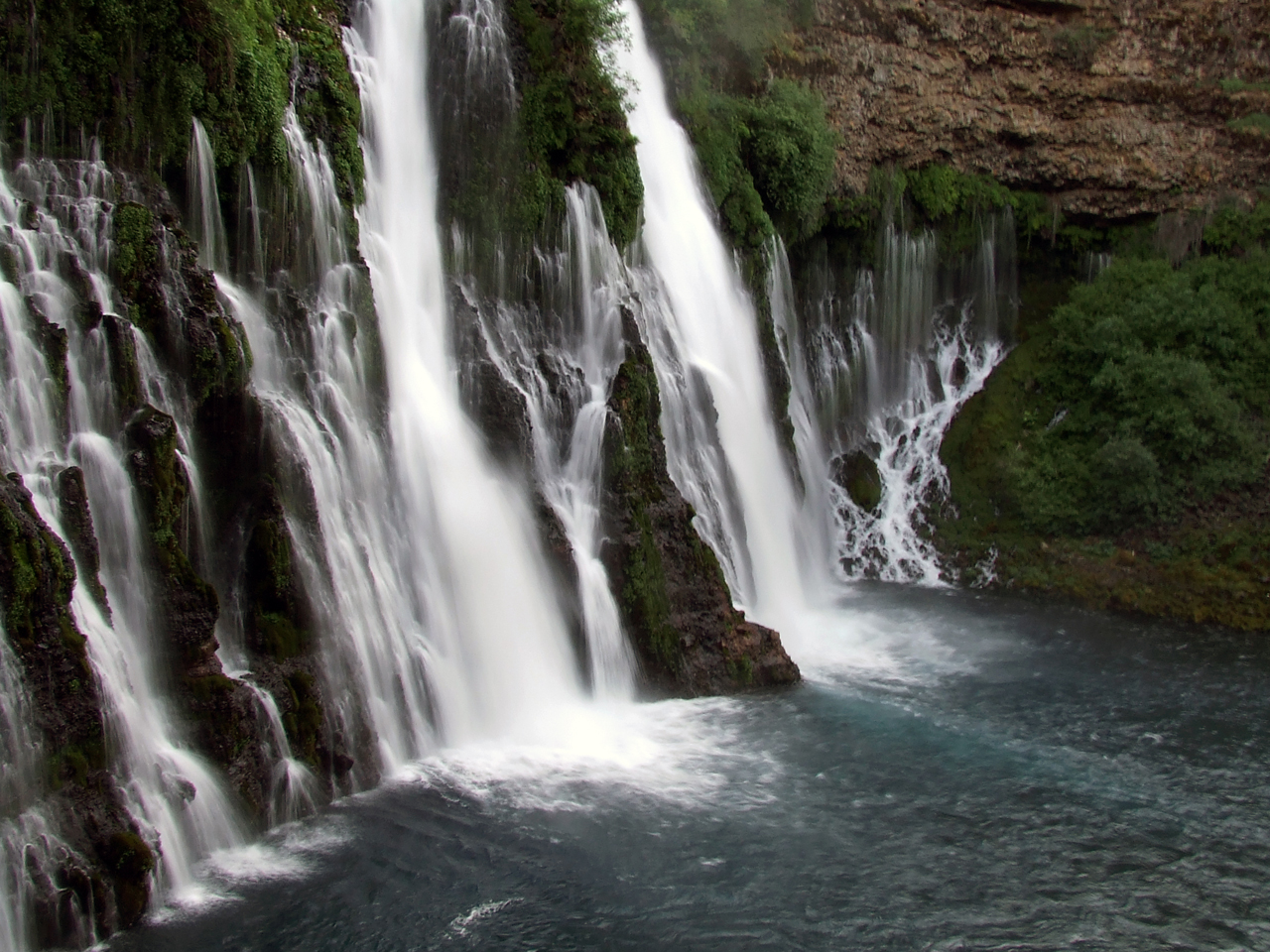
Tucked away in the verdant expanse of Shasta County, California, Burney Falls is a mesmerizing natural wonder that has captivated travelers for centuries. President Theodore Roosevelt, often a man of action over words, famously proclaimed it the "eighth wonder of the world" — a testament to its breathtaking beauty. As you approach the falls, you are greeted by the thunderous roar of water tumbling 129 feet into a crystal-clear pool below, a spectacle that leaves visitors in awe.
The history of Burney Falls is steeped in the lore of the native Illmawi people, a band of the larger Pit River tribe, who revered the falls as a sacred site. The land around Burney Creek was rich in resources, providing sustenance and spiritual nourishment to the indigenous communities. The falls themselves are named after Samuel Burney, a settler in the area during the mid-19th century. In 1920, the area was preserved as part of the McArthur-Burney Falls Memorial State Park, thanks to the efforts of the McArthur family, who donated the land to ensure its protection for future generations.
Architecturally, there is little to distract from the raw beauty of the falls themselves. However, the visitor center at the park offers interpretive displays that delve into the geology and ecology of the region, enhancing the visitor experience. The park's design emphasizes harmony with nature, using natural materials and a rustic style that complements the setting.

The local culture around Burney Falls is a blend of native traditions and the pioneering spirit of early settlers. Each year, the nearby town of Burney hosts the Burney Basin Days, a festival that celebrates the community's heritage with parades, crafts, and traditional music. This event offers a glimpse into the enduring culture of the area, where past and present intertwine.
Gastronomy near Burney Falls is characterized by hearty, rustic fare that reflects the area's frontier past. Visitors can savor dishes featuring local ingredients like trout from the pristine waters of the region and wild berries that grow abundantly in the surrounding forests. One can also find a hint of the area's Native American heritage in dishes that incorporate acorns and other traditional foods.
For those keen to explore beyond the obvious, Burney Falls holds several lesser-known curiosities. The falls have a unique hydrogeology, with water emerging from underground springs halfway down the cliff face, creating a stunning veil-like effect. Additionally, the park is home to a diverse array of wildlife, including black bears and bald eagles, which can often be spotted by the observant visitor.
Practical information is essential for anyone planning to visit this natural wonder. The best time to visit Burney Falls is during the late spring or early autumn when the weather is mild, and the park is less crowded. The 1.3-mile trail that circles the falls offers various viewpoints, each presenting a different perspective of the cascading waters. It's advisable to wear sturdy shoes and bring a camera to capture the unforgettable vistas.
In summary, Burney Falls is more than just a picturesque destination; it is a place where nature, history, and culture converge. Whether you are drawn by its natural splendor, intrigued by its past, or seeking a deeper connection with the land, Burney Falls promises an experience that lingers long after the visit has ended.
