
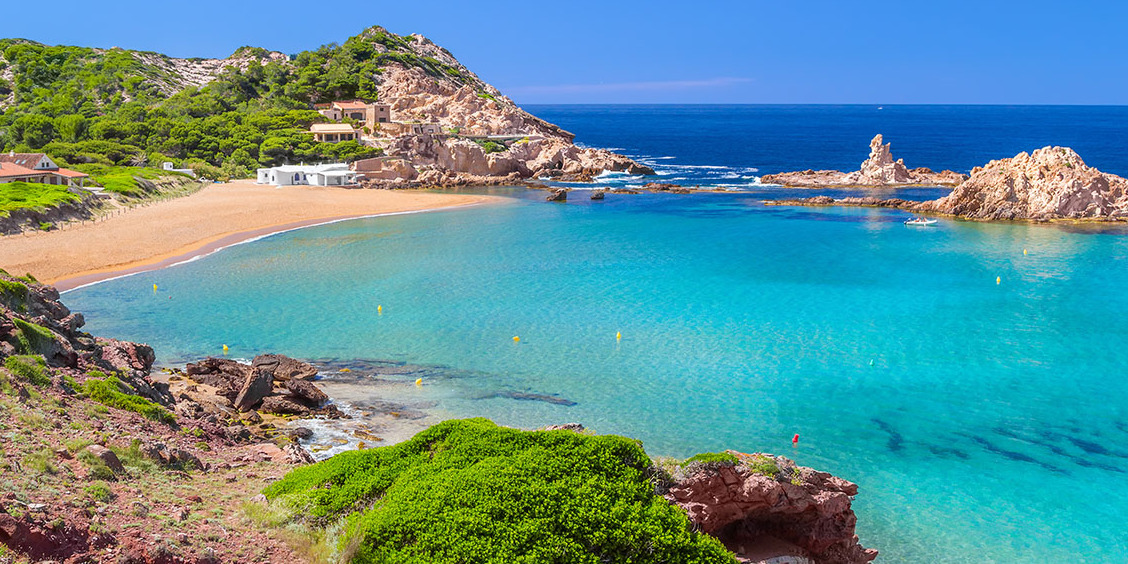

Cala Pregonda, located in Es Mercadal, Spain, is unlike any other beach on the island of Menorca. With its striking red sand and a backdrop that evokes images of a Martian landscape, it stands out as a natural wonder. The cove’s unique geological features stem from the island's volcanic past, providing visitors with a glimpse into Menorca's ancient history. The reddish hue of the sand, created by the iron oxide present in the soil, contrasts beautifully with the crystal-clear waters that surround it, making it a photographer's paradise.
Historically, Menorca has always been a hub of diverse cultures, with influences from the Phoenicians, Romans, and Moors. Although Cala Pregonda itself may not have a distinct historical narrative, the island’s rich past is evident in the ancient megalithic structures scattered throughout Menorca, some of which date back to 2000 BC. These structures, known as talaiots, reflect the island’s prehistoric significance and are a testament to its long-standing connection to the sea and agriculture.
Architecturally, the region is characterized by traditional Menorcan architecture, featuring whitewashed houses adorned with colorful shutters. While Cala Pregonda is primarily a natural site, nearby towns like Fornells and Mercadal showcase charming buildings that reflect the island's agricultural roots and maritime heritage. Visitors may encounter local artworks inspired by the landscapes and seascapes of Menorca, which celebrate the island’s natural beauty.
Local culture thrives in the villages surrounding Cala Pregonda, where customs and traditions are deeply rooted in the island's history. Menorca is known for its vibrant festivals, such as the Festa de Sant Joan, held in Ciutadella every June. During this celebration, locals honor Saint John with horse parades, fireworks, and traditional music, offering visitors an authentic glimpse into the island's communal spirit.
Gastronomically, Cala Pregonda is a gateway to savoring local Menorcan delicacies. The island is famous for its queso de Mahón, a rich cheese with a distinct flavor profile, best enjoyed with a glass of Palo, a local herbal liqueur. Additionally, the area boasts a variety of seafood dishes, such as caldereta de langosta, a lobster stew that pays homage to Menorca's maritime culture. Visitors should not miss the chance to dine in local restaurants, where the freshness of the ingredients reflects the island's culinary traditions.
One of the lesser-known curiosities about Cala Pregonda is its often-overlooked biodiversity. The cove is home to unique flora and fauna that thrive in its rocky landscape, including endemic plants and a variety of marine life. For those willing to dive into the waters, snorkeling reveals vibrant underwater ecosystems, making it a hidden gem for both nature lovers and adventure seekers.
Practical information for visitors is essential for making the most of a trip to Cala Pregonda. The best time to visit is during the late spring and early autumn months, when the weather is pleasantly warm, and the summer crowds have dissipated. The cove is accessible via a 30-minute walk from the nearest parking lot, so it’s advisable to bring plenty of water, sunscreen, and a hat to shield against the sun. While the trek may seem daunting, the stunning views en route are worth every step.
As you approach the cove, take a moment to absorb the breathtaking landscape, where the red sands meet the azure sea, creating a mesmerizing contrast that feels almost otherworldly. Don’t forget to explore the surrounding coastal paths, which offer panoramic views and opportunities for birdwatching.
In conclusion, Cala Pregonda is not just a beach; it is an experience that encapsulates the essence of Menorca's natural beauty and rich cultural heritage. For those planning to explore Es Mercadal, using the Secret World app can help tailor a personalized itinerary that uncovers the hidden treasures of this stunning locale.


