



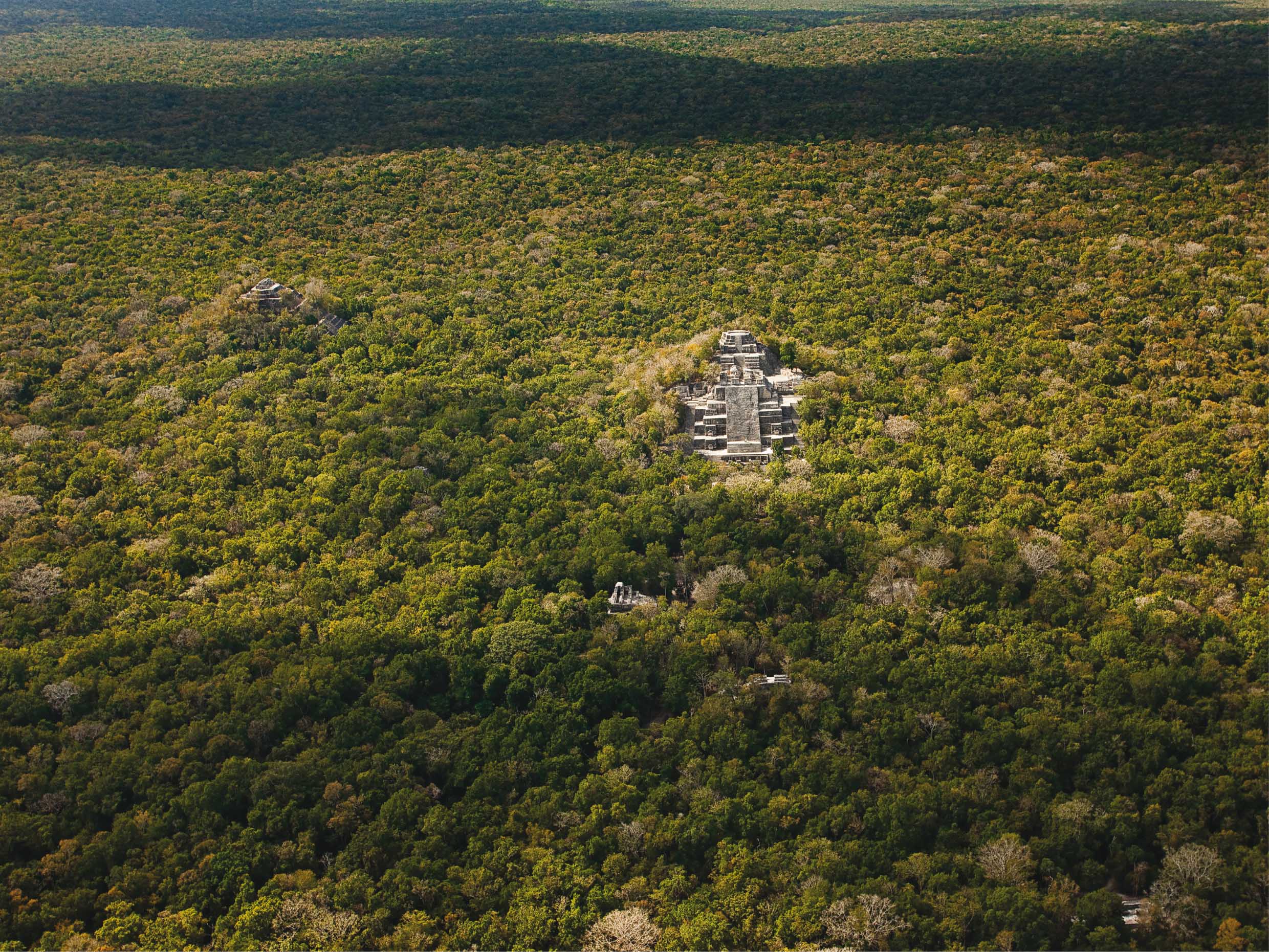
Amidst the dense foliage of the Calakmul Biosphere Reserve, a UNESCO World Heritage Site in the Mexican state of Campeche, lies the enigmatic Mayan city of Calakmul. This ancient metropolis, one of the largest ever uncovered, reveals a fascinating saga etched into the ruins of over 6,500 structures, each whispering stories of a once-mighty civilization.

The origins of Calakmul trace back to the Preclassic period, with its height marking the Classic period (circa AD 250-900). As the seat of the powerful Kaan or "Snake" kingdom, Calakmul was a formidable rival to Tikal, another prominent Mayan city. At its zenith, Calakmul exerted influence over vast territories, a testament to its strategic prowess and intricate political alliances. Intriguingly, the city was involved in a series of conflicts known as the "Star Wars," which were characterized by celestial events that guided military campaigns. These conflicts are chronicled in the hieroglyphic inscriptions found throughout the site, offering invaluable insights into the city's storied past.
The artistry and architectural feats of Calakmul are nothing short of breathtaking. Its grandiose pyramids, notably the towering Structure II, rise majestically above the jungle canopy, offering panoramic views that stretch across the lush expanse. This pyramid is one of the tallest and most significant in the Mayan world, showcasing the architectural ingenuity of the civilization. The city's structures are adorned with intricate stucco masks and murals that depict scenes from daily life and mythology, alongside hieroglyphic inscriptions that immortalize the deeds of rulers like Yuknoom Ch'een II, known as the greatest king of the Snake Kingdom.

Beyond its ruins, the surrounding region is steeped in rich cultural traditions. The state of Campeche, with its blend of indigenous heritage and colonial influences, celebrates various festivals that reflect its vibrant culture. While specific traditions tied directly to Calakmul are sparse due to its remote and protected nature, the nearby communities uphold the spirit of the Mayan legacy through vibrant festivities, such as the Hanal Pixán or Day of the Dead, where offerings are made to honor ancestors, echoing the reverence for the past that the ancient city embodies.
Gastronomy in this region offers a delectable journey into the flavors of Campeche. Local dishes are a feast for the senses, with staples like pan de cazón—a layered dish of tortillas and seasoned shark meat, bathed in a rich tomato sauce. Poc chuc, a dish of citrus-marinated pork, and the hearty pepita con tasajo, featuring pumpkin seeds and dried beef, offer a taste of the region's culinary heritage. These flavors are complemented by refreshing drinks such as agua de chaya, made from the local chaya plant, known for its health benefits.
For those seeking deeper connections with Calakmul, there are lesser-known curiosities to uncover. The site's strategic placement, thought to be influenced by its proximity to several important Mayan trade routes, underscores its economic importance. Recent studies have also suggested that the city was enveloped by an extensive system of reservoirs, indicative of advanced water management techniques crucial for sustaining its large population amidst the challenging jungle environment.
Visitors to Calakmul should plan their journey between November and April, when the weather is cooler and drier, making exploration more comfortable. The site is remote, requiring a trek through the jungle, so visitors should prepare for an adventure that offers both challenges and rewards. Hiring a knowledgeable guide can enhance the experience, offering insights into the site's history and the diverse flora and fauna of the biosphere reserve.
In exploring Calakmul, one steps into a world where history, nature, and mystery intertwine. It is a journey not just through ruins, but through time itself, where the whispers of the past linger in the rustle of the jungle leaves, inviting those who listen to uncover the secrets of the Snake Kingdom.
