
← Back

Camerata Cornello and the European postal system

24010 Camerata Cornello BG, Italia ★★★★☆ 375 views
Ely Kunis
Camerata Cornello
🏆 AI Trip Planner 2026

Get the free app

Discover the best of Camerata Cornello with Secret World — the AI trip planner with 1M+ destinations. Get personalized itineraries, hidden gems and local tips. Free on iOS & Android.

🧠 AI Itineraries 🎒 Trip Toolkit 🎮 KnowWhere Game 🎧 Audio Guides 📹 Videos
Scan to download iOS / Android
Scan for AppGallery Huawei users

About Camerata Cornello and the European postal system

Camerata Cornello and the European postal system - Camerata Cornello | Secret World Trip Planner

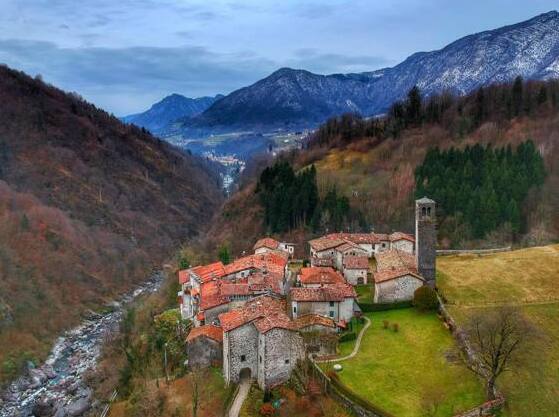
Camerata Cornello, a small village in Val Brembana, is the birthplace of the European postal system. The museum and the historical center, even if very small, are worth a visit. The name Camerata Cornello, derives from camerata = house, dwelling and Cornello = rock, cliff (from the bergamasco CORNEL). The country is constituted by a series of nuclei of ancient taste distributed on the right bank of the Brembo, from the bottom of the valley up to the slopes of the Venturosa mountain. One of these villages is Cornello, known for being the birthplace of the Tasso family of postmen and men of letters. Among them we remember BERNARDO, father of the most famous TORQUATO, immortal author of the Gerusalemme Liberata. Already in the eleventh century the Tasso family organized a "service of social and mercantile correspondence" in the Republic of Venice. From 1460 to 1539 the Tasso family was able to obtain the management of the postal service of the Papal State, while Maximilian I of Habsburg contracted the brothers Francis and Jannetto de Tassis the first postal connections in the Tyrol [4]. In the course of the centuries and until 1866 the family Tasso, and in particular the German branch Thurn und Taxis, played a fundamental role in the diffusion of the postal system in Europe.

Once the village was at the center of trade that took place with the Valtellina along the Via Mercatorum and was home to an important market. Towards the end of the 16th century its fortunes began to decline following the construction of the new road along the valley floor, the Priula, which did not touch Cornello, which thus remained rather isolated, losing the important function of connection between the middle and upper valley that it had played up to that moment. The secular isolation favoured the preservation of the original urban fabric which is characterized by the overlapping of four different building plans. In the lower part a series of constructions overhanging the Brembo are aligned, which highlight the original fortification characteristic of the village. Above them runs the monumental porticoed street surmounted by stone arches, covered by a ceiling in wooden beams and paved in cobblestones. Under the arcade, the entrances to the buildings on the lower floor open towards the valley and the shops and stables, which were the commercial heart of the town during the period of greatest development, face uphill. On the third floor, somewhat more open and diversified, there are the buildings destined for habitation, some of which are of a certain architectural interest.

🗺 AI Trip Planner

Plan your visit to Camerata Cornello

Suggested itinerary near Camerata Cornello and the European postal system

MAJ+
500.000+ travelers worldwide
  1. 🌅
    Morning
    Camerata Cornello and the European postal system
    📍 Camerata Cornello
  2. ☀️
    Afternoon
    Museum of Badger and Postal History
    📍 1 km · Camerata Cornello
  3. 🌆
    Evening
    San Pellegrino Biscuit
    📍 6.8 km · Camerata Cornello

Buy Unique Travel Experiences

Powered by Viator

See more on Viator.com

Explore nearby · Camerata Cornello

Frequently Asked Questions

Camerata Cornello is the birthplace of the European postal system, founded by the Tasso family who organized a 'service of social and mercantile correspondence' in Venice as early as the eleventh century. From 1460 to 1539, the Tasso family managed the postal service of the Papal State, and their German branch, Thurn und Taxis, played a fundamental role in spreading the postal system throughout Europe until 1866.
Torquato Tasso was the most famous member of the Tasso family born in Camerata Cornello, known as the immortal author of 'Gerusalemme Liberata.' He was the son of Bernardo Tasso, and the family's legacy in both postal services and literature made them one of Europe's most influential families during the Renaissance.
The village features a museum and historical center dedicated to the Tasso family's postal legacy, though both are small in scale. The original urban fabric is well-preserved with overlapping building plans from different periods, and visitors can see constructions aligned along the Brembo river that reflect the village's medieval character.
Towards the end of the 16th century, the village lost its importance after the construction of the new Priula road along the valley floor, which bypassed Camerata Cornello entirely. This isolation caused the village to lose its crucial function as a connection point between the middle and upper valleys, though it fortunately preserved its original medieval architecture.
Camerata Cornello is a small village in Val Brembana and consists of several ancient nuclei distributed on the right bank of the Brembo river. The name derives from 'camerata' meaning house or dwelling and 'Cornello' meaning rock or cliff in the local Bergamasco dialect.
