



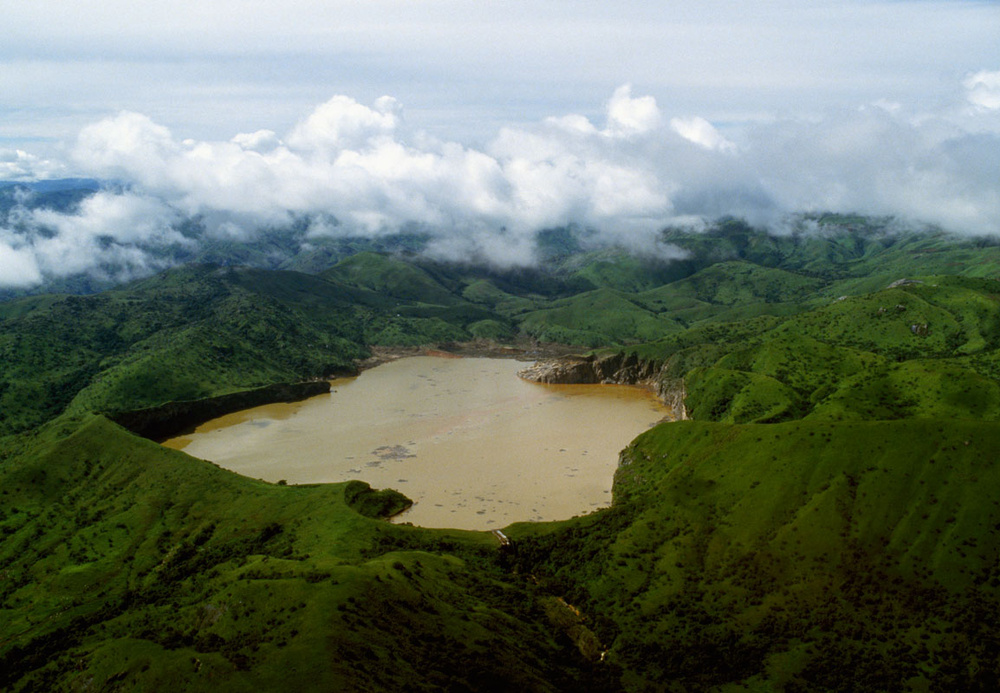
Nestled in the heart of Cameroon, Lake Nyos is a breathtaking yet haunting spectacle, renowned as the most deadly lake in the world. This crater lake, located about 200 miles (322 km) northwest of Yaoundé, sits high on the flank of an inactive volcano in the Oku volcanic plain, part of the Cameroon line of volcanic activity. The lake is hemmed in by a natural dam of volcanic rock, creating a serene yet treacherous body of water that has captivated and terrified locals and visitors alike.
The origins of Lake Nyos can be traced back thousands of years. Formed during a volcanic eruption, this lake has a depth of around 208 meters (682 feet) and is one of only three known lakes globally that is saturated with carbon dioxide (CO2). Beneath its surface lies a pocket of magma, which leaks CO2 into the water, converting it into carbonic acid. This natural phenomenon is not just a geological curiosity, but it also tells the story of a region shaped by volcanic activity, where ancient tribes revered the mountains and lakes that surrounded them.
The tragic history of Lake Nyos is marked by the catastrophic event of August 21, 1986, when a sudden release of CO2 resulted in the loss of 1,700 lives and countless livestock in nearby villages. This event was a pivotal moment in scientific research, as it was the first known large-scale asphyxiation caused by a natural disaster. The aftermath led to significant changes in how volcanic lakes are monitored and managed, with the installation of a degassing tube in 2001 to prevent future disasters. However, the lake’s potential for danger remains, highlighting the delicate balance of nature in this region.
As you approach Lake Nyos, you are greeted by the striking landscape that surrounds it. The lush green hillsides contrast sharply with the lake's deep blue waters, creating a picturesque scene. The area is rich in artistic significance, characterized by the traditional Fang and Bamileke cultures. While the lake itself does not boast notable architectural structures, the nearby villages showcase traditional mud huts adorned with vibrant colors and intricate patterns, reflecting the artistic spirit of the local people.
Cultural traditions in the region are deeply intertwined with the lake's existence. Local customs often celebrate the natural beauty and spiritual significance of water. Festivals such as the Ngouondé Festival, held by the Bamoun people, exemplify a colorful display of dance, music, and storytelling, rooted in ancestral beliefs and the reverence of nature. These gatherings are not just celebrations; they are vital moments for communal bonding and cultural preservation, where folklore is passed down through generations.
The culinary landscape around Lake Nyos is equally rich. Traditional dishes such as fufu—a starchy dish made from cassava or yams—and ndole, a savory stew made with bitter leaves, peanuts, and fish, are staples of local gastronomy. The region is also known for its palm wine, a traditional drink made from the sap of palm trees, often enjoyed during social gatherings and celebrations. Sampling these local delicacies offers a taste of the vibrant culture that thrives around this remarkable lake.
For the adventurous traveler, Lake Nyos offers a unique opportunity to explore its surroundings. While many visitors come to witness the lake’s beauty, few are aware of its lesser-known curiosities. For instance, the lake is home to a unique species of fish called the Lake Nyos cichlid, which has adapted to the high CO2 levels. Additionally, the surrounding volcanic landscape is dotted with ancient rock formations that tell the story of the earth's geological past—a hidden gem for those willing to explore beyond the lake's surface.
The best time to visit Lake Nyos is during the dry season, from November to March, when the weather is more temperate and conducive to outdoor activities. Travelers should pack sturdy hiking boots, as exploring the volcanic terrain requires some physical endurance. Engaging with local communities is encouraged, as they offer insights into the lake's history and cultural significance, providing a richer understanding of this enigmatic place.
As you plan your journey to this extraordinary destination, consider using the Secret World app to create a personalized itinerary tailored to your interests.
