


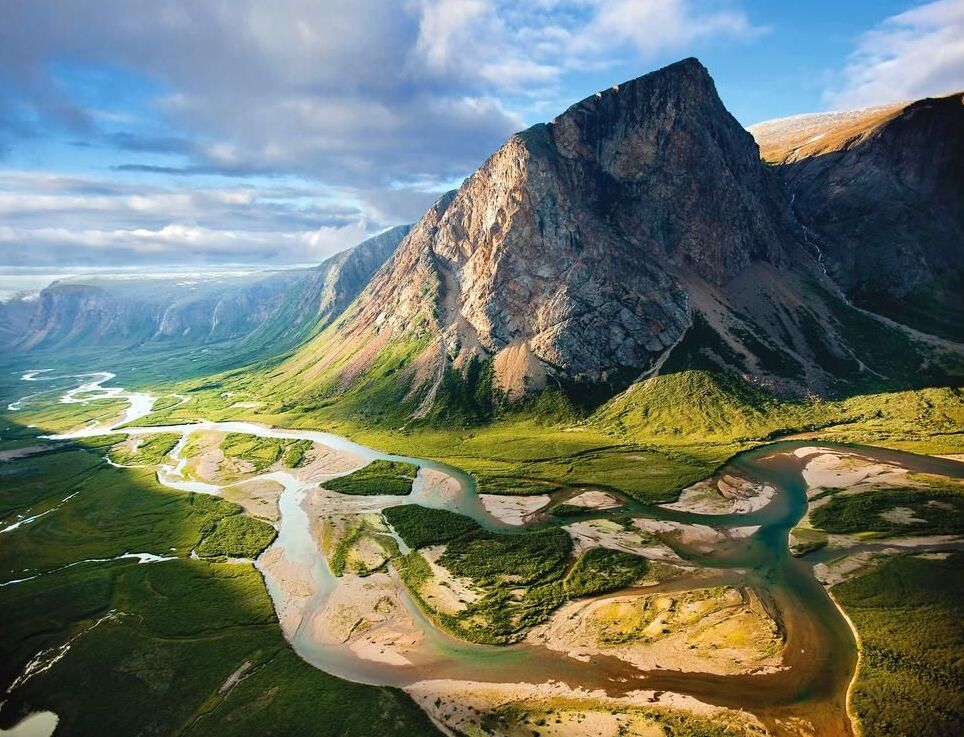
The Torngat Mountains, a breathtaking range in northern Labrador, Canada, beckon adventurous souls with their rugged beauty and rich cultural heritage. Stretching approximately 120 miles (190 km) from Hebron Fjord to Cape Chidley, this magnificent landscape is cradled between the Quebec border to the west and the Atlantic Ocean to the east. The name Torngat is derived from the Inuit term Torngarsuak, meaning ‘ruler of all sea animals,’ reflecting the deep spiritual connection the indigenous Labrador Inuit hold with this land, sometimes referred to as the Devil Mountains or the ‘home of the spirits.’
History and Origins The Torngat Mountains are not only a natural wonder but also a site steeped in ancient history. For thousands of years, the Inuit have inhabited this region, relying on its rich marine life and the land’s resources for survival. Archaeological evidence suggests that these mountains have served as a hunting ground for the Thule people, who migrated from the western Arctic about 1,000 years ago. European exploration didn’t begin until the late 15th century, with the arrival of John Cabot and later Martin Waldseemüller, who mapped the coastline. Despite being relatively unexplored by settlers until the 18th century, the local Inuit have maintained a profound relationship with the mountains and their surrounding waters, emphasizing the area’s significance as a cultural and spiritual site.
Art and Architecture The rugged landscape of the Torngat Mountains has inspired countless artists and craftspeople. Traditional Inuit art, particularly carvings and prints, often reflects the themes of nature and spirituality found within these majestic peaks. Notable pieces include intricate soapstone sculptures that depict local wildlife and mythological figures, highlighting the connection between the people and their environment. While there are no formal architectural structures in the mountains themselves, the nearby community of Nain showcases traditional Inuit architectural styles in its buildings, which often incorporate natural materials and reflect the lifestyle of the local population.
Local Culture and Traditions The culture surrounding the Torngat Mountains is vibrant and deeply intertwined with the landscape. The Inuit community celebrates numerous festivals, such as Kakivak and Inuit Day, which honor their heritage through traditional music, dance, and storytelling. Seal hunting and fishing remain crucial for sustenance and cultural identity, and during the spring months, gatherings often occur for the harvesting of seals and the sharing of traditional meals. The storytelling tradition is particularly strong here, with elders passing down tales of the mountains and their spirits, enriching the community's cultural tapestry.
Gastronomy The cuisine in the region is heavily influenced by the land and sea, featuring local ingredients that reflect the Inuit way of life. Traditional dishes often include seal, muktuk (whale skin and blubber), and various fish caught fresh from the frigid waters. Berries such as cloudberries and blueberries are also foraged and incorporated into desserts or served with traditional meals. Visitors might also encounter tea brewed from local herbs, a comforting staple during the long winters. For those adventurous enough to try, a dish of caribou stew could offer a taste of the rugged wilderness that defines this region.
Lesser-known Curiosities Beyond the stunning vistas, the Torngat Mountains hold many hidden gems. One intriguing aspect is the presence of glacial erratics—large boulders that have been transported by glacial ice, often appearing in unexpected locations. The area is also home to the Torngat Mountains National Park, established in 2005, which is one of Canada’s northernmost national parks and provides a sanctuary for wildlife, including caribou and polar bears. Few know that the park is not only a haven for nature enthusiasts but also offers guided tours led by local Inuit guides, who share their profound knowledge of the land and its history.
Practical Visitor Information The best time to visit the Torngat Mountains is during the summer months, from June to September, when the weather is milder, and the days are long. Visitors should prepare for a rugged adventure—hiking trails can be challenging, and amenities are limited. It is advisable to travel with a local guide who understands the terrain and cultural nuances. When exploring, keep an eye out for breathtaking fjords, unique rock formations, and abundant wildlife, all of which contribute to the region's ethereal beauty.
For those looking to truly immerse themselves in the experience, consider using the Secret World app to create a personalized itinerary tailored to your interests in Nain.
