
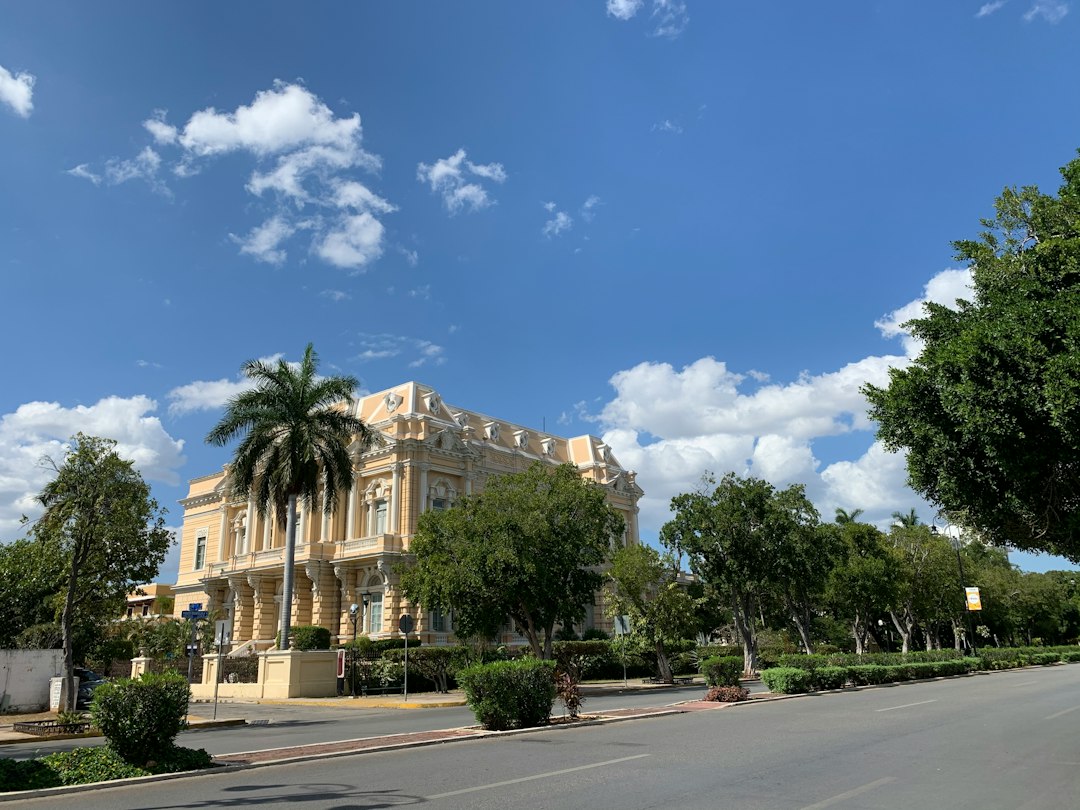

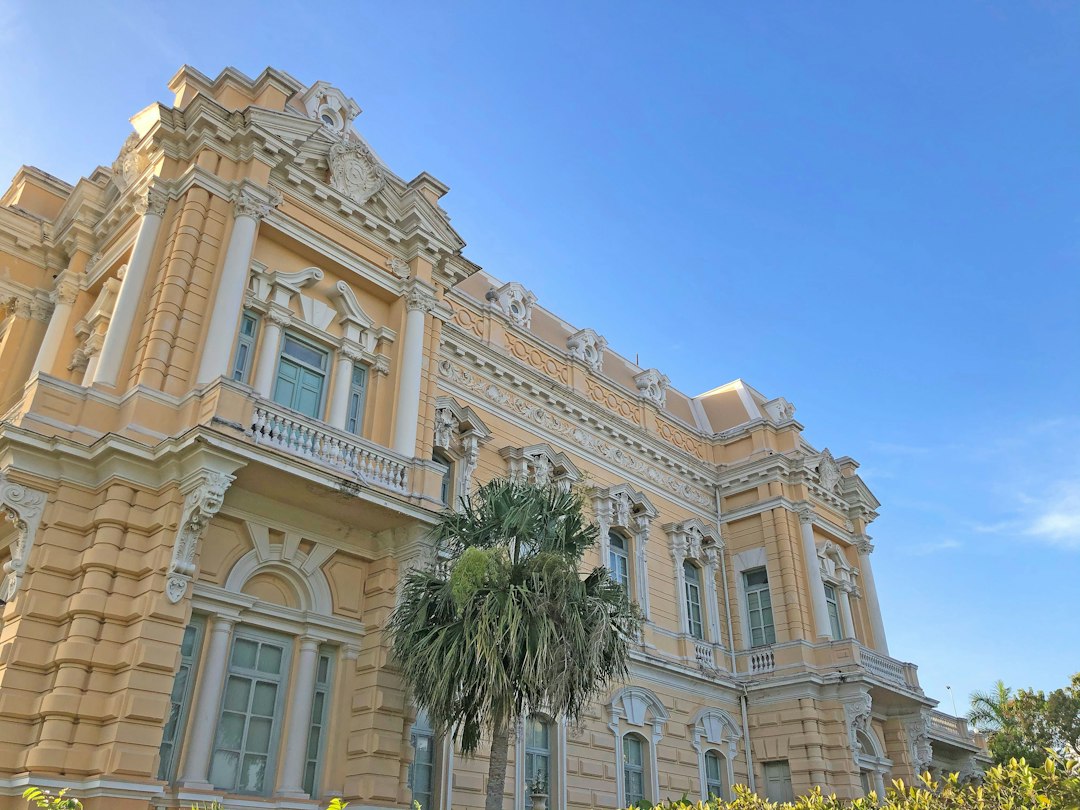
A green jade funerary mask, positioned under soft lighting, welcomes the visitor to the halls of the Regional Museum of Anthropology in Mérida. We are inside the Cantón Palace, a neoclassical palace built between 1904 and 1911 at the behest of General Francisco Cantón Rosado, former governor of Yucatán. The building, designed by Italian architect Enrico Deserti, is today one of the most elegant examples of Porfirian architecture in the Yucatán Peninsula, with its white limestone façade and the double entrance staircase overlooking the Paseo de Montejo.
The museum houses one of the most complete collections of Maya art and archaeology in the region, with artifacts from sites such as Uxmal, Chichén Itzá, and Dzibilchaltún. Yet, despite the extraordinary quality of the exhibited objects, the Cantón Palace remains surprisingly less frequented compared to other attractions in Mérida, making it one of the most tranquil and in-depth visits one can make throughout the peninsula.
The palace and its architectural history
The Cantón Palace was conceived as a luxury private residence, and this domestic origin is still perceived today in the details of the interiors: the imported marble floors, the frescoed ceilings, and the tall windows that flood the rooms with light. General Cantón did not live long in the building, and after his death, the property changed hands several times, eventually becoming the seat of the state government and finally, in the 1970s, a regional anthropology museum.
Walking through the rooms, one can notice how the architecture and the museum contents blend in an unusual way: the display cases with Maya artifacts coexist with gilded frames, antique mirrors, and decorative stuccos that tell of an era of colonial wealth. This contrast between the European splendor of the building and the pre-Columbian civilization displayed within creates a visual and cultural effect that is hard to find elsewhere.
The collections: masks, stelae, and stucco panels
The exhibition path follows a chronological and thematic order, starting from the origins of the first communities of the Yucatan Peninsula to the peak of classical Maya civilization. Among the most significant pieces are funerary masks made of jade, used in the burials of high-ranking individuals, and a series of stucco panels from regional archaeological sites, which display ritual scenes and figures of rulers with a level of detail rarely seen outside of Yucatán.
Particularly noteworthy is the section dedicated to personal ornaments and ceremonial objects: necklaces, pendants, and polychrome vases that illustrate the craftsmanship of the classical Maya. Some exhibited stelae preserve hieroglyphic inscriptions that are still partially legible, and the explanatory panels in Spanish and English provide sufficient context to understand the significance of each artifact even without a guide.
The visiting experience: slow pace and attention to detail
The museum can be comfortably explored in about two hours, a time that allows for lingering in each room without haste. The small size of the building and the reduced number of visitors compared to the large museums of the Mexican capital make it possible to observe the exhibits up close, often without queues or crowds. The natural light that enters through the windows of the palace helps create an intimate atmosphere, far from the anonymity of large museum spaces.
It is worth spending a few minutes on the outdoor garden and the facade of the palace, which can be photographed freely. Paseo de Montejo, the large tree-lined avenue on which the museum overlooks, can be walked and connects the Palacio Cantón to the historic center of Mérida in about twenty minutes on foot.
Practical Information for the Visit
The museum is located at number 485 on the Paseo de Montejo, easily reachable by taxi or on foot from the city center. The entrance ticket has a symbolic cost, generally less than five euros for foreign visitors, with discounts for students and free entry for Mexican citizens in certain age groups. Opening hours are typically from Tuesday to Sunday, with closure on Monday, but it is advisable to check the INAH (National Institute of Anthropology and History) website before the visit, as hours may vary during holidays.
The best time to visit is in the early morning, between nine and eleven, when temperatures are still bearable and the rooms are almost deserted. Mérida is known for its intense heat, especially between May and September, and the palace offers a pleasant coolness thanks to the high ceilings and natural ventilation of the historic spaces.


