



Perched on the rugged cliffs of Cape Byron, the Cape Byron Lighthouse stands as a sentinel over the Pacific Ocean, its beam cutting through the darkness for over a century. This lighthouse, at Australia’s most easterly point, is not just a guide for seafarers but also a portal into the rich tapestry of history, culture, and nature that defines Byron Bay.

### History and Origins
The history of Cape Byron is deeply intertwined with the Bundjalung people, the traditional custodians of the land. Long before European settlement, this region was a sacred space, with the Arakwal Bumberlin people using the area for cultural practices, including the notable dancing circle that was tragically destroyed during the lighthouse's construction in 1899.
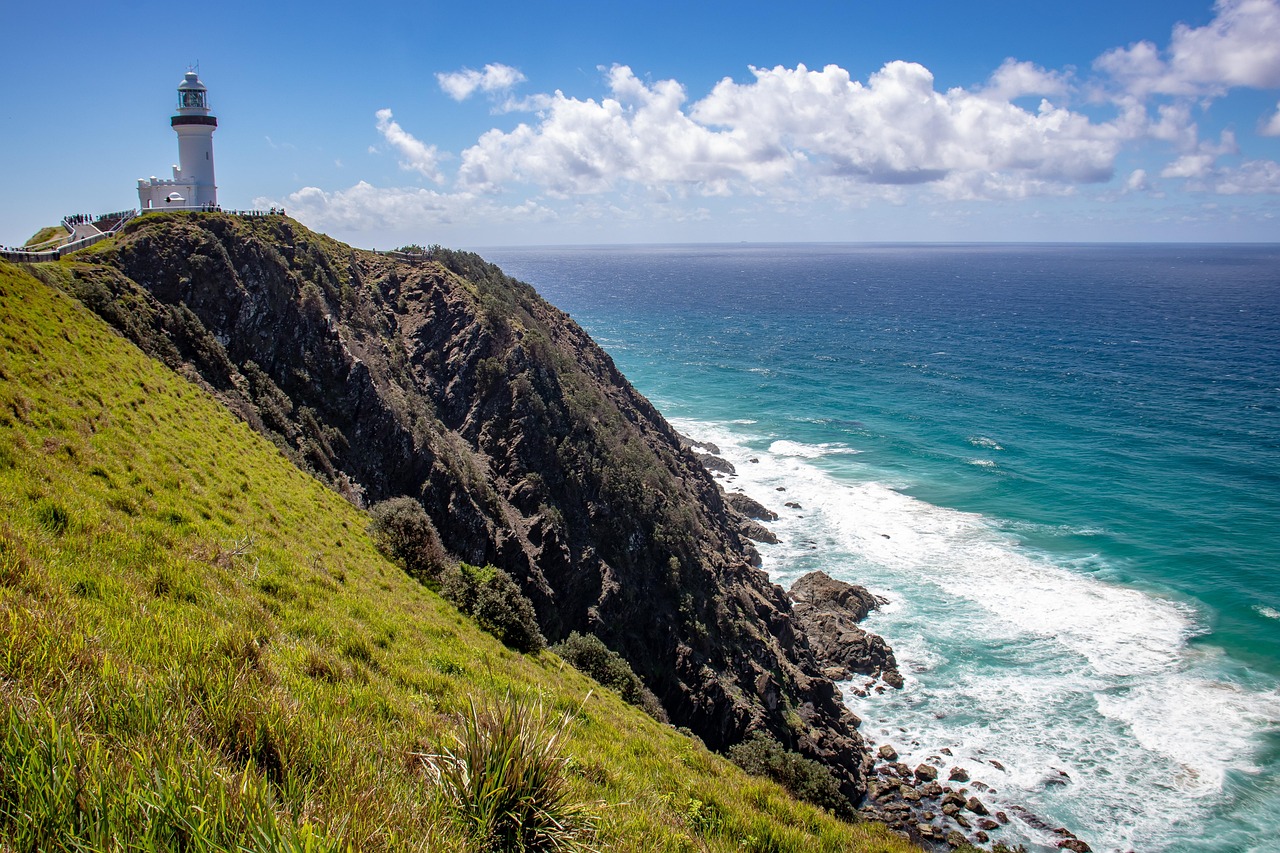
In the late 19th century, maritime disasters along the coast prompted the need for a more reliable navigation point. Charles Harding, influenced by his mentor James Barnet, designed the lighthouse in a Victorian style. Construction commenced in 1899, with the lighthouse officially lighting up on October 1, 1901. The structure is a 22-metre high tower built from local materials, blending seamlessly with its dramatic surroundings. Its initial kerosene light, a six-wick burner, was replaced in the 1920s with an electric light, ensuring safer passage for ships navigating the treacherous waters.
### Art and Architecture
The architectural style of the Cape Byron Lighthouse is a striking example of late Victorian design, combining functionality with aesthetic appeal. The whitewashed brick tower, topped with a distinctive black lantern, stands out against the backdrop of azure skies and crashing waves. The surrounding headland is home to various walking tracks that offer breathtaking views, making it a favorite for photographers and nature enthusiasts alike.
Artistic significance is not limited to the architecture alone. The lighthouse precinct features interpretive signage that narrates the history of the site and the local Indigenous culture. Nearby, you can find murals and installations that reflect the vibrant artistic community prevalent in Byron Bay.
### Local Culture and Traditions
Byron Bay is a melting pot of cultures, where traditional Aboriginal practices intertwine with contemporary lifestyles. Local festivals like the Byron Bay Surf Festival celebrate the region's deep-rooted connection to surfing, a sport that defines much of its modern identity. Moreover, the Byron Bay Bluesfest, held annually, showcases an eclectic mix of music, drawing visitors from all over the world.
The cultural significance of the lighthouse extends beyond its historical role. It serves as a symbol of resilience and community spirit, often featured in local art and storytelling. The lighthouse is not just a navigational aid; it’s a gathering point for locals and tourists alike, who come to witness the sunrise or to spot dolphins frolicking in the ocean.
### Gastronomy
The culinary scene in Byron Bay is as diverse as its culture. From fresh seafood caught off the coast to locally sourced produce, the food here tells a story of the land and sea. Popular local dishes include fish tacos, made with freshly caught fish, and prawn risotto, often paired with a glass of local wine.
Don’t miss out on the chance to sample Byron Bay’s famous coffee, which has garnered a reputation for its quality and sustainability. The area is dotted with cafes that serve ethically sourced brews, perfect for enjoying while gazing at the lighthouse from afar.
### Lesser-Known Curiosities
While many flock to the lighthouse during the day, the Cape Byron area holds secrets best discovered after sunset. The lighthouse is known for its ghostly tales, with stories of former keepers and their families lingering in the air. Visitors often report feeling a mysterious presence while exploring the grounds after dark.
Another surprising fact is that the lighthouse's light can be seen from as far as 30 kilometers away on clear nights, a beacon of hope for seafarers navigating the vast ocean. Additionally, the Cape Byron Marine Park, surrounding the headland, is home to a rich biodiversity, including sea turtles and migrating humpback whales, providing a stunning backdrop to the lighthouse.
### Practical Visitor Information
The best time to visit Cape Byron Lighthouse is during the spring (September to November) and autumn (March to May) when the weather is mild and the coastal views are particularly stunning. Early mornings are ideal for witnessing the sunrise, while evenings offer spectacular sunset views over the ocean.
Visitors should wear comfortable shoes for the walking trails and bring a camera to capture the breathtaking scenery. Don’t forget to check the lighthouse’s opening hours; while you can walk around the grounds year-round, guided tours are available on select days, offering deeper insights into its history.
To truly immerse yourself in the beauty and history of Byron Bay, consider using the Secret World app to curate a personalized itinerary that will enhance your exploration of this coastal gem.
