
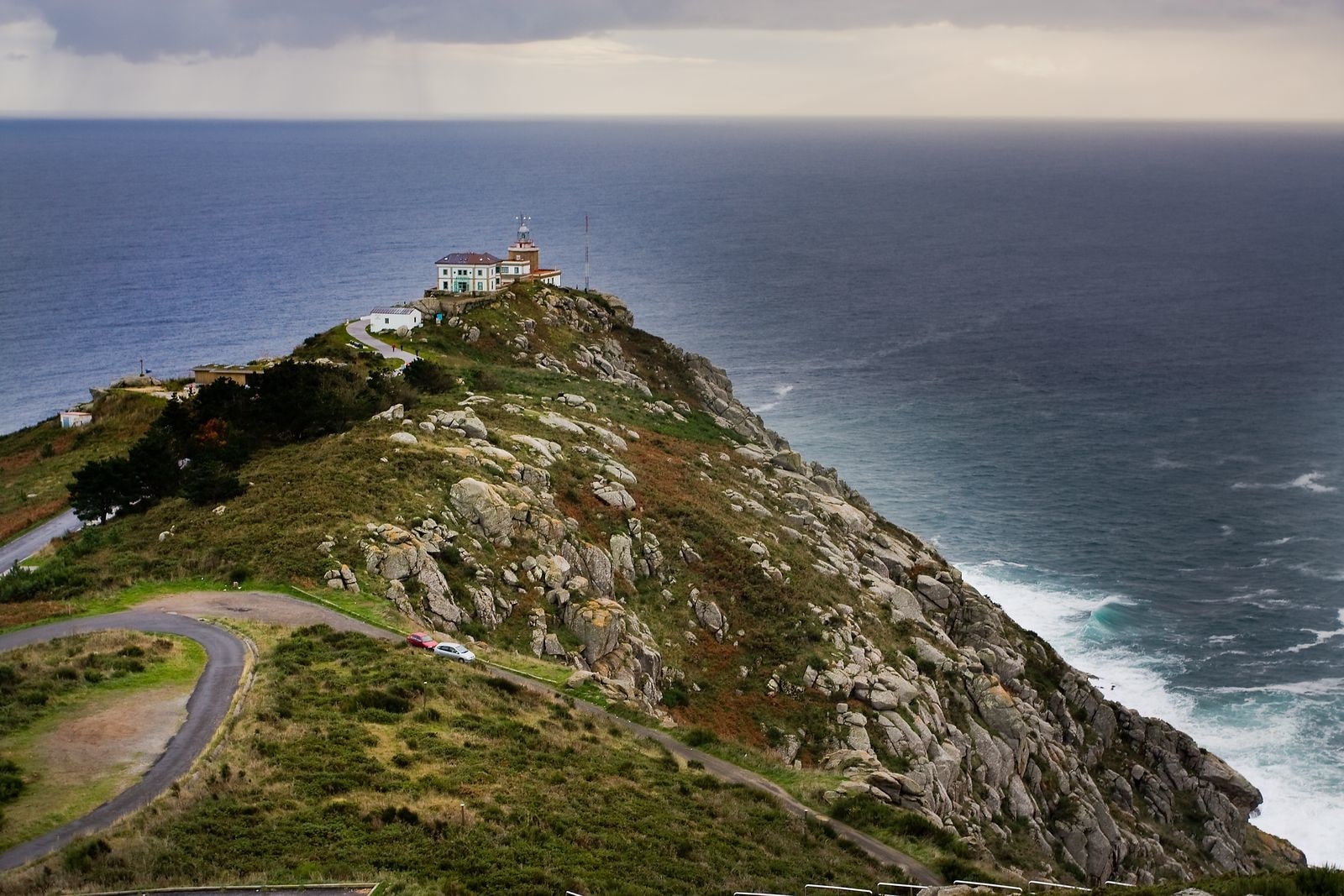

Where the land meets the sea and history whispers through the wind, Cape Finisterre stands as a mystical endpoint of the Camino de Santiago. Known as the 'End of the World' to medieval pilgrims, this storied cape in Galicia, Spain, is steeped in legends and realities that capture the spirit of adventure and the soul's quest for meaning.

The origins of Cape Finisterre trace back to the Romans, who named it 'Finis Terrae,' meaning 'End of the Earth.' In the medieval period, pilgrims who completed the Camino de Santiago continued their journey to this remote point, believing it to be the westernmost edge of the known world. This tradition has endured, with many modern-day pilgrims opting to culminate their spiritual journey here, 90 kilometers beyond the Cathedral of Santiago de Compostela.
Architecturally, the lighthouse of Finisterre, built in 1853, stands as a beacon of guidance and resilience. Its rugged stone structure resists the relentless Atlantic winds, offering a testament to the region's maritime heritage. Nearby, the Igrexa de Santa María das Areas, a 12th-century Romanesque church, houses an enigmatic Cristo de Fisterra, a Gothic statue that draws both faithful pilgrims and art enthusiasts alike.

Culturally, Galicia is a tapestry of rich traditions, many of which are celebrated in the annual Festa de San Xoán. This midsummer festival, marked by bonfires on the beaches of Finisterre, is a jubilant celebration of life and community. The region's Celtic roots are also evident in the haunting melodies of the gaita (bagpipes), often heard echoing through the coastal mists.
The gastronomy of this coastal enclave is a feast for the senses. Pulpo a la Gallega (Galician octopus) and percebes (goose barnacles) are local delicacies that reflect the bounty of the Atlantic. Washed down with a glass of Albariño wine, these dishes encapsulate the flavors of Galicia, offering a taste of the sea that's both robust and refreshing.
Beyond the well-trodden paths, Cape Finisterre holds secrets known to few. The stone cross of A Ferida, marking the spot where the sun supposedly dies each day, is a site of quiet contemplation. Meanwhile, the Pedra da Barca, a precariously balanced rock, is steeped in legend, said to be the boat of the Virgin Mary turned to stone.
For those planning a visit, the best time to explore Finisterre is during the late spring or early autumn. The weather is mild, and the path less crowded, allowing for a more intimate connection with the landscape and its stories. It's wise to pack layers, as the coastal climate can be unpredictable, shifting from sunshine to mist within moments.
To fully appreciate the mystical allure of Cape Finisterre, let the Secret World app craft a personalized itinerary that unveils the hidden wonders of this ancient land.


